• HOME
  • ABOUT
  • SHOP
  • SERVICES
  • EXCHANGE DIFFS
  • BLOG
  • CONTACT
  • 03 381 0320
  • CART
  • 03 381 0320
  • CART
  • HOME
  • ABOUT
  • SHOP
  • SERVICES
  • EXCHANGE DIFFS
  • BLOG
  • CONTACT

Free Shipping NZ Wide

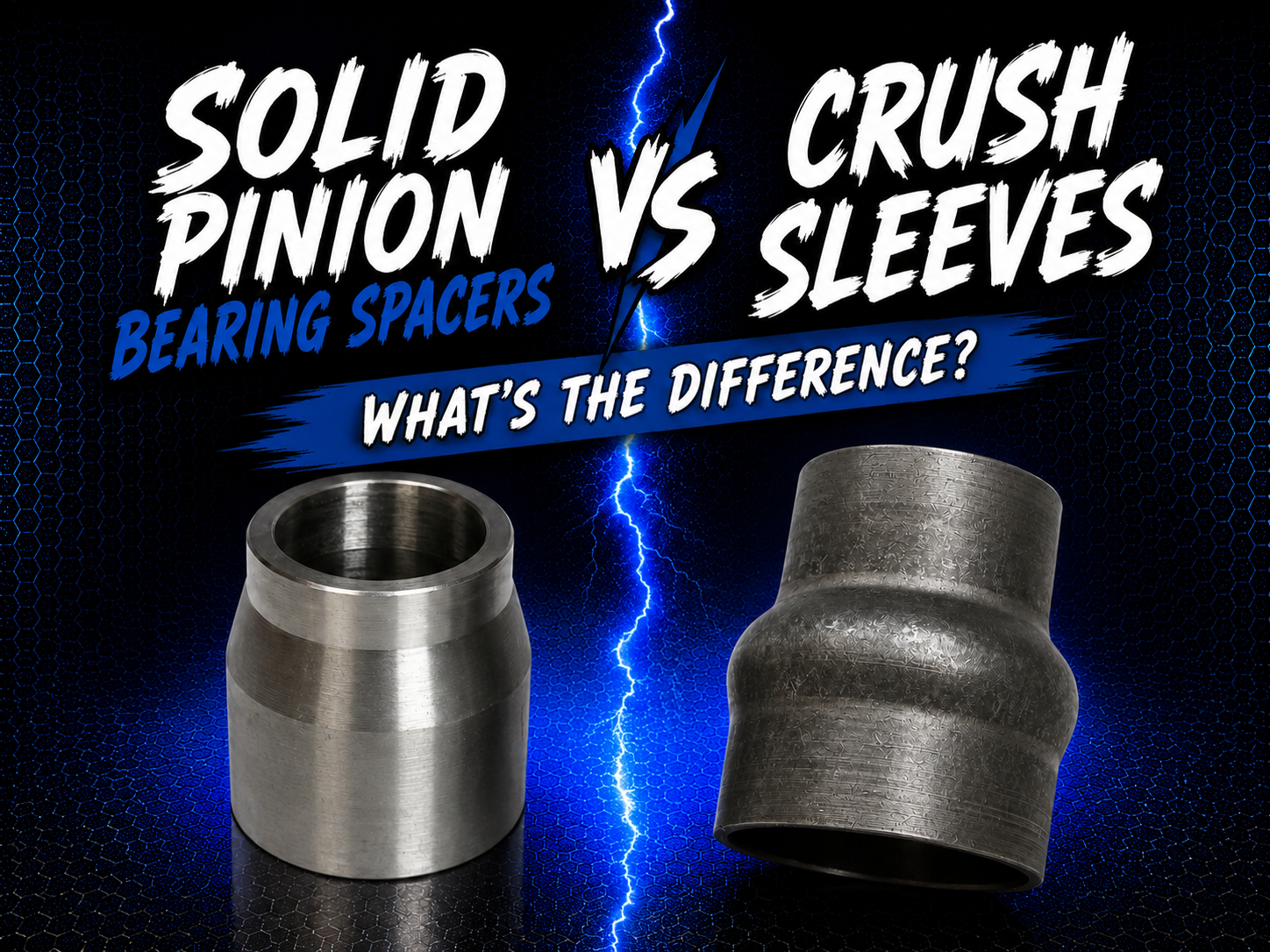
Two metal automotive parts labelled as a solid pinion bearing spacer and a crush sleeve, with bold text reading “Solid Pinion Bearing Spacers vs Crush Sleeves: What’s the Difference?” and a striking lightning bolt in the background.

Solid Pinion Bearing Spacers vs Crush Sleeves

June 12th, 2026

Solid pinion spacers are one of the most common upgrades we recommend when rebuilding a differential. Replacing the factory crush sleeve with a solid pinion spacer can improve preload stability...

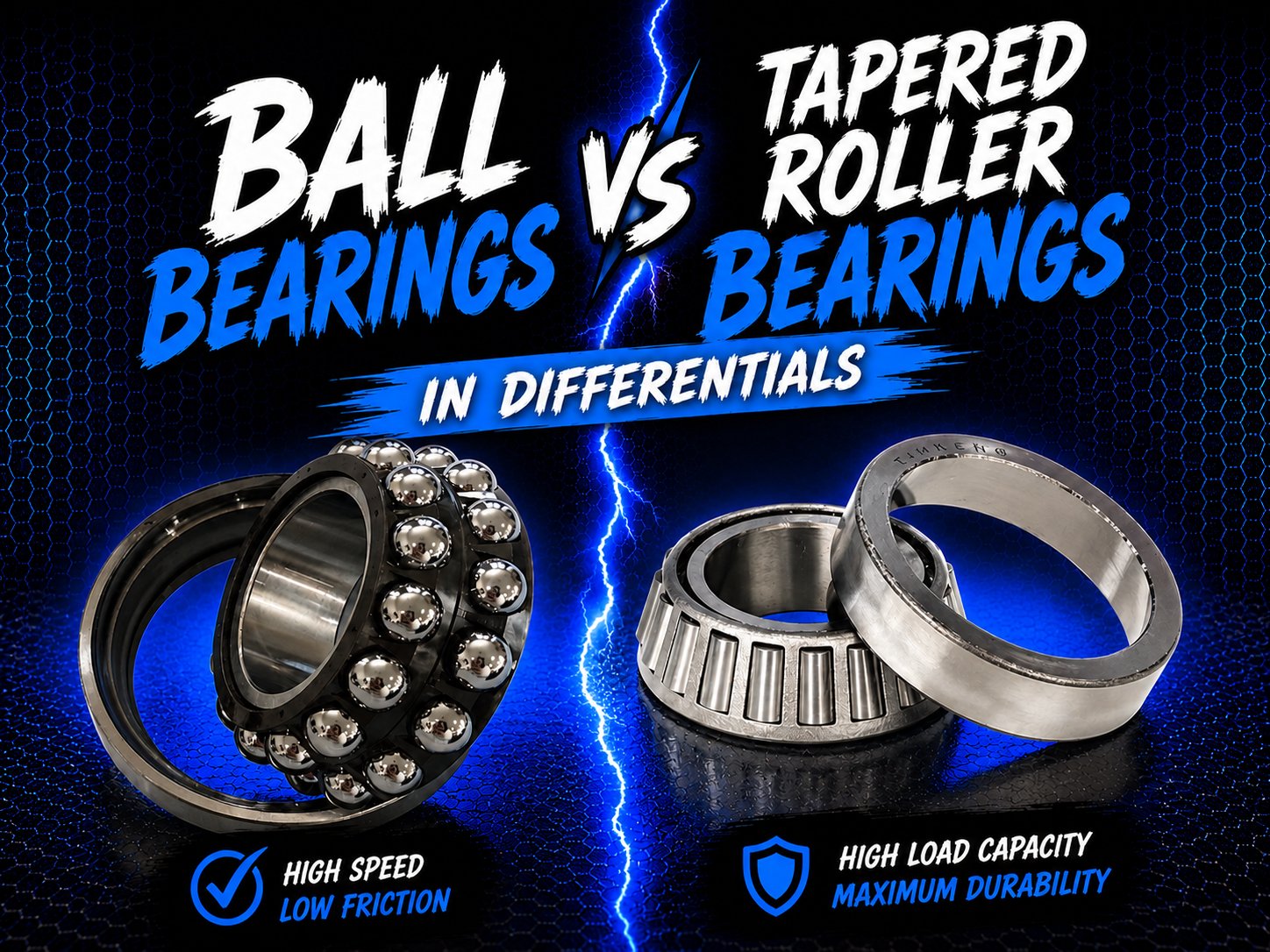
Two types of bearings are shown: ball bearings on the left and tapered roller bearings on the right. Text compares their use in differentials, highlighting ball bearings for high speed and low friction, and roller bearings for high load capacity and durability.

Ball Bearings vs Tapered Roller Bearings in Differentials

June 10th, 2026

Bearings play a critical role in the strength, durability, and lifespan of a differential. Inside every diff assembly, bearings support rotating components such as the pinion gear and differential carrier....

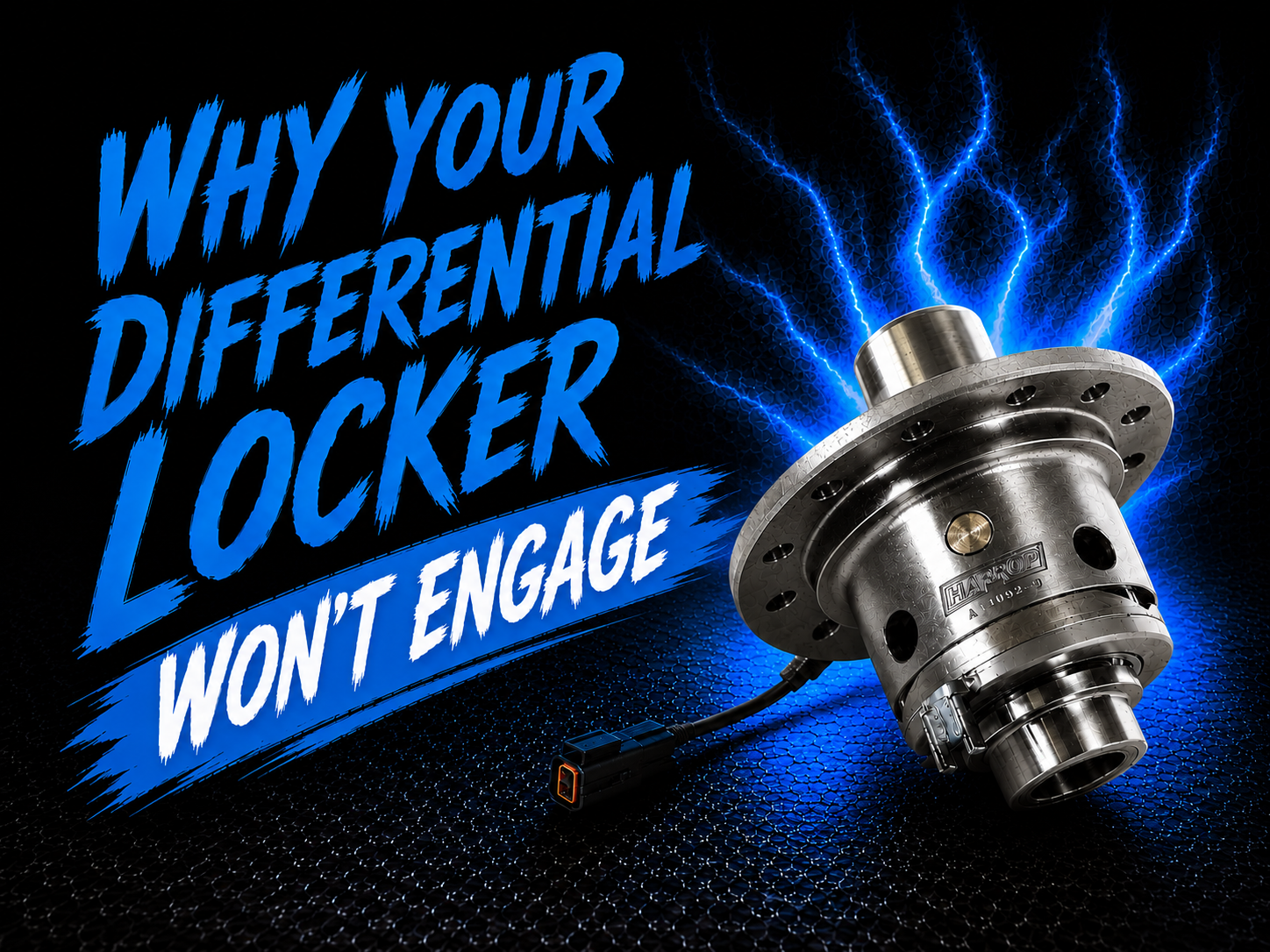
A metallic differential locker with wiring is shown next to bold blue text that reads, "Why your differential locker won't engage," set against a dark background with blue electric streaks.

Why Your Differential Locker Won’t Engage

June 5th, 2026

A diff locker that won’t engage can be frustrating, especially when you need it most in off-road conditions. Whether your vehicle is fitted with an air locker, electronic locker (E-Locker),...

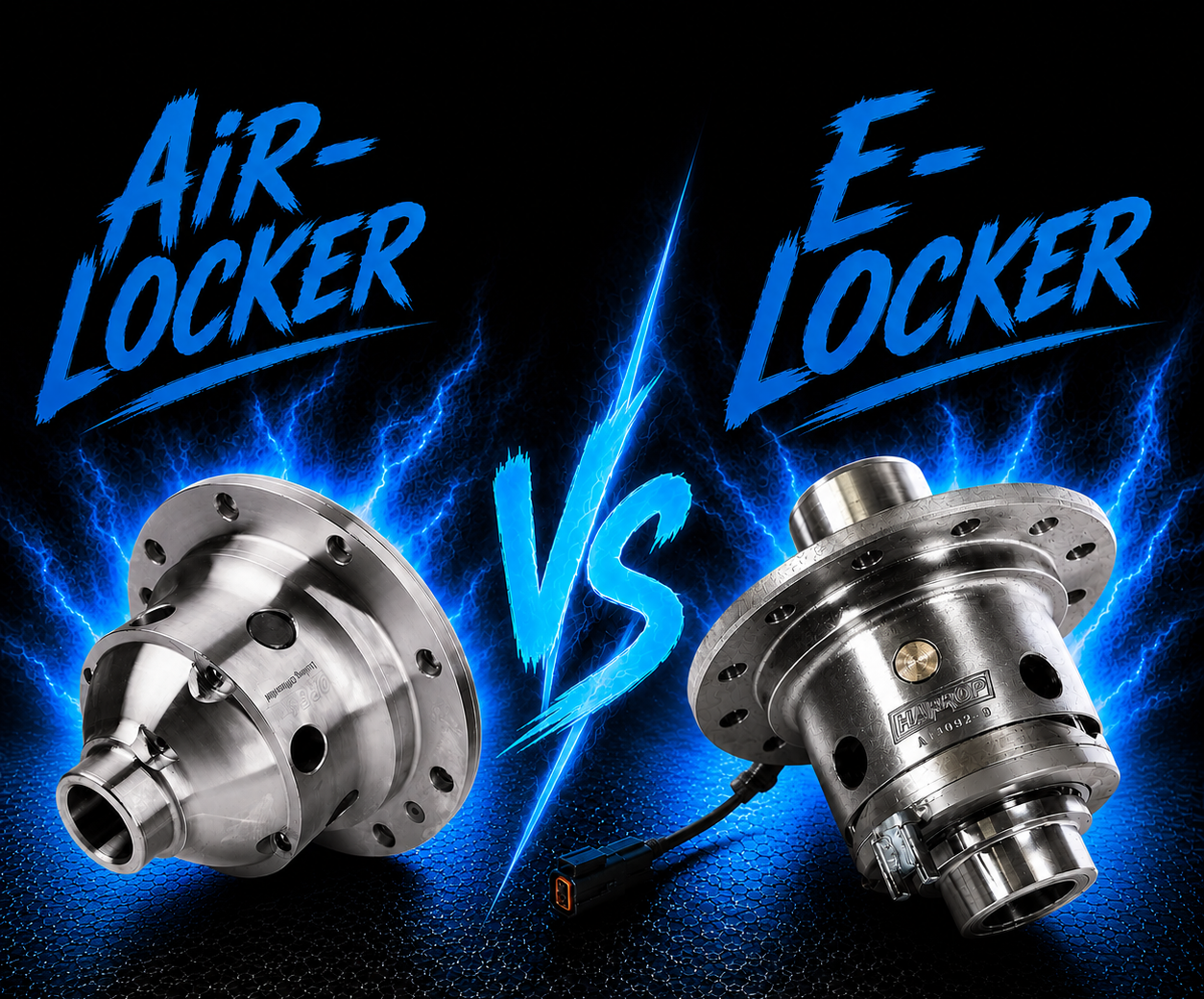
Two differential lockers, labelled "Air-Locker" and "E-Locker," are shown side by side with electric blue lightning effects and a "VS" in between them on a black background.

Air Locker vs E-Locker: Which Is Better?

June 3rd, 2026

If you’re building a 4WD for serious off-road use, one of the biggest decisions you’ll make is whether to run an air locker (e.g. ARB Air Locker) or an electronic...

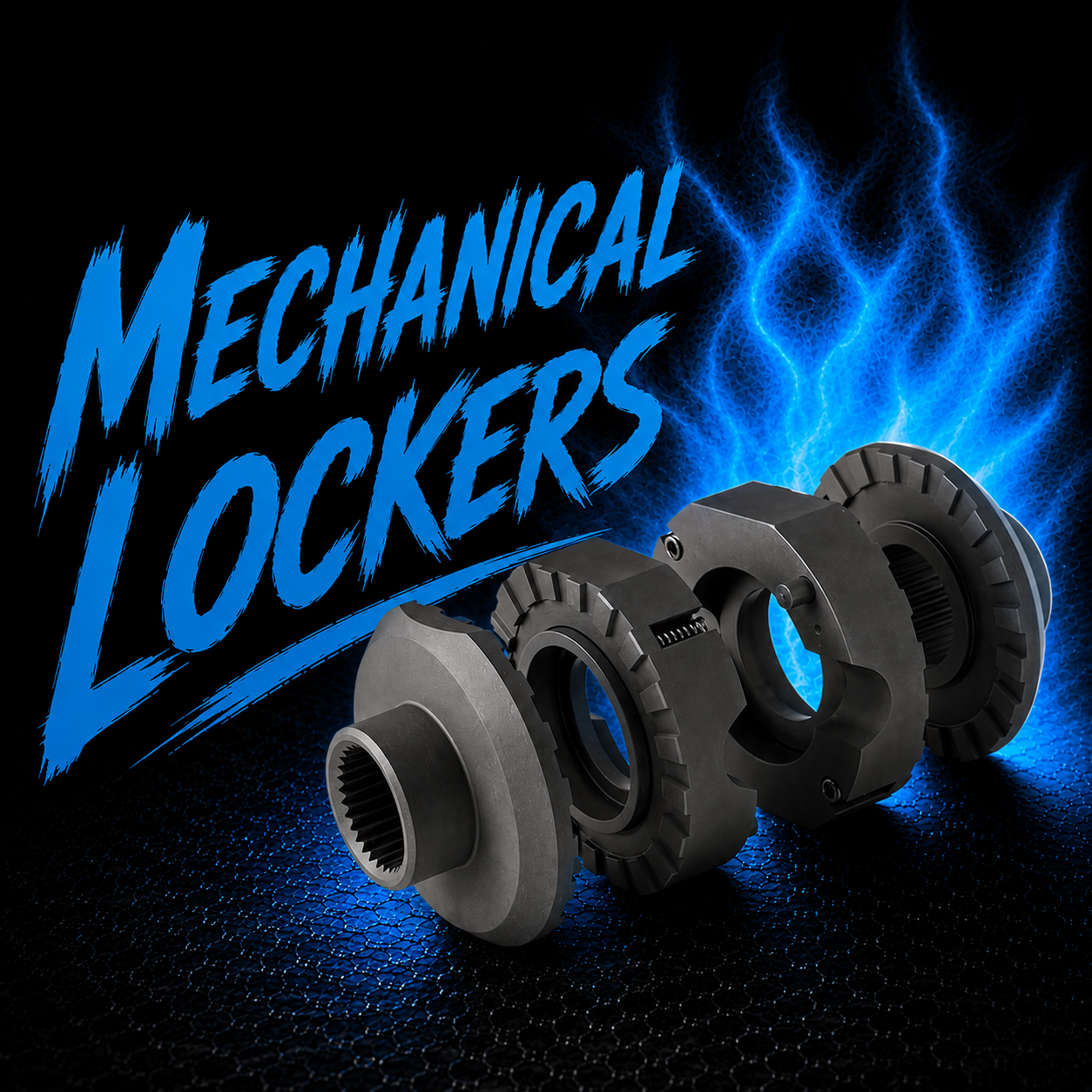
Three mechanical locker parts are displayed in a row on a textured surface, with glowing blue light effects and the bold text “MECHANICAL LOCKERS” in the background.

Mechanical Lockers: How Auto Lockers Work

June 2nd, 2026

Mechanical lockers, often referred to as auto lockers or lunch-box lockers, are a type of differential locker that engage automatically when torque is applied to the drivetrain. Unlike air lockers...

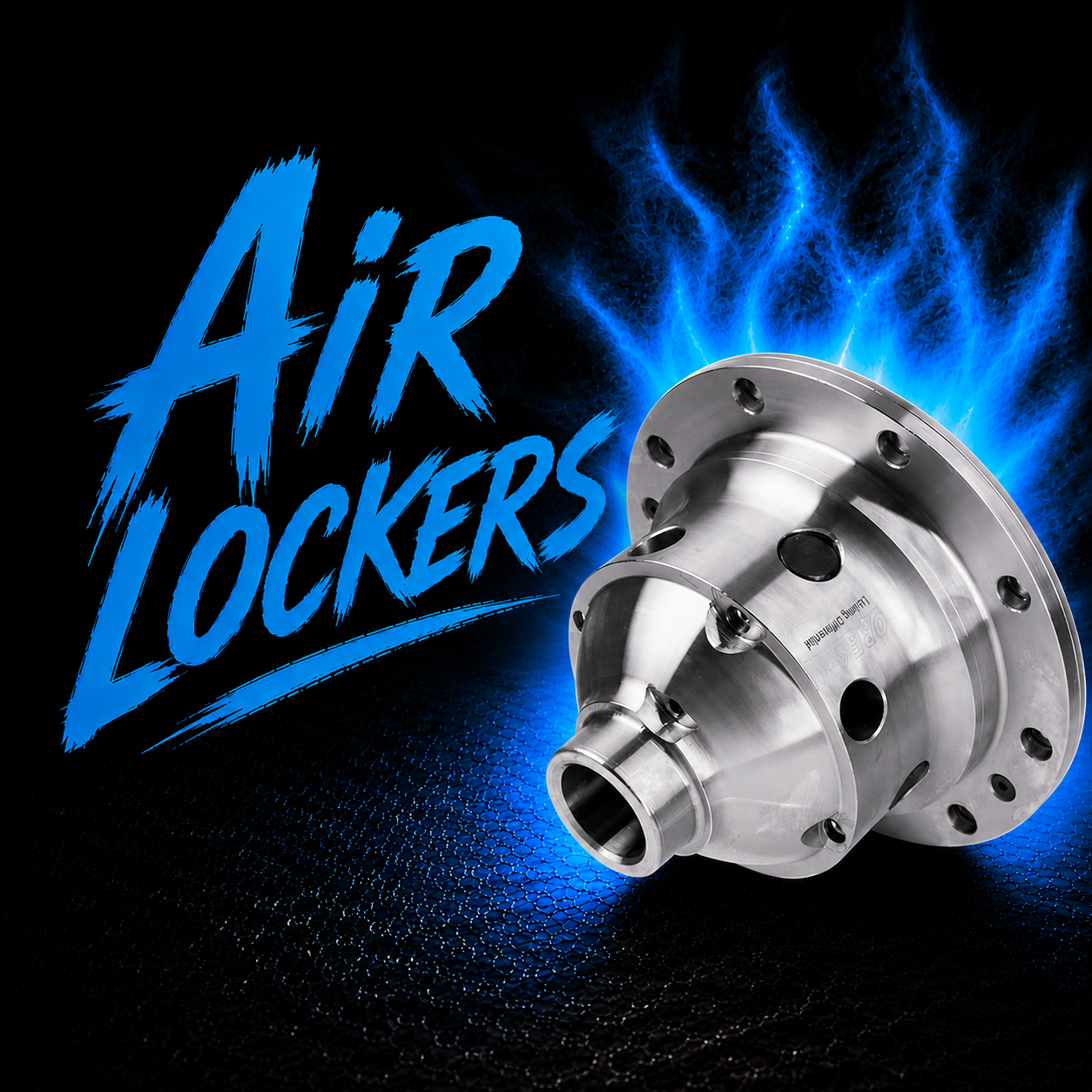
A shiny metal differential with multiple holes is displayed on a black background with blue lighting effects. The words "Air Lockers" appear in bold, electric blue lettering to the left of the part.

Air Lockers: How They Work

May 27th, 2026

Air lockers are one of the most popular types of selectable diff lockers used in off-road vehicles. Unlike automatic lockers that engage on their own, air lockers allow the driver...

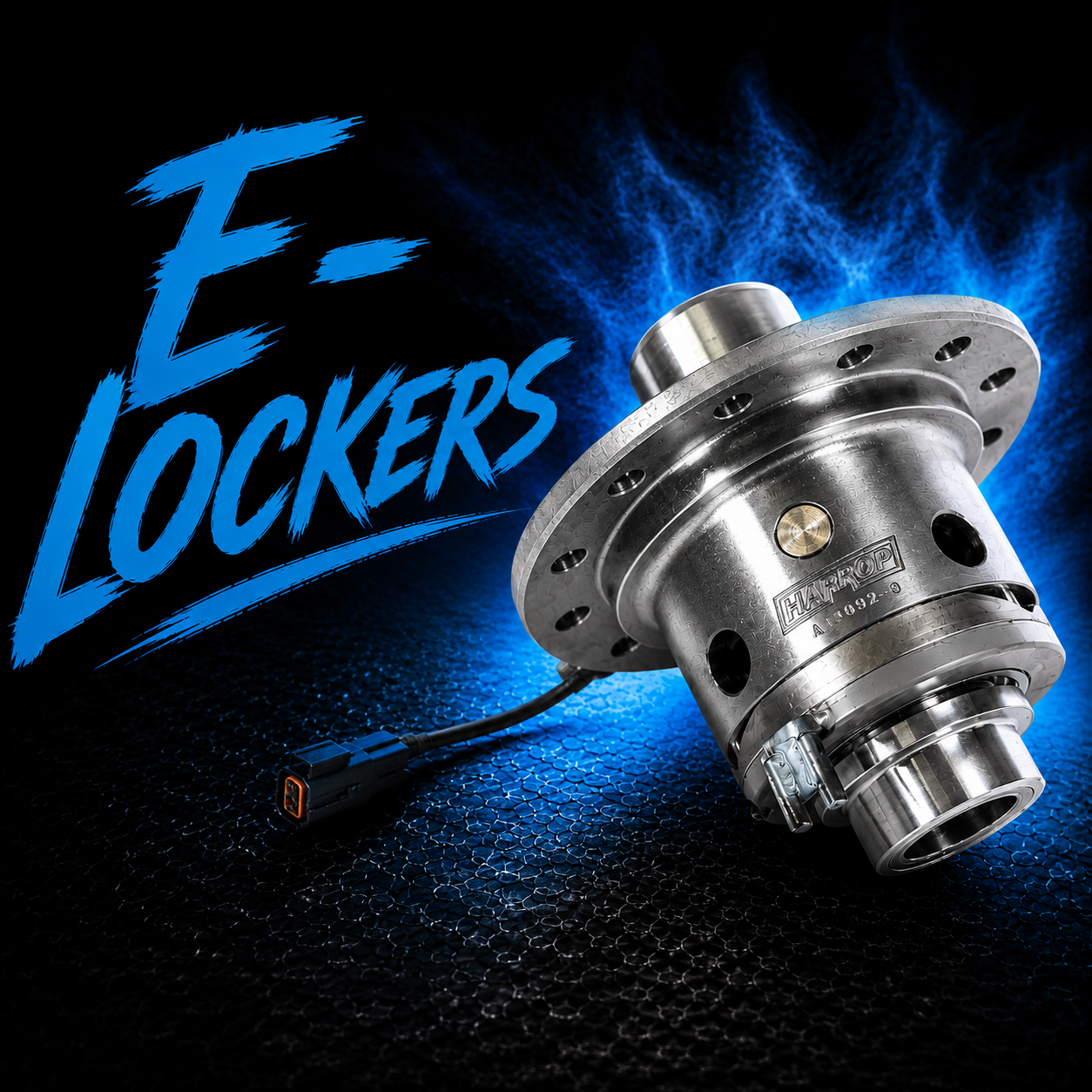
A metallic E-locker differential with a connected cable is showcased on a dark textured surface, illuminated by blue lighting, with bold blue text reading “E-Lockers” on the left side.

E-Lockers: How They Work

May 22nd, 2026

Electronic diff lockers, commonly referred to as E-Lockers, are a type of selectable locking differential that use an electrical actuator to lock the differential when required. Like air lockers, E-Lockers...

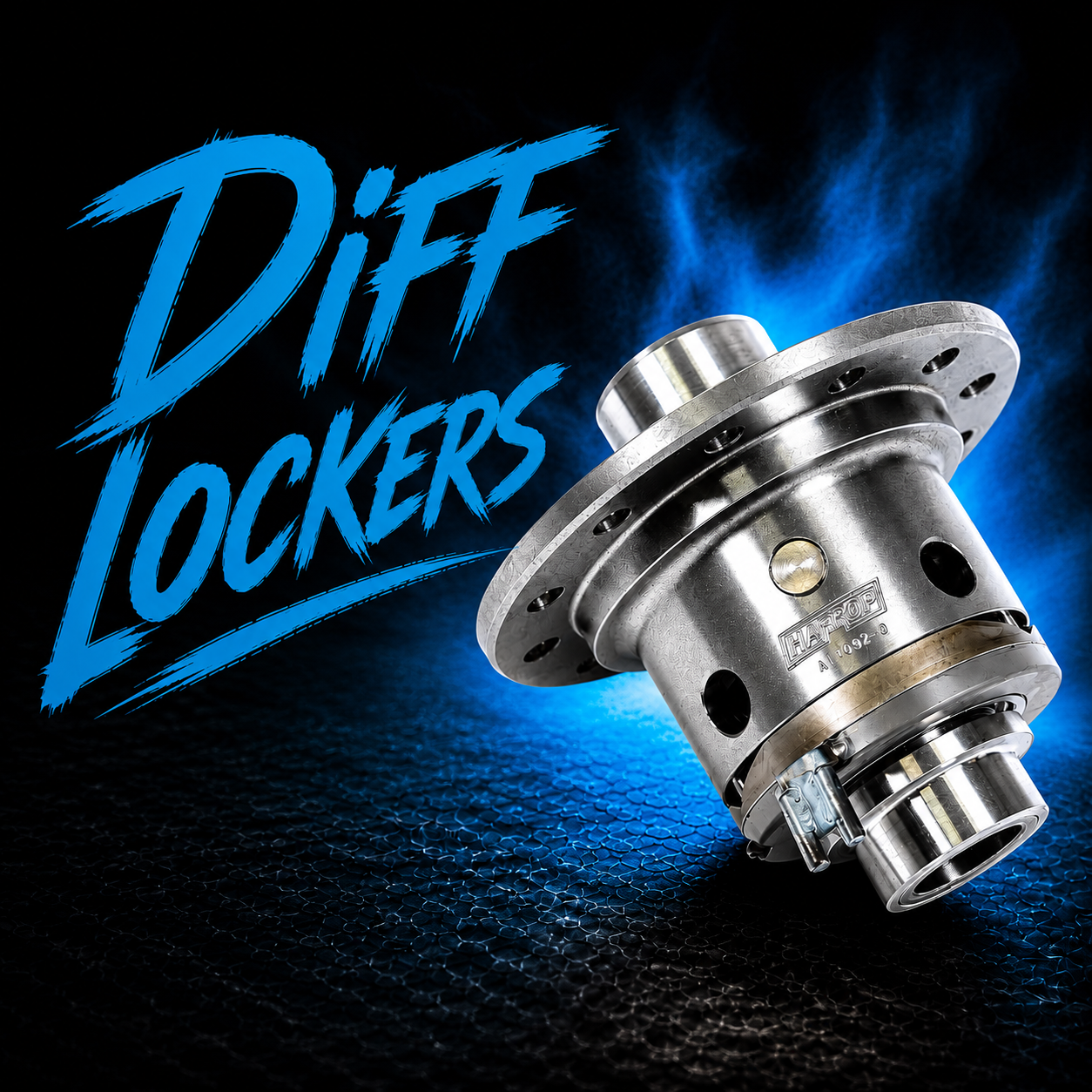
A shiny differential locker is displayed on a dark textured background with blue flames behind it. Bold blue text on the left reads "Diff Lockers.

Differential Lockers: What They Are and How They Work

May 18th, 2026

Diff lockers are designed to provide maximum traction by locking both wheels on an axle together. Unlike open diffs or limited slip diffs, which allow some difference in wheel speed,...

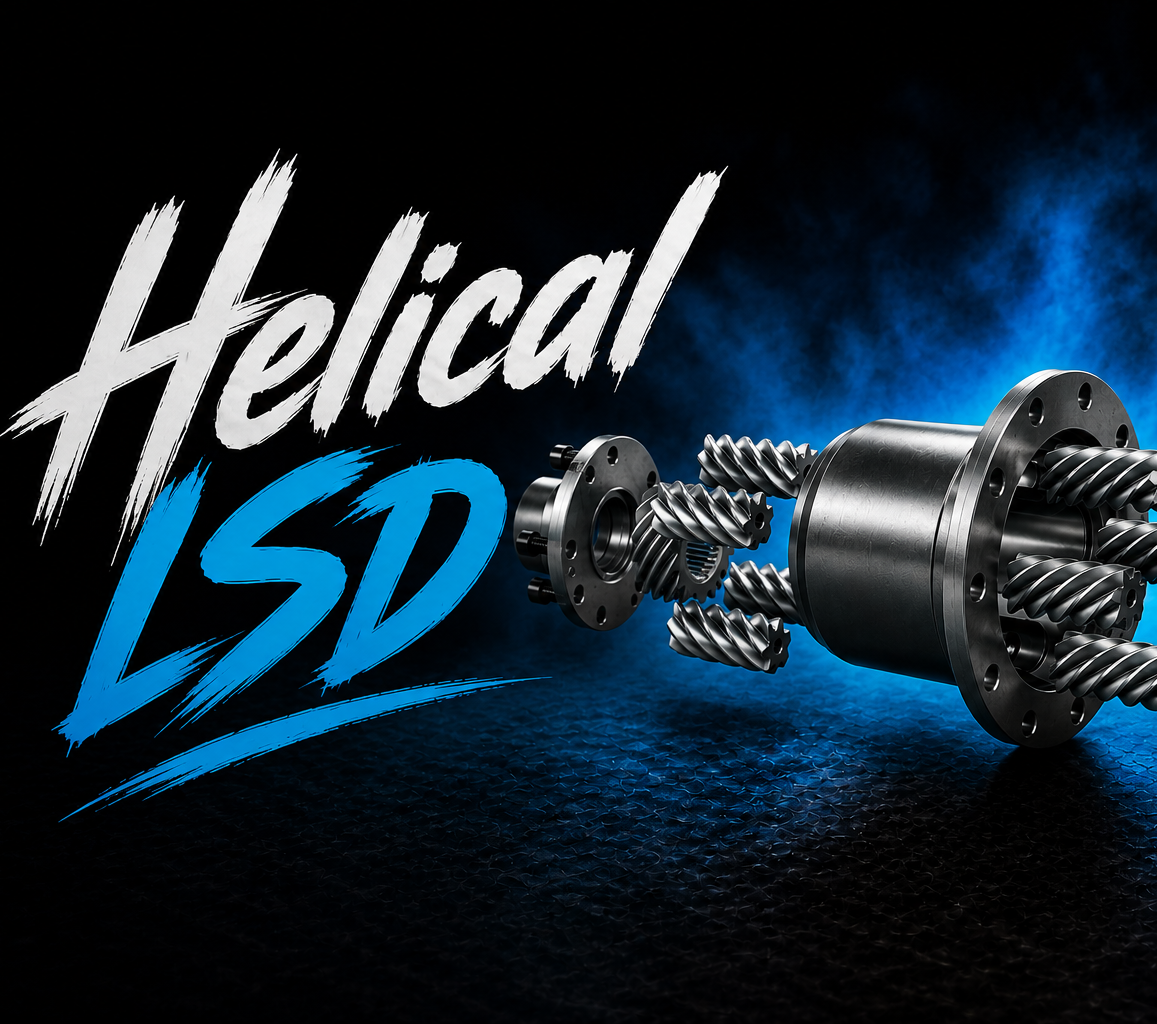
A metallic helical limited slip differential (LSD) with gears is displayed against a dark, textured background with blue smoke. Bold white and blue text reads “Helical LSD” on the left side.

Helical LSDs – How They Work and Their Pros & Cons

May 8th, 2026

Helical limited slip differentials (LSDs) are one of the most popular modern differential upgrades for both street and performance vehicles. Unlike traditional clutch-type LSDs, helical LSDs use a series of...

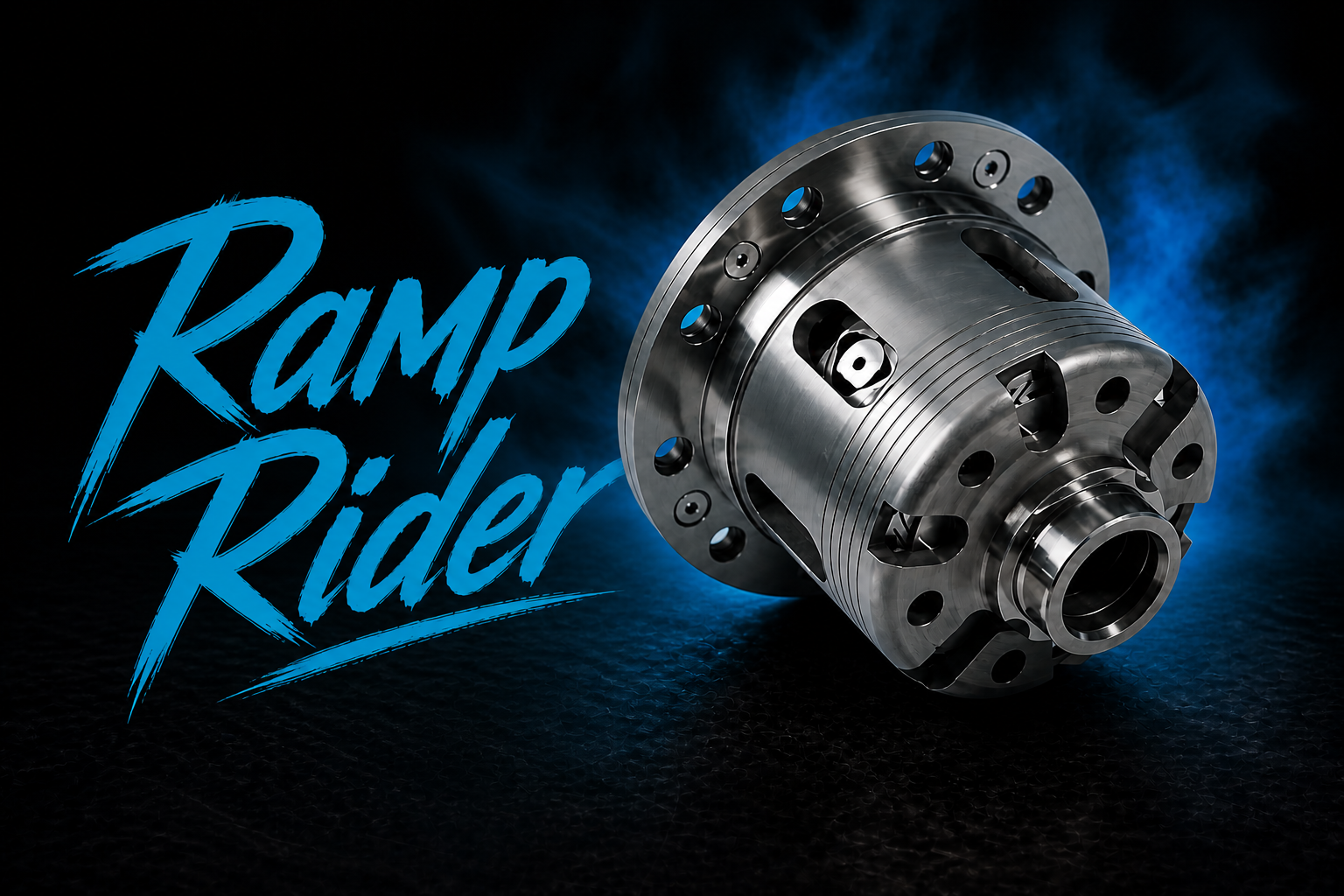
A polished metal mechanical part, possibly an automotive differential, is set against a dark background with blue smoke. The bold text "Ramp Rider" in blue is displayed on the left side of the image.

Understanding 1 Way, 1.5 Way and 2 Way Differentials

May 6th, 2026

Ramp rider limited slip differentials are one of the most common LSD designs used in motorsport and performance vehicles. They are particularly popular in drifting, circuit racing, and high-performance street...

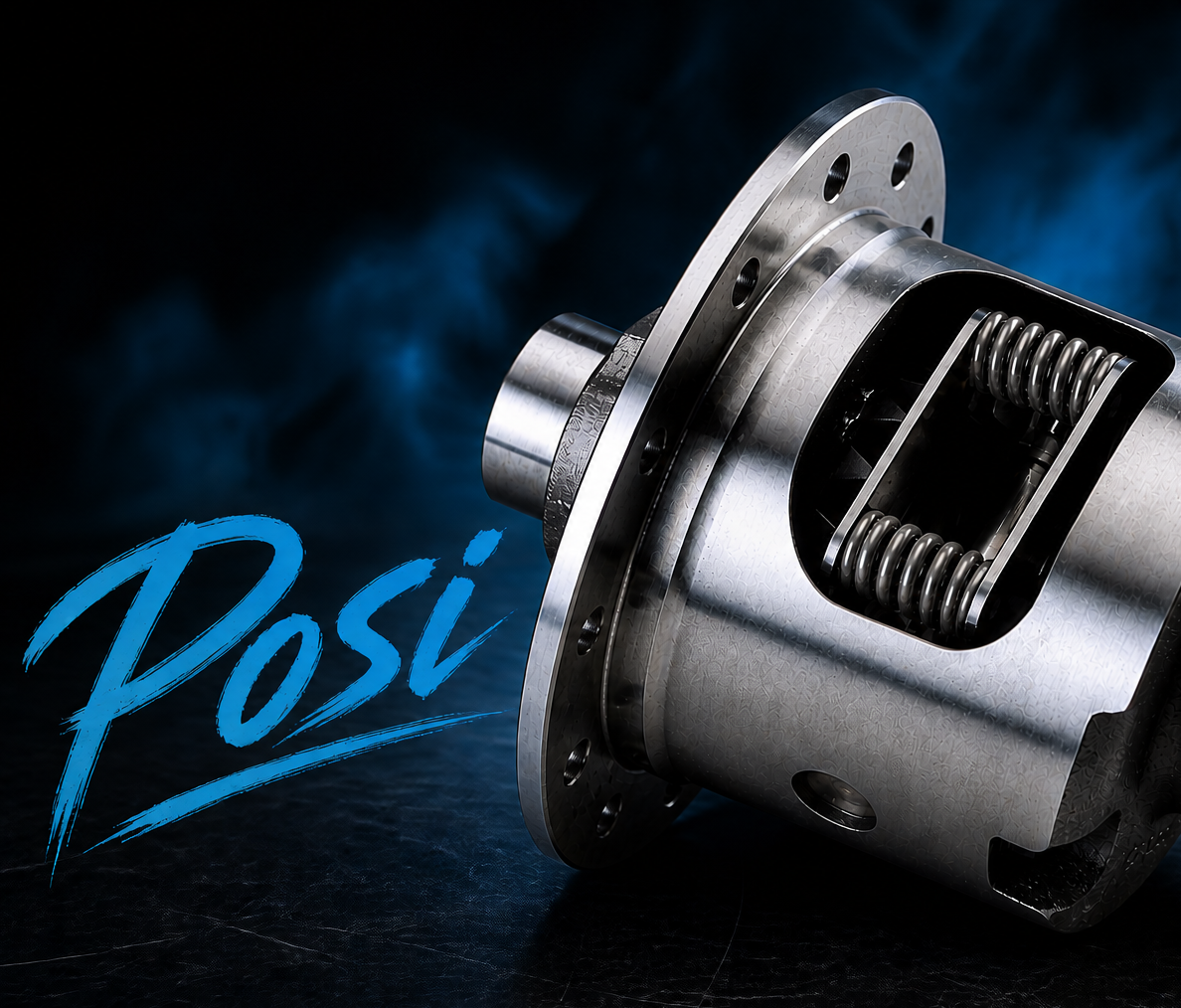
A polished metal automotive differential part sits on a dark surface with blue smoke in the background and the word "Posi" written in bold blue script on the left side.

Positraction LSD (Posi): How They Work

May 4th, 2026

A Positraction LSD, often referred to simply as a “Posi”, is one of the most well-known types of clutch-type limited slip differentials. The design became widely known through American performance...

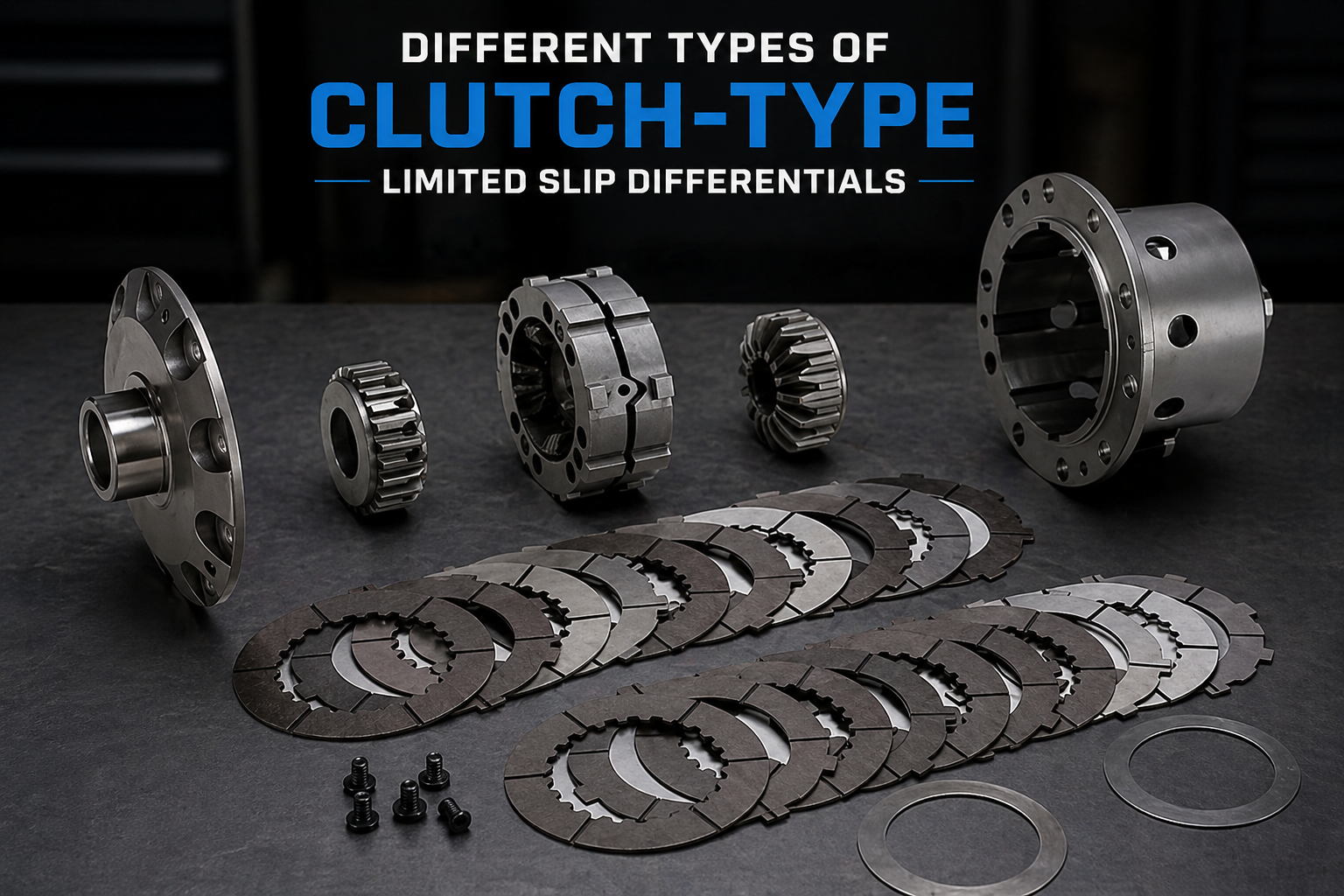
Various metal components and clutch plates of limited slip differentials are arranged on a dark surface, with the text “Different Types of Clutch-Type Limited Slip Differentials” displayed above.

Different Types of Clutch Type Limited Slip Differentials

May 1st, 2026

Clutch-type limited slip differentials are one of the most widely used LSD designs in performance vehicles, motorsport applications, and some factory drivetrain setups. These differentials use friction plates inside the...

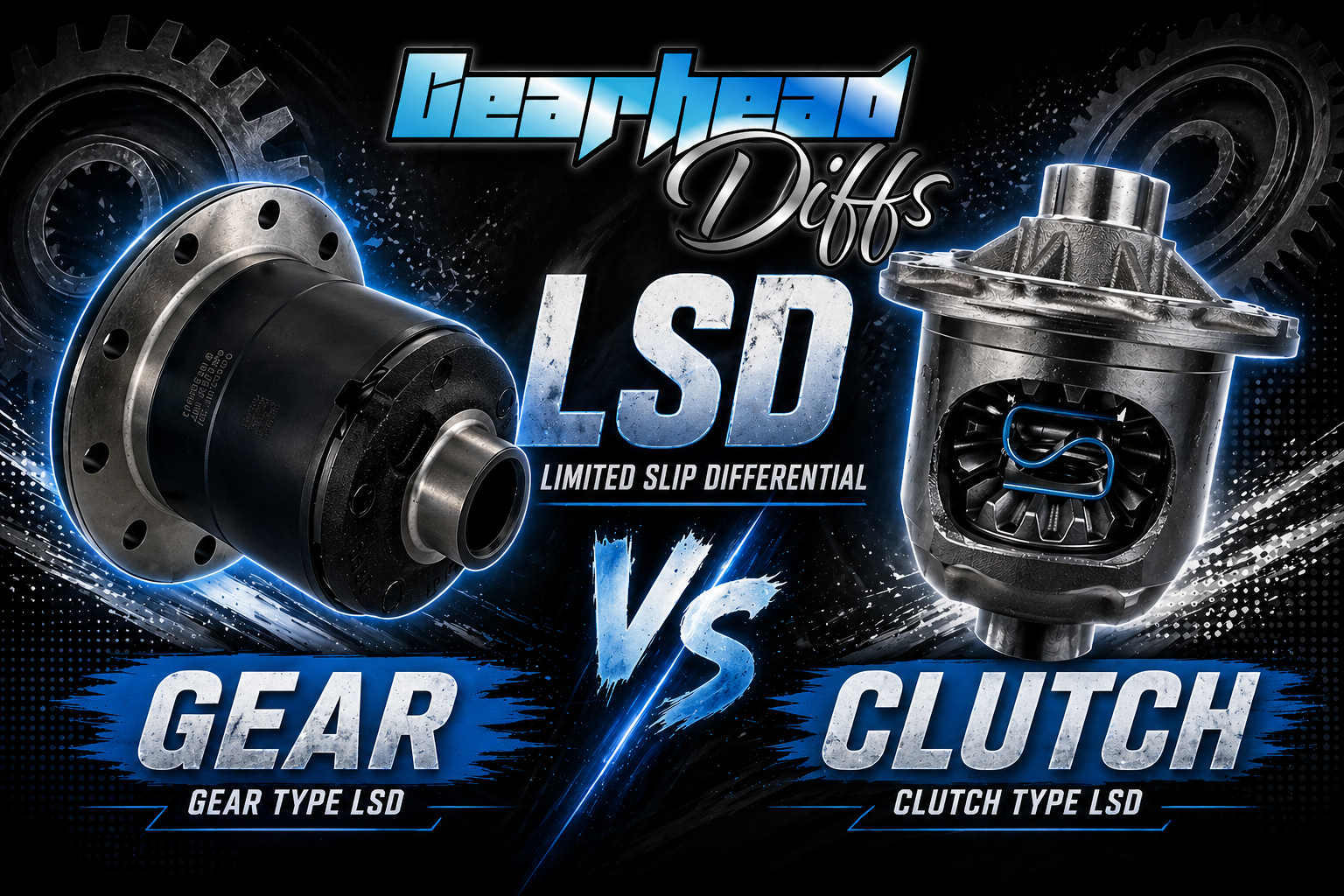
A comparison graphic of two types of limited slip differentials: a gear type LSD on the left labelled "GEAR" and a clutch type LSD on the right labelled "CLUTCH," with bold text reading "LSD vs" in the centre.

Intro to Limited Slip Differentials

April 30th, 2026

A limited slip differential (LSD) is designed to improve traction by limiting the difference in speed between the two drive wheels. Unlike an open differential, which sends power to the...

Side-by-side comparison of a Jeep with an open differential (left, one rear wheel spins, no traction) and a limited slip differential (right, both rear wheels driving, maximum traction) on a rocky track. Text and arrows annotate each scenario.

LSD vs Open Differential – What’s the Difference?

April 28th, 2026

Most vehicles come from the factory with an open differential, which works well for normal road driving. However, many performance vehicles and 4WDs benefit from upgrading to a limited slip...

Close-up of a damaged automotive differential gear with visible metal wear and chipped teeth, surrounded by leaked black oil inside the opened metal housing.

5 Signs Your Differential Is About to Fail

April 20th, 2026

Your vehicle’s differential is a critical part of the drivetrain. It allows the wheels to rotate at different speeds when cornering while transferring power from the driveshaft to the wheels....

A close-up of the Import placeholder for 1804 metal differential gear assembly on a metallic surface, highlighting detailed gear teeth and components, with a blurred workshop in the background.

What Is a Differential?

April 17th, 2026

The differential is a critical component in a vehicle’s drivetrain that allows the wheels to rotate at different speeds while still being driven by the engine. Although most drivers never...

Address

104 Byron Street
Sydenham
Christchurch, 8023

Contact

Contact Us
03 381 0320

Opening Hours

Mon – Fri
8:00 am – 5:00 pm

Saturday

By appointment only.

Sunday
Closed.

Newsletter

sign up now, simple.

Afterpay Logo
  • © Gearhead Diffs 2023

  • |

  • Terms & Conditions
  • |

  • Privacy Policy
  • |

  • Delivery, Returns and Refunds
Website design by: Meta Digital

Added to cart

Your Cart Is Empty
0

Check out our shop to see what's available

Cart Total: Total$0.00
Your cart is empty. Shop now →