
Superfinished differential gears have become increasingly popular in motorsport and high-performance driveline applications. When building a high-performance differential, most people focus on gear ratios, LSD choice, bearings, and setup accuracy.
One upgrade that is often overlooked is isotropic superfinishing, commonly referred to simply as superfinishing.
Superfinished differential gears feature an extremely smooth surface finish that can reduce friction, improve efficiency, lower operating temperatures, reduce gear noise, and potentially increase component life.
But what exactly is isotropic superfinishing, and is it worth the additional cost?
What Is Isotropic Superfinishing?
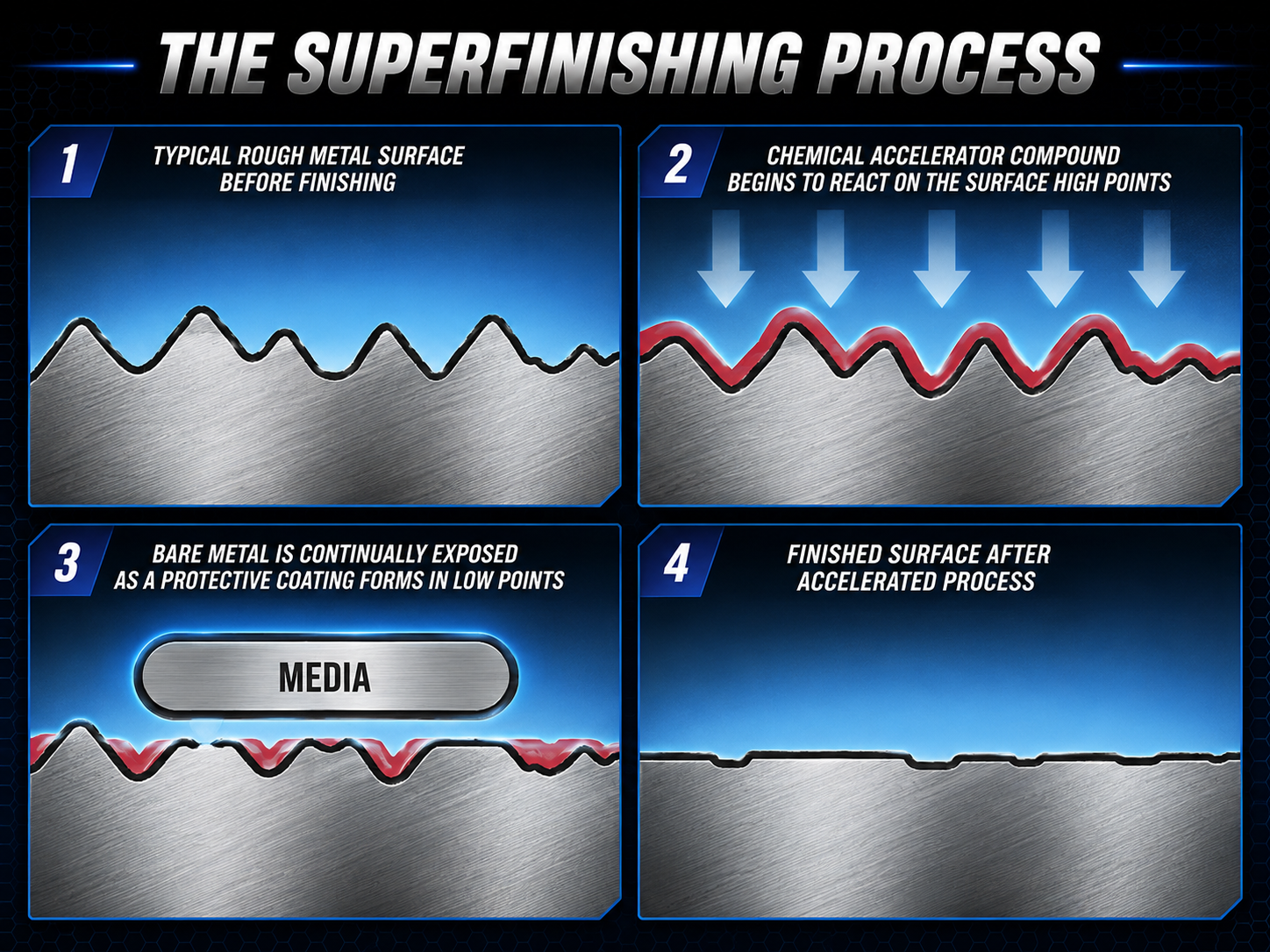
Isotropic superfinishing is a specialised surface treatment process that removes microscopic peaks and imperfections from metal components.
The process is commonly used on:
- Crownwheels and pinions
- Transmission gears
- Dog engagement gearsets
- Bearings
- Racing engine components
Unlike polishing, isotropic superfinishing does not significantly alter gear geometry or critical dimensions.
Instead, it creates an extremely smooth and consistent surface finish by removing microscopic high spots left behind during the manufacturing process.
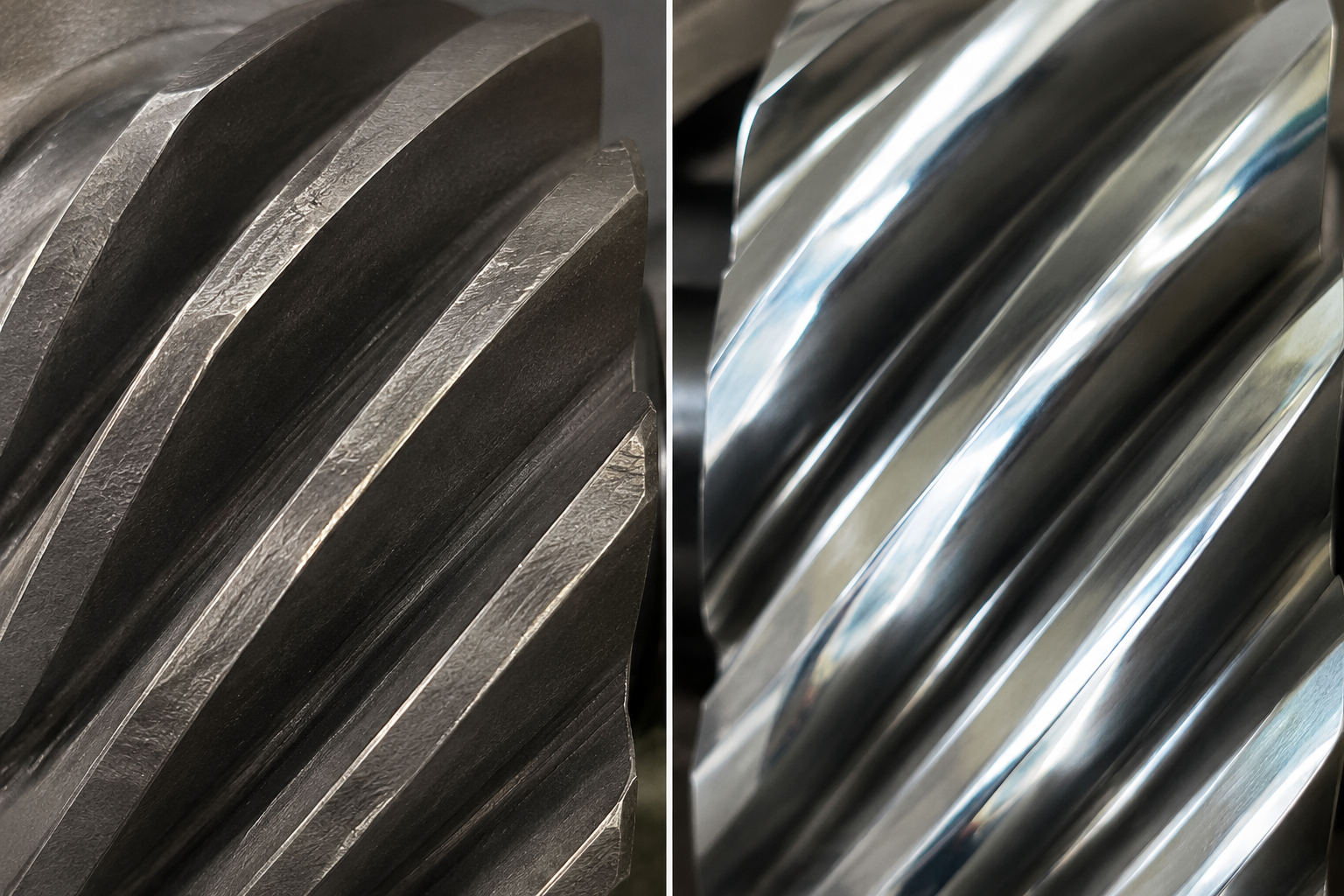
The result is a gear surface that appears almost mirror-like.
How Does Superfinishing Work?
The process typically involves a combination of:
- Chemical surface activation
- Vibratory finishing
- Specialised abrasive media
As the process progresses, microscopic roughness is gradually removed from the gear teeth.
This leaves a highly refined surface while maintaining the original gear profile and tooth geometry.
Because the process works at a microscopic level, gear mesh characteristics remain unchanged.
Benefits of Superfinished Differential Gears
There are several reasons why superfinished gears have become popular in motorsport applications.
Reduced Friction
A smoother surface creates less friction between mating gear teeth.
This can improve drivetrain efficiency and reduce power losses through the differential.
Reduced Noise
Superfinished gears often operate more quietly than non-finished gears.
By removing microscopic peaks and imperfections from the tooth surface, gear mesh becomes smoother and more consistent.
While superfinishing will not correct noise caused by incorrect setup, worn bearings, or damaged gears, it can help reduce the minor gear noise generated by normal tooth contact.
This can be particularly beneficial in street vehicles where reduced driveline noise is desirable, espcially when fitting aftermarket gears.
Independent testing has also shown that isotropic superfinishing can help retain more horsepower throughout the drivetrain by reducing frictional losses. For those interested in the results, see the testing published by REM Surface Engineering here.
Lower Operating Temperatures
Reduced friction generally results in lower oil temperatures.
This can be particularly beneficial in endurance racing, circuit racing, towing applications, and vehicles subjected to sustained heavy loads.
Reduced Wear
Microscopic surface imperfections act as stress concentration points.
Removing these imperfections can reduce wear during operation and improve long-term durability.
Improved Oil Film Retention
While the surface appears highly polished, isotropic superfinishing still allows the gear oil film to remain attached to the gear teeth.
This helps maintain proper lubrication under load.
Faster Break-In
One of the advantages of superfinished gears is that they typically require little to no break-in period compared to conventionally finished gears.
Because the microscopic peaks and imperfections have already been removed during the superfinishing process, much of the initial surface smoothing that normally occurs during break-in has already taken place.
In most applications, a dedicated break-in procedure is not required. However, for high-performance vehicles that will be subjected to immediate heavy loads, such as dyno tuning, circuit racing, drag racing, or other motorsport use, we still recommend completing a few heat cycles before operating the vehicle at full load.
This allows the gears, bearings, and other differential components to stabilise under normal operating temperatures before being subjected to maximum stress.
Do Superfinished Gears Increase Strength?
This is one of the most common misconceptions.
Superfinishing does not significantly increase the strength of a gear.
The crownwheel and pinion remain the same material and heat treatment as before.
Instead, the primary benefits relate to:
- Reduced friction
- Reduced wear
- Reduced heat
- Improved efficiency
- Improved durability
While these improvements may contribute to longer gear life, superfinishing should not be viewed as a substitute for a stronger gearset.
Are Superfinished Gears Worth It?
For a daily-driven vehicle, the benefits are often difficult to justify purely on cost (unless fitting with a new aftermarket gear set).
However, for:
- Circuit racing
- Endurance racing
- Drag racing
- Rally cars
- High-horsepower street cars
- Professional motorsport applications
The reduction in friction and wear can make superfinishing an attractive upgrade.
Many professional racing teams utilise isotropic superfinishing throughout their driveline components for exactly this reason.
Final Thoughts on Superfinished Diff Gears
Isotropic superfinishing is one of those upgrades that often goes unnoticed because it doesn’t change the appearance of a differential from the outside.
However, the microscopic improvements made to the gear surface can reduce friction, lower operating temperatures, improve efficiency, and help minimise wear over time.
While not essential for every vehicle, superfinished differential gears can be a worthwhile upgrade for serious performance and motorsport applications where every advantage counts.