
When upgrading or rebuilding a differential, most people focus on gears, LSDs, lockers, and bearings.
However, the diff bushes also play an important role in how the vehicle performs and feels on the road.
The choice between solid and rubber diff bushes can affect:
- Driveline movement
- Wheel hop
- Traction
- Noise, Vibration and Harshness
- Differential longevity
Understanding the differences can help you choose the right setup for your application.
What Do Diff Bushes Do?
Differential bushes mount the differential housing to the chassis or subframe.
Their job is to:
- Support the differential
- Absorb vibration and noise
- Reduce driveline shock
- Control differential movement
Every time the vehicle accelerates, decelerates, changes gear, or encounters bumps, forces are transferred through the differential mounts.
The bushes help manage these loads.
Rubber Diff Bushes
Mostly all factory vehicles use rubber bushes.
Manufacturers choose rubber because it provides excellent isolation from noise and vibration while delivering acceptable durability for normal road use.
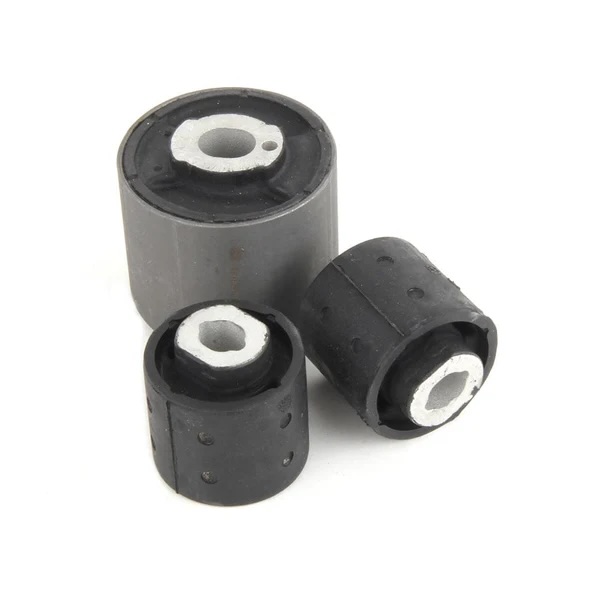
Advantages of Rubber Diff Bushes
- Reduced noise and vibration
- Improved ride comfort
- Smooth driveline operation
- Ideal for daily-driven vehicles
- Lower cabin noise
For street vehicles, rubber bushes generally provide the best balance between comfort and performance.
Disadvantages of Rubber Diff Bushes
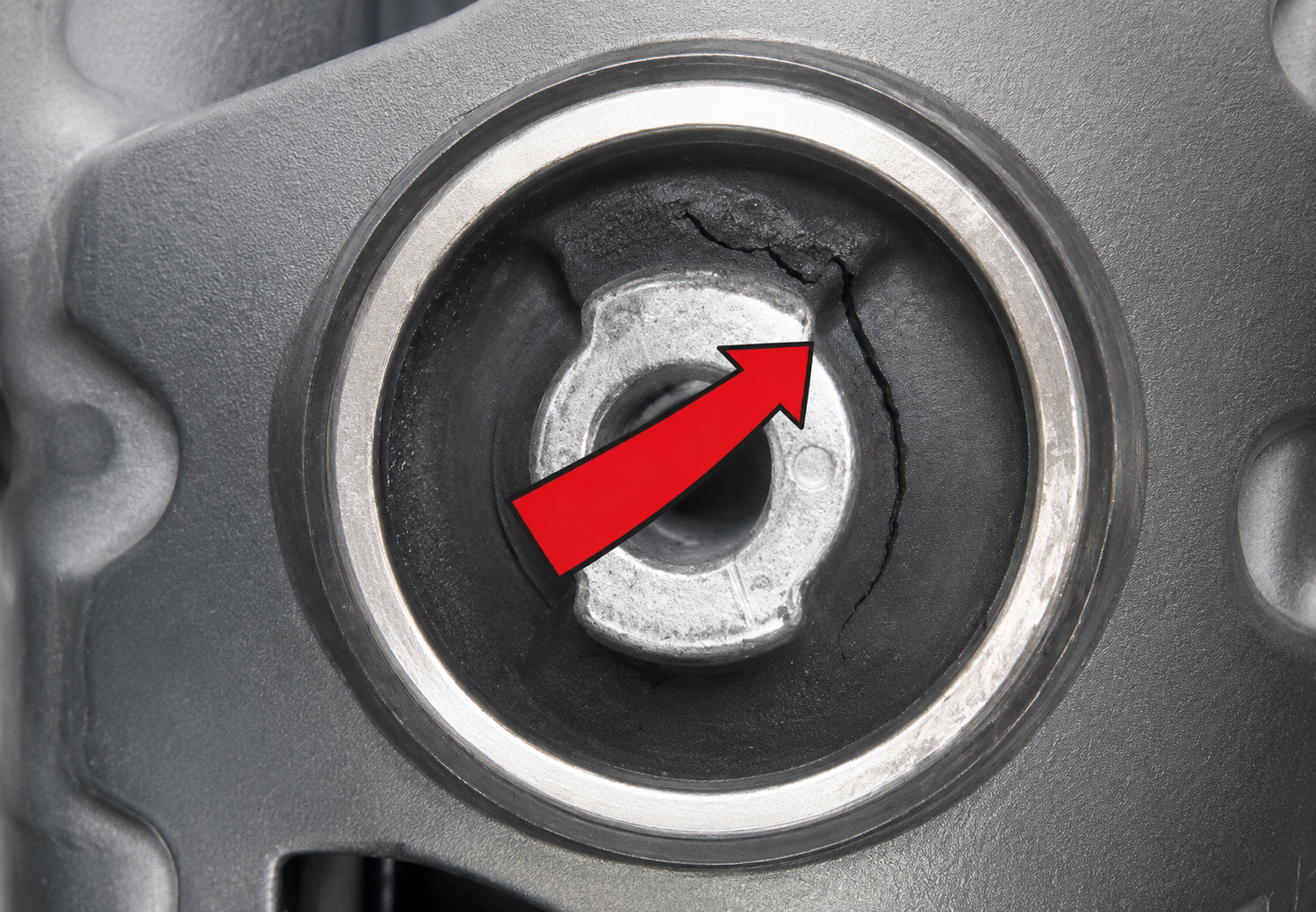
Rubber bushes allow movement.
As they age, they become softer and can crack, split, or deteriorate.
This can lead to:
- Excessive diff movement
- Clunking noises
- Wheel hop
- Poor traction
- Driveline shudder
In high-power vehicles, the amount of movement can become significant.
Solid Diff Bushes
Solid bushes are typically manufactured from aluminium, steel, or other rigid materials.
Unlike rubber bushes, they provide almost no compliance.
This means the differential is mounted far more rigidly to the chassis.
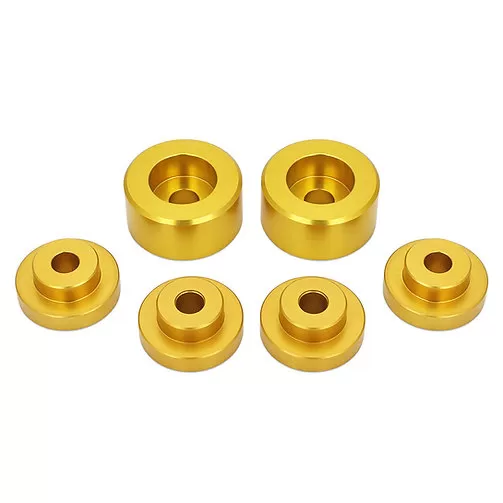
Nissan R200 Solid Aluminium Diff Bushes
Advantages of Solid Diff Bushes
- Minimal diff movement
- Improved driveline control
- Reduced wheel hop
- More consistent power delivery
- Improved traction in high-performance applications
Many race cars and dedicated motorsport vehicles use solid bushes because they provide maximum control of diff movement.
The Problem with Differential Movement
When the differential moves under load, some of the engine’s torque is used to twist the differential housing instead of driving the wheels.
This movement can contribute to:
- Wheel hop
- Delayed throttle response
- Axle tramp
- Increased bush wear
By reducing differential movement, solid bushes allow more consistent transfer of power to the tyres.
Disadvantages of Solid Bushes
The main drawback of solid bushes is increased noise, vibration and overall harshness.
Because there is very little isolation between the differential and chassis, more vibration and gear noise can be transmitted into the vehicle.
Common side effects include:
- Increased diff whine
- Increased vibration
- Harsher driveline feel
- More cabin noise
This is often acceptable in a race car but can become tiring in a daily-driven vehicle. A diff that is perfectly quiet in a vehicle with factory rubber bushes, has every chance of being noisy after changing to solid diff bushes.
Solid Bushes for Performance Cars
Solid bushes are popular in:
- Drift cars
- Circuit cars
- Drag cars
- Time attack cars
- High-horsepower street cars
These vehicles prioritise performance over comfort.
Reducing differential movement can improve consistency and traction, particularly under hard acceleration.
Rubber Bushes for Street Cars
For most daily-driven vehicles, rubber bushes remain the preferred option.
Modern rubber bushes provide excellent comfort while still controlling differential movement effectively.
Unless the vehicle suffers from excessive wheel hop or is used in motorsport, rubber bushes are often the best compromise.
Which Diff Bushes Are Best?
There is no universal answer.
The right choice depends on how the vehicle is used.
For comfort and daily driving, rubber bushes are usually the better option.
For motorsport and high-performance applications, solid bushes provide superior differential control and reduced movement.
The best solution is the one that matches the vehicle’s intended use.
Final Thoughts
Solid and rubber diff bushes each have advantages and disadvantages.
Rubber bushes provide comfort, isolation, and refinement.
Solid bushes provide maximum differential control, improved traction, and reduced driveline movement.
At Gearhead Diffs, we regularly replace worn differential bushes and can advise whether a rubber or solid bush setup is best suited to your vehicle and application.