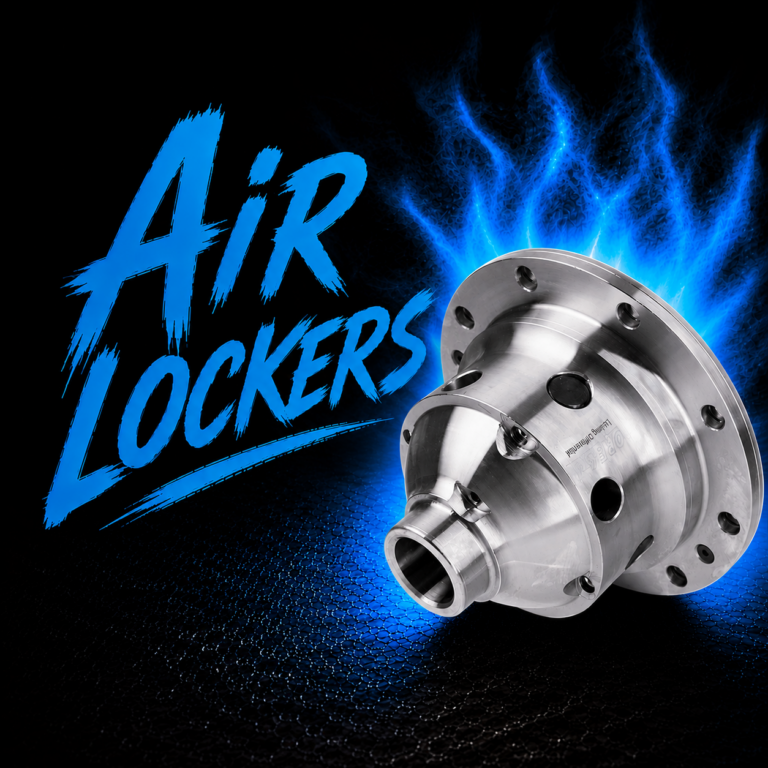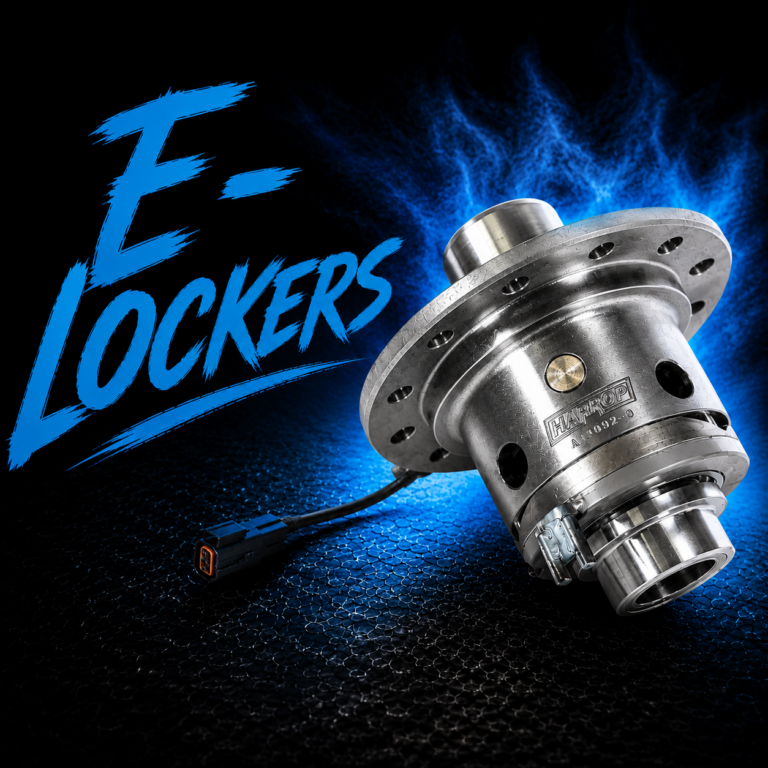
If you’re building a 4WD for serious off-road use, one of the biggest decisions you’ll make is whether to run an air locker (e.g. ARB Air Locker) or an electronic locker / E-Locker (e.g. Harrop E-Locker or Eaton E-Locker).
Both are selectable lockers, meaning they can be turned on only when needed. This is a major advantage over automatic mechanical lockers for vehicles that spend time on the road.
But they achieve this locking action in different ways, and each system has strengths depending on how the vehicle is used.
This guide breaks down how each system works, where each one excels, potential failure points, and how to choose the right option for your vehicle.
What a Selectable Locker Does
When a locker is engaged it mechanically locks both axle shafts together so both wheels rotate at the same speed.
This provides maximum traction when:
- One wheel lifts off the ground
- One wheel is on a slippery surface such as mud, sand or loose gravel
- Slow controlled crawling is required without wheel spin
When disengaged the differential behaves normally, allowing the vehicle to turn without driveline binding.
How an Air Locker Works
An air locker uses compressed air to move an internal actuator piston which slides a locking collar into place.
When engaged, the collar locks the differential gears together so both axle shafts rotate at the same speed.
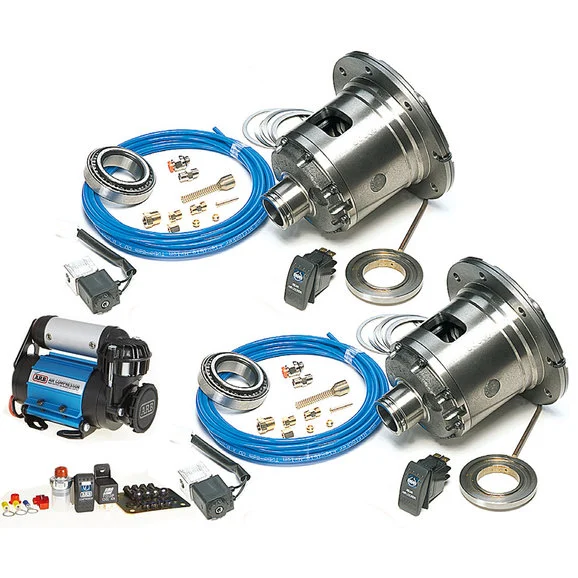
Typical components in an air locker system include:
- The locking differential centre
- Air seal housing in the differential
- Air line running to the differential
- Solenoids
- Compressor and wiring
- Dashboard switches
Because the system uses compressed air, proper installation and routing of airlines is important for reliability.
How an E-Locker Works
An electronic locker uses an electromagnetic actuator inside the differential to move the locking mechanism.
When the driver activates the locker switch, electrical current energises an magnet which engages the locking collar inside the differential.
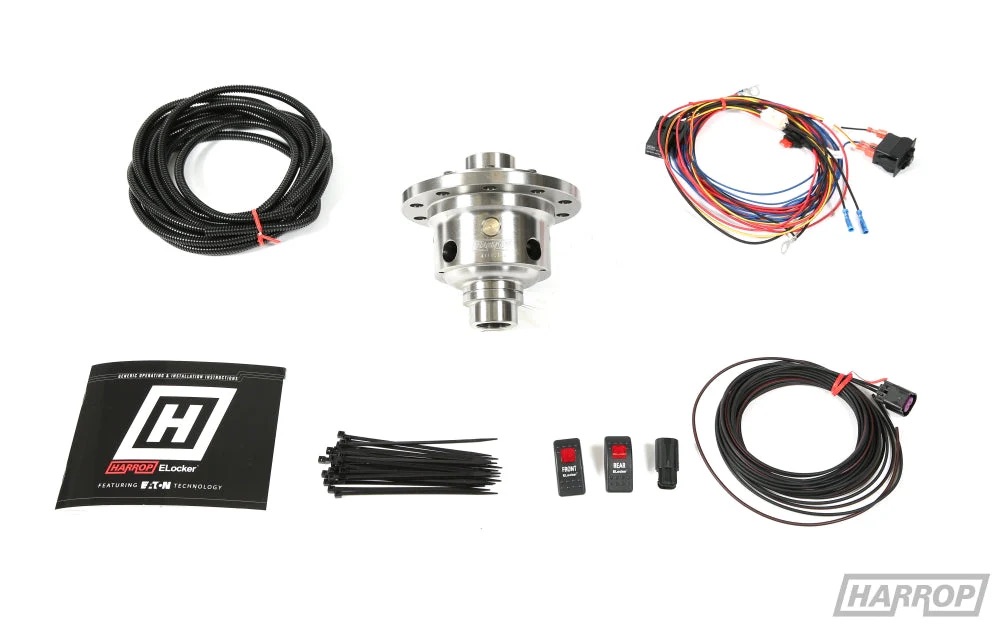
Typical components include:
- The electronic locker differential centre
- Wiring harness
- Electrical connectors
- Switch and relay system
Because no compressor or air system is required, installation is generally simpler than an air locker system.
Engagement Behaviour
Air lockers typically provide a very positive mechanical engagement when the locking collar moves into place.
E-lockers generally engage smoothly as the electromagnetic actuator activates the locking mechanism.
Some lockers in both variations can require a slight back and forward movement to engage fully.
Both systems provide full locking when engaged and behave like an open differential when disengaged.
Strength and Suitability
Both air lockers and E-lockers are extremely strong when installed correctly.
In most real-world situations the strength of the axle, CV joints, and drivetrain components will determine overall durability rather than the locking system itself.
Driver behaviour also plays a major role in the longevity of a locker. Incorrect use can place excessive stress on the locking components. For example, attempting to engage the locker while heavily accelerating can increase the risk of damage to the internal mechanism.
Correct differential setup and driving style play a major role in long term reliability.
Reliability and Common Issues
Air Locker Common Issues:
- Air leaks in fittings or airlines
- Airline damage from heat or abrasion
- Compressor or solenoid issues
- Incorrect installation of seal housing components
- Worn seal surfaces on the locking carrier itself
E-Locker Common Issues:
- Wiring damage
- Connector corrosion
- Poor earth connection
- Voltage drop from inadequate wiring
- Switch or relay failure
Water Crossings and Mud
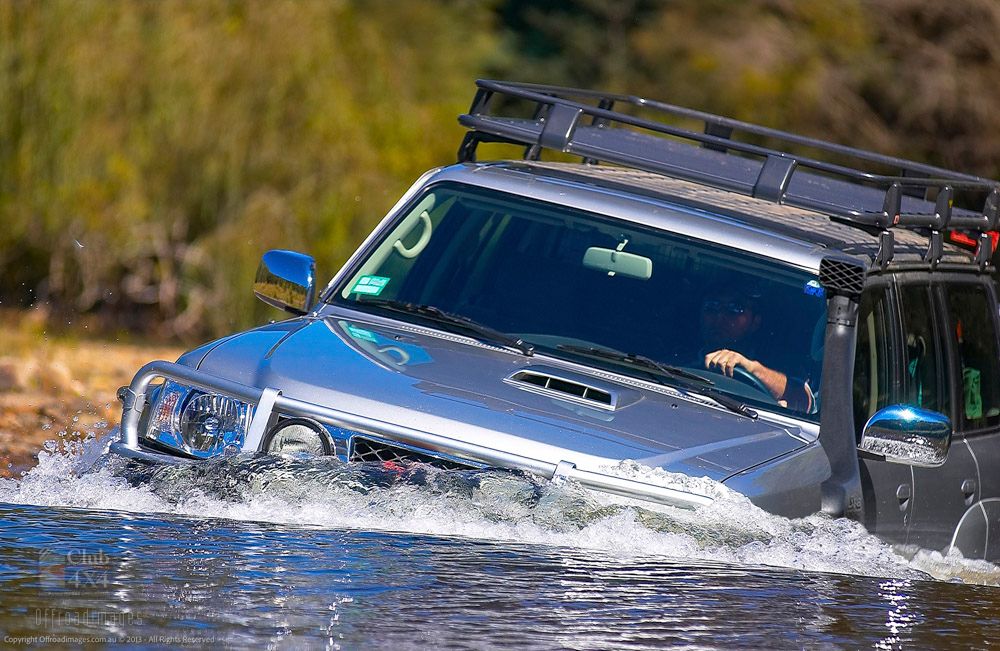
Both locker types can perform well in harsh off-road environments when installed properly.
Air locker systems require protection of airlines and compressors from water ingress.
Electronic lockers require sealed connectors and well protected wiring harnesses.
In both cases careful installation is the key factor in long term reliability.
Installation Complexity
Air lockers require installation of compressors, airlines, solenoids and electrical controls.
E-lockers require only electrical wiring and switch systems.
For some vehicle builds, the simpler installation of an E-locker can be a major advantage.
Cost Considerations
Air locker installations may include additional cost for compressors and air system components.
However many off-road vehicles benefit from having an onboard compressor for tyre inflation, which can make the air locker system more attractive.
E-lockers typically involve fewer supporting components but still require correct wiring and installation.
Front vs Rear Locker Choice
Most vehicles benefit most from installing a rear locker first.
Rear lockers provide the biggest traction improvement during climbing and acceleration.
Front lockers can provide additional capability in extreme terrain but also increase stress on CV joints and may affect steering feel when engaged.
Our Practical Preference
For vehicles that spend significant time on the road, our preference is electronic lockers.
Although both air lockers and E-lockers are able to alternate between being fully locked and operating as an open differential very effectively, E-lockers do not rely on internal air seals that run on internal sealing surfaces and can wear over time, even when the locker is not actively engaged.
FAQs:
Can I Run a Locker With Traction Control
Most modern vehicles can run lockers alongside factory traction control systems.
Traction control works by braking a spinning wheel, whereas lockers mechanically link both wheels together.
When a locker is engaged the traction control system often has less work to do and may reduce intervention on that axle.
Should I Lock the Front or Rear Diff First
For most vehicles the rear locker is installed first as it provides the most noticeable improvement in traction.
Front lockers are usually added later for more extreme off-road driving where additional traction is required.
Do Lockers Cause Driveline Breakages
Lockers themselves do not cause failures, but they increase traction which can place greater load on axles, CV joints and drivetrain components.
Driving style and overall drivetrain strength are major factors in reliability.
Air Locker Not Engaging, Common Causes
- Air leaks
- Damaged airline
- Faulty solenoid
- Compressor failure
- Low air pressure
- Internal seal surfaces being worn
E-Locker Not Engaging, Common Causes
- Damaged wiring
- Corroded connectors
- Poor earth connection
- Voltage drop
- Faulty switch or relay