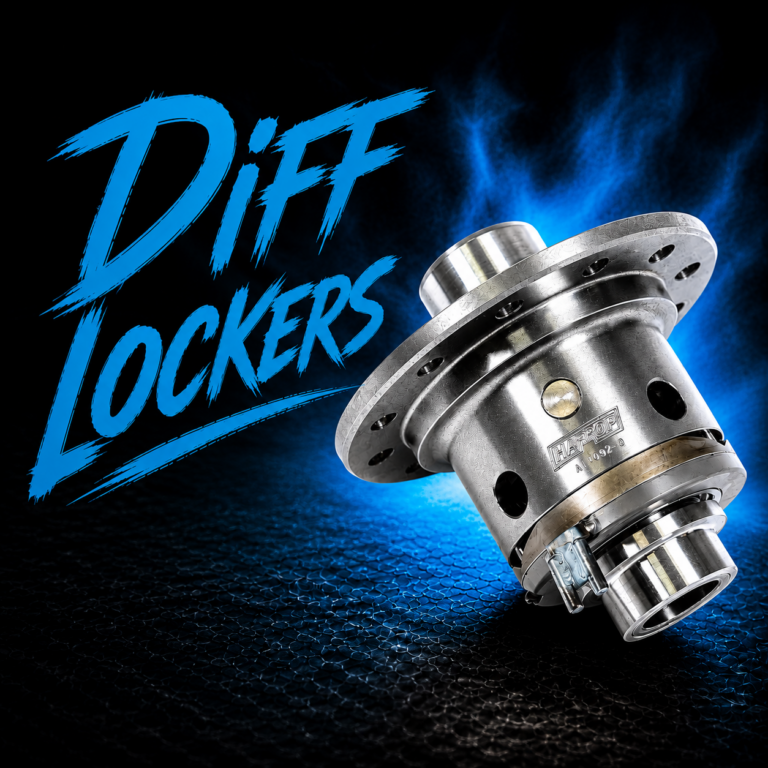
Electronic diff lockers, commonly referred to as E-Lockers, are a type of selectable locking differential that use an electrical actuator to lock the differential when required.
Like air lockers, E-Lockers allow the driver to engage or disengage the differential lock on demand, usually through a switch inside the vehicle.
When the locker is disengaged, the diff operates normally, allowing the wheels to rotate at different speeds when turning.
When the locker is activated, the differential is mechanically locked so that both wheels rotate at the same speed, providing maximum traction.
How an Electronic Locker Works
An electronic locker uses an electrically controlled actuator to engage a locking mechanism inside the differential.
When the locker is activated using a dashboard switch, electrical current is sent to the actuator inside the differential housing.
This actuator moves a locking collar or locking mechanism that connects the differential components together.
Once engaged, the differential gears can no longer allow the wheels to rotate at different speeds.
This forces both axle shafts to rotate together, ensuring torque is delivered to both wheels regardless of traction.
When the locker is switched off, the actuator releases the locking mechanism and the differential returns to normal operation.
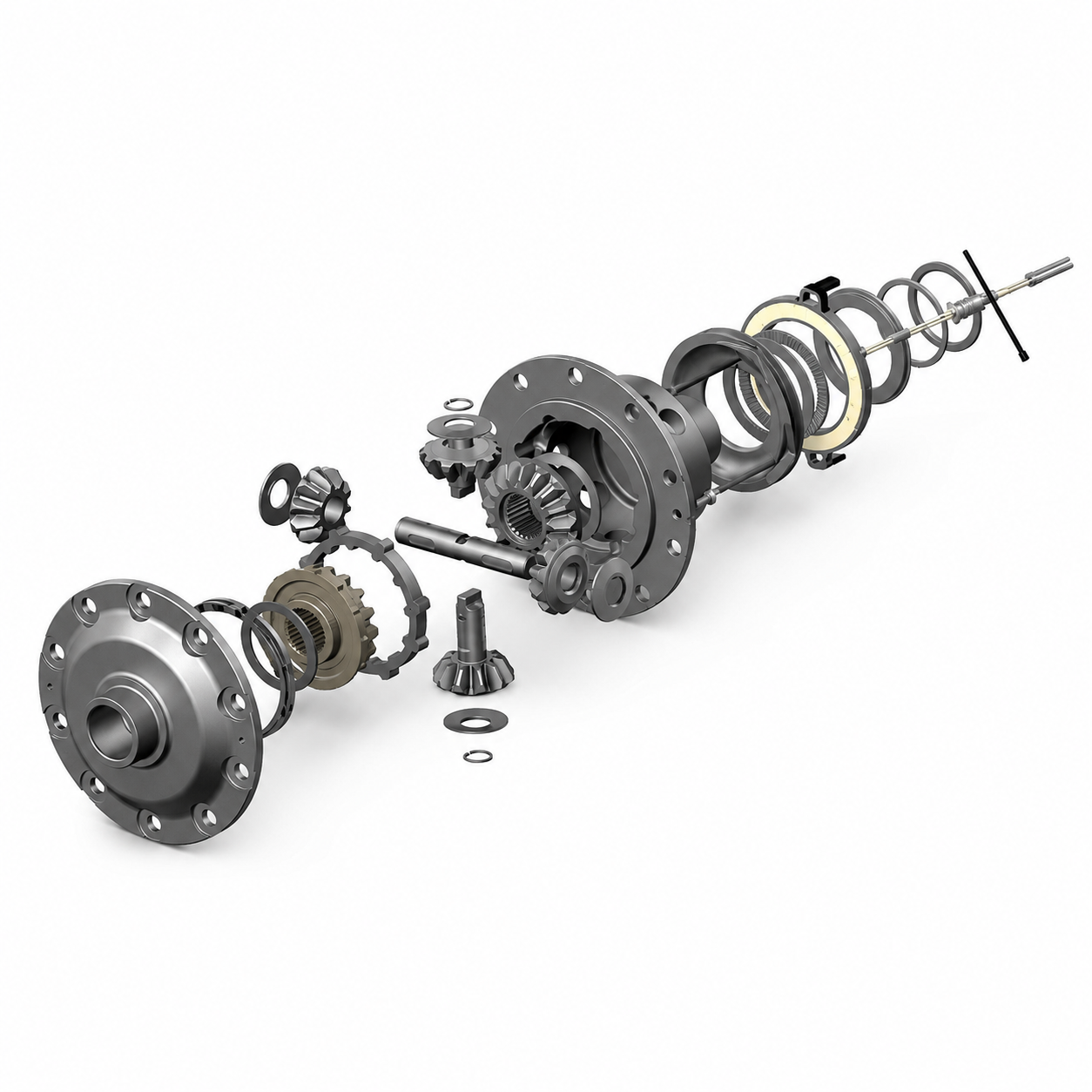
Harrop E-Locker / Eaton E-Locker
Two of the most well-known electronic locker systems are the Harrop E-Locker and the Eaton E-Locker.
Both systems operate using an electromagnetic actuator inside the differential.
When the locker is activated, electrical current energises an electromagnetic coil within the differential centre. This magnetic force moves an internal locking mechanism that engages a locking collar, locking the differential.
Once engaged, the differential gears can no longer allow the wheels to rotate at different speeds, forcing both axle shafts to turn together.
When electrical power is removed, the locking mechanism disengages and the differential returns to normal operation.
Advantages of Electronic Lockers
Selectable Operation:
The driver can engage the locker only when needed, allowing normal differential operation during everyday driving.
Simpler System Compared With Air Lockers:
Electronic lockers do not require compressors or air lines.
Strong Traction:
When engaged, electronic lockers provide full locking between both axle shafts.
Potential Limitations
Electronic lockers rely on electrical wiring and switches to operate.
If electrical components fail or wiring becomes damaged, the locker may not engage properly.
Proper installation and protection of wiring is important for long-term reliability.
Common Applications
Electronic lockers are commonly used in a wide range of four-wheel-drive vehicles including:
- Toyota Hilux
- Toyota Land Cruiser
- Ford Ranger
- Jeep Wrangler
They are popular in vehicles used for touring and off-road driving where additional traction is required while maintaining good road manners.
Installation
Installing an electronic locker involves replacing the differential centre with the locker assembly and connecting the required electrical components.
Correct differential setup is essential to ensure proper gear mesh, bearing preload, and reliable operation.
At Gearhead Diffs we supply and install a wide range of differential lockers and traction upgrades for many vehicles.