Isuzu D-Max Diff Failure: Why the Open Carrier Gears Give Out
Has your D-Max developed a clunk or grind from the rear end? This is often the first sign of Isuzu D-Max diff failure. It’s one of the most common drivetrain failures we see on this platform. The cause almost always comes down to the same part: the open carrier (spider) gears inside the rear diff.
What Causes Isuzu D-Max Diff Failure
The D-Max runs an open differential as standard, with no factory limited-slip unit. Inside the diff carrier sit two small spider gears and two side gears. These mesh together to let the rear wheels spin at different speeds through a corner.
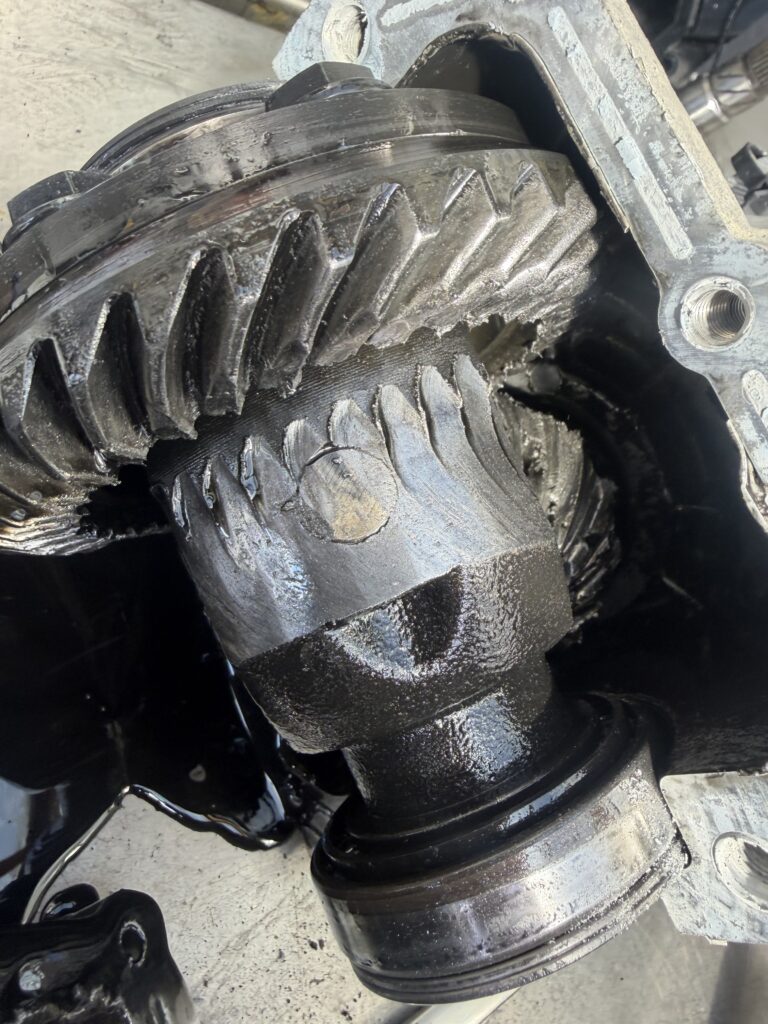
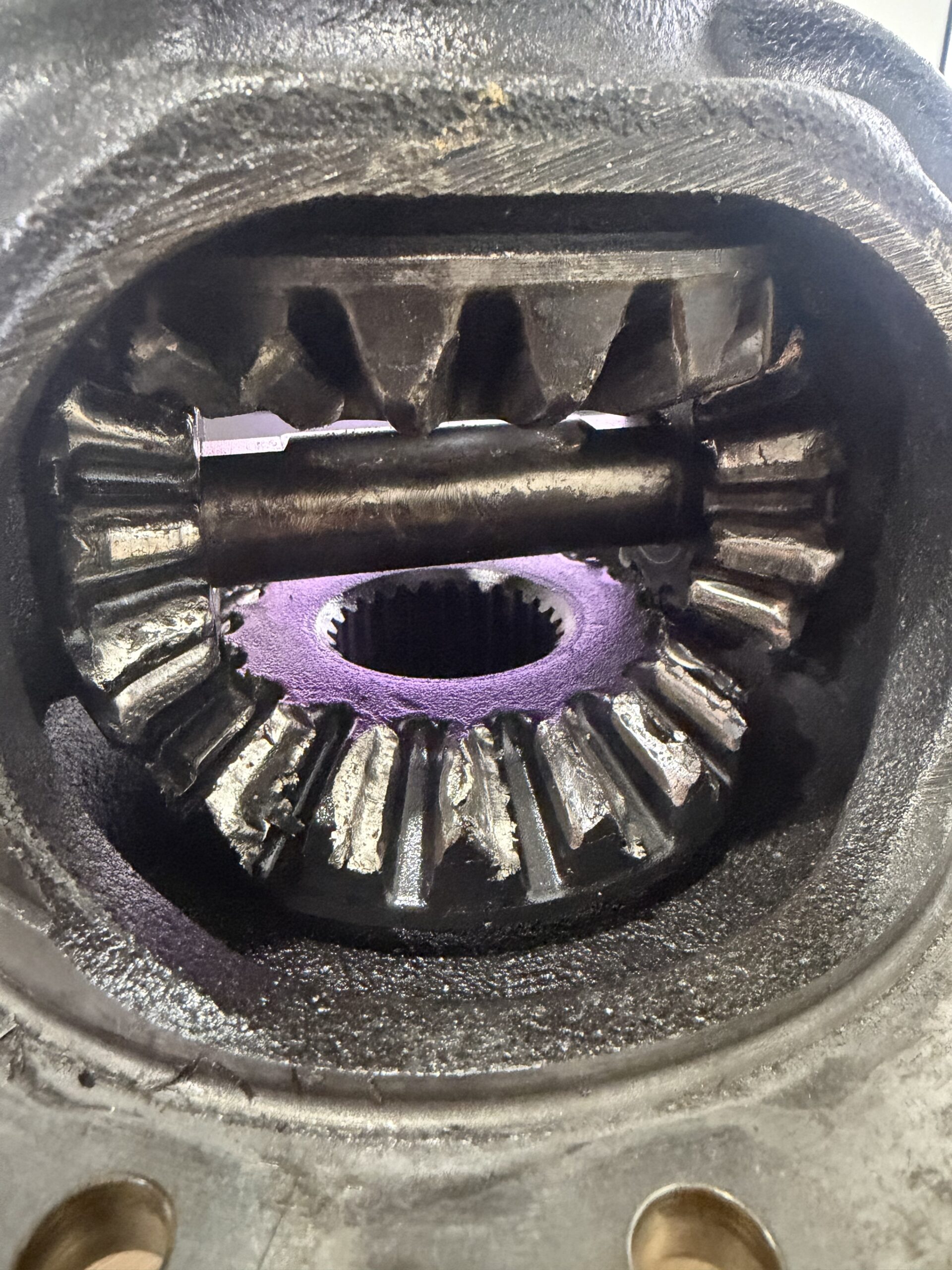
On a number of D-Max production runs, the factory poorly case-hardened these spider gears. The gear teeth fatigue and chip under normal load, then chew each other apart. The result is a diff housing full of metal shavings and gears with no tooth profile left to transmit drive.
The factory also often shims these gears incorrectly. This leaves them meshing right at the edge of the tooth — the weakest point of contact — which speeds up the failure.
Because the gears consume themselves from the inside, this isn’t a “keep an eye on it” problem. Once the teeth are gone, drive is gone too. Often there’s little warning beyond a bad noise for a few hundred kilometres beforehand.
Signs of Isuzu D-Max Diff Failure
Early signs include a grinding or clunking noise from the rear axle, often most noticeable when turning. As the failure progresses, you’ll hear it on acceleration from a stop, under load, and eventually in a straight line too. Some owners report this happening well under 80,000 km. That’s often before the vehicle is out of its early service life — sometimes right as warranty cover runs out.
Low or contaminated diff oil speeds up the process, so check fluid condition at the first sign of noise. Even a diff with perfect oil can fail if it’s from an affected batch of gears.
What Happens If You Ignore It
Total loss of drive. Once the spider gears shear enough material, nothing is left to carry torque to the wheels. The vehicle simply stops moving under power — sometimes at the worst possible time, like merging or towing. By the time you remove the diff cover, you’ll often find metal debris covering the housing floor. Left long enough, this damages the ring and pinion too.
Fixing Isuzu D-Max Diff Failure
If you’ve got a grind or clunk from the rear of your D-Max, don’t wait for it to get worse. Drain and inspect the diff oil for metal contamination. Check the carrier for play or noise before it fails completely. Catching it early is the difference between a gear and bearing kit and a full diff rebuild — or a tow truck.
At Gearhead Diffs, we see this exact failure regularly. We know what to look for, what to replace, and how to set the diff up properly so it doesn’t come straight back. If your D-Max is making noise out back, get in touch. We’ll sort it before it costs you a lot more than a diff rebuild.
To keep you moving, we offer these diffs on exchange. Choose a factory open replacement, built with a brand new open carrier nest kit. Or step up to an LSD upgrade to fix the fault and improve traction at the same time.
We also offer the new nest kits alone and also a new nest kit with a full bearing kit!