Toyota Hilux diffs are renowned for their reliability and durability, making them one of the toughest drivetrains on the market. However, like any mechanical component, they can still develop problems over time.
Whether your Hilux is used for daily driving, towing, off-road adventures, or carrying heavy loads, understanding the most common Toyota Hilux differential problems can help you identify issues early and avoid more expensive repairs.
In this guide, we’ll cover the most common differential failures we see on Toyota Hilux models, their symptoms, and what can be done to repair them.
Differential Whine
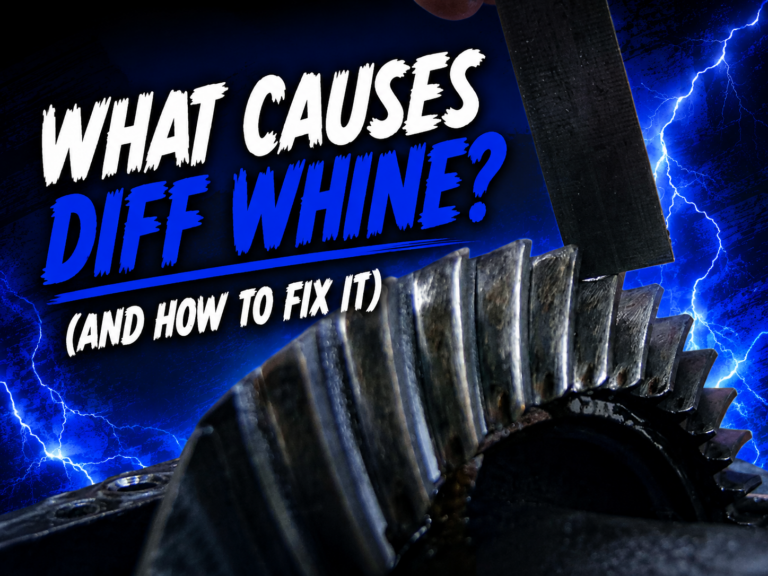
One of the most common Toyota Hilux differential problems is differential whine.
A whining noise can develop gradually or appear suddenly after significant wear or damage.
Depending on when the noise occurs, it may indicate:
- Worn pinion bearings
- Worn carrier bearings
- Incorrect gear setup
- Worn crownwheel and pinion gears
A whine that only occurs under acceleration or deceleration often points towards crownwheel and pinion wear or an incorrect gear contact pattern, while a constant noise that increases with vehicle speed is more commonly associated with bearing wear.
Ignoring differential whine can eventually lead to complete crownwheel and pinion failure.
For further information, read our blog What Causes Differential Whine?
Pinion Bearing Failure
The most common failure we see in Toyota Hilux diffs is a failing front pinion bearing.
Pinion bearings are subjected to enormous loads every time the vehicle accelerates, decelerates, or tows.
Over time they can wear due to:
- High kilometres
- Contaminated oil
- Low oil level
- Heavy towing
- Larger aftermarket tyres
Common symptoms include:
- Whining
- Rumbling
- In extreme cases, vibration
- Oil leaking from the pinion seal
If worn bearings are replaced early enough, it is very common for no further damage to have occurred to the differential. This can often save the original crownwheel and pinion, significantly reducing the overall repair cost.
Crownwheel and Pinion Wear
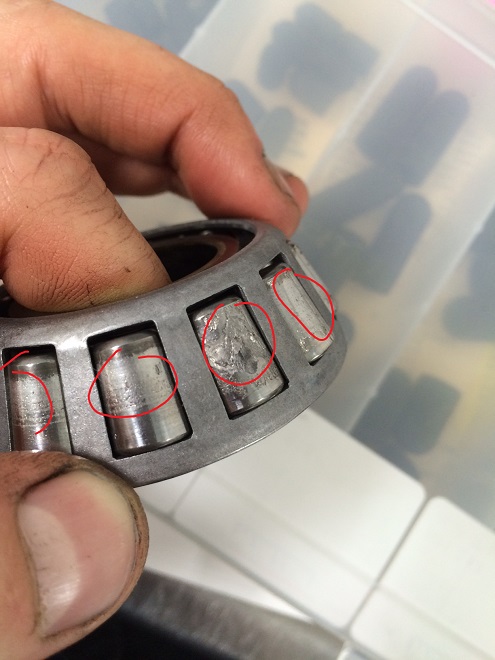
Once bearing wear develops, the crownwheel and pinion can begin to run out of alignment. This changes the gear contact pattern, causing the gears to mesh in the wrong position. If left unrepaired, the gears can wear into this incorrect pattern, often creating a differential whine that cannot be eliminated without replacing the crownwheel and pinion.
This can also lead to:
- Chipped teeth
- Abnormal wear patterns
- Excessive backlash
- Gear noise
Once a crownwheel and pinion become damaged, replacing bearings alone will generally not solve the problem.
Carrier Bearing Wear
Carrier bearings support the differential centre and maintain the correct gear mesh.
Another common issue we see on Toyota Hilux and Hiace differentials is the carrier bearing inner race spinning on the differential carrier itself. As the inner race spins, it gradually wears away material from the carrier, reducing the preload on the carrier bearings. This allows the differential centre to move excessively, affecting gear alignment and the gear contact pattern. It also generates metal particles that are circulated throughout the differential, accelerating wear of the bearings and gears.
If caught early, this issue can often be repaired and future-proofed using a permanent repair. However, if left too long, the carrier can become so badly worn that it may crack or fail completely, requiring replacement of the entire differential centre.
As the bearings wear, backlash increases and the gear contact pattern changes.
Symptoms often include:
- Rumbling noises
- Gear whine
- Vibration in some extreme cases
- Metallic particles in the oil
If caught early, replacing the bearings may prevent further damage to the gears.
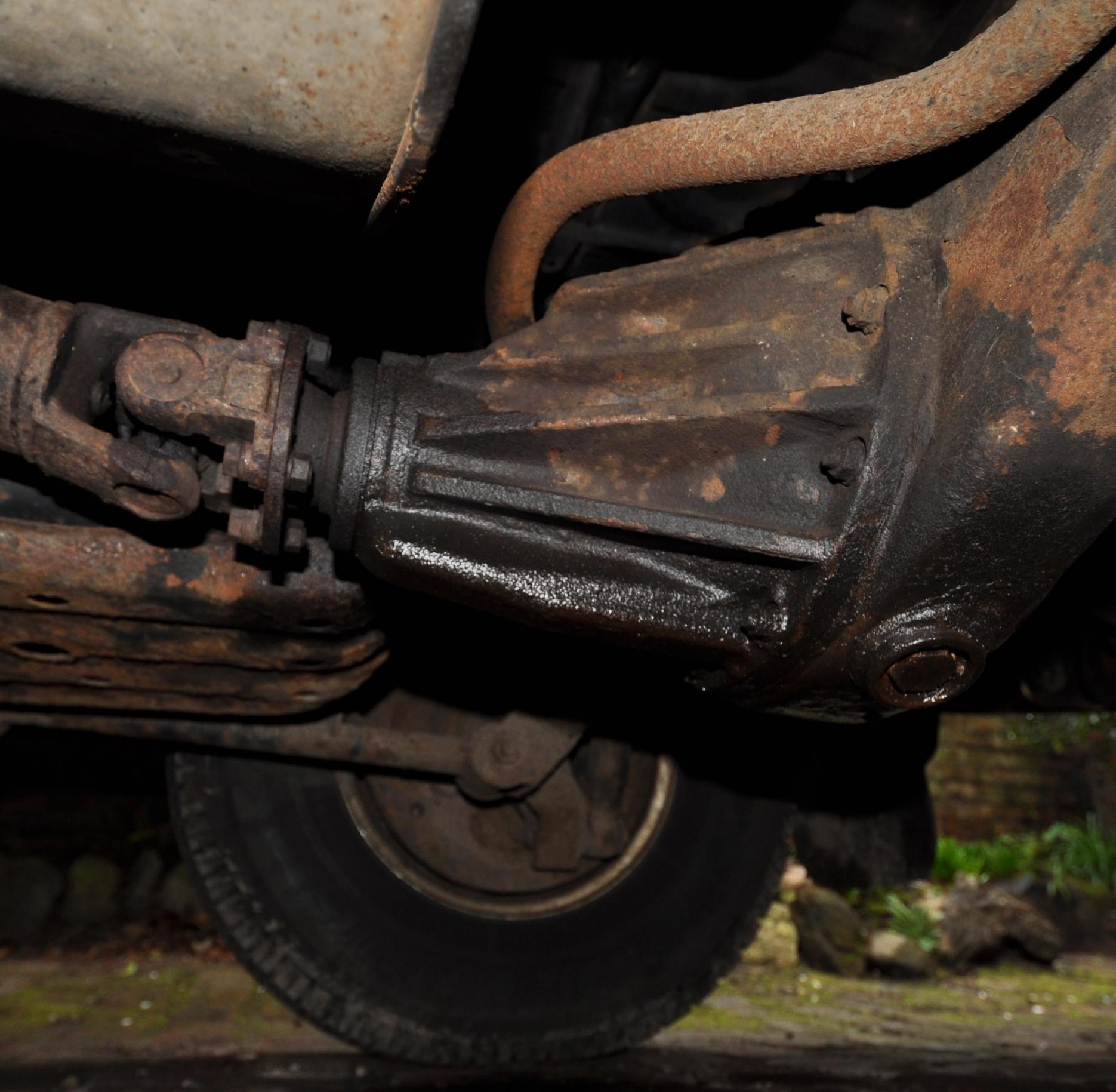
Oil Leaks
Oil leaks are often ignored until serious damage has already occurred.
Common leak points include:
- Pinion seal
- Axle seals
- Differential housing gasket
- Breather system
Running a differential with low oil can quickly destroy bearings and gears.
If an axle seal begins to leak, differential oil can contaminate the brake shoes or brake pads, significantly reducing braking performance and creating a serious safety risk.
Checking for leaks during routine servicing is one of the easiest ways to extend differential life.
Front Differential Problems
Although the front differential only operates in four-wheel drive, failures still occur.
We commonly see problems caused by:
- Aggressive off-road driving
- Oversized tyres
- Shock loading
- Low oil level
One of the most common failures we see on Toyota Hilux independent front suspension (IFS) differentials is wear of the internal CV support bearings. As these bearings wear, they allow the CV shaft to move excessively, causing it to “flop around” inside the differential. This movement commonly leads to premature axle seal failure and differential oil leaks.
Earlier Hilux models were not fitted with these support bearings from the factory. As part of our repair process, we can retrofit support bearings to these earlier differentials, providing a permanent solution to a well-known weak point.
This issue is often made worse on lifted Hilux’s that have not been fitted with a differential drop kit. Raising the suspension increases the operating angle of the CV shafts, placing additional load on the support bearings and axle seals, which can significantly accelerate wear.
If left un-repaired and the differential loses a substantial amount of oil, severe internal damage can occur. In many cases, this results in failure of the bearings, crownwheel and pinion, and differential centre, requiring a complete rebuild or replacement of the internal components.
It’s also worth remembering that worn CV joints and wheel bearings can sometimes be mistaken for front differential failures.
Correct diagnosis is essential before replacing components.
Factory LSD Wear
Many Toyota Hilux models were fitted with a factory clutch-type limited slip differential.
Over time, the clutch plates wear, reducing the amount of locking action available.
Common symptoms include:
- One-wheel spin
- Reduced off-road traction
- Poor performance on loose surfaces
Depending on the condition, the factory LSD can often be rebuilt or upgraded.
Larger Tyres and Differential Problems
One of the biggest contributors to Toyota Hilux differential problems is fitting oversized tyres without changing the differential ratio.
Larger tyres place additional load on:
- Bearings and the factory crush tube
- Crownwheel and pinion gears
- Axles
- CV joints
- Clutch
They also reduce torque at the wheels and increase the stress placed on the entire drivetrain.
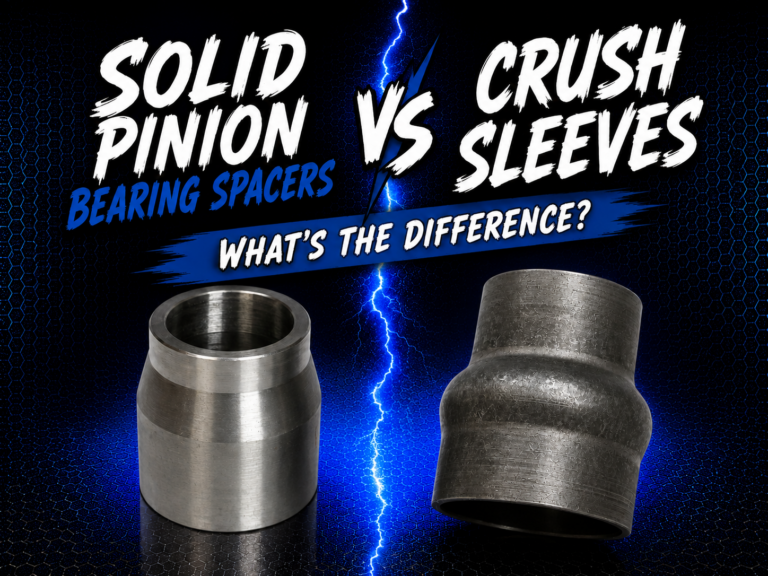
One of the best upgrades for reducing the additional strain placed on a Hilux differential is a solid pinion spacer upgrade. By replacing the factory crush sleeve with a solid spacer, the pinion bearings are held under a much more rigid and consistent preload. This significantly reduces pinion movement and flex under heavy loads, helping to maintain the correct gear contact pattern.
A solid pinion spacer is particularly beneficial on vehicles fitted with larger tyres, used for towing, driven off-road, or producing increased power, where the factory crush sleeve is subjected to much higher loads than originally intended. Read more on Solid spacer upgrades here.
Re-gearing the differential to suit larger tyres can restore factory drivability while reducing unnecessary strain on differential components.
For help choosing the correct diff ratios for larger tyres, read our blog on Choosing the Right Diff Ratio
How to Prevent Toyota Hilux Differential Problems
Regular maintenance is the best way to maximise differential life.
We recommend:
- Changing differential oil at appropriate intervals
- Checking for oil leaks
- Repairing bearing noise early
- Avoiding excessive shock loading
- Re-gearing after fitting significantly larger tyres
- Using quality gear oil
Early diagnosis is almost always less expensive than replacing a damaged crownwheel and pinion. Regular differential oil changes allow the condition of the oil to be inspected for early signs of wear. Identifying metal particles or other contamination before major damage occurs can often save a considerable amount of money by catching problems early.
Final Thoughts
Toyota Hilux differentials are among the most reliable available, but even the strongest drivetrains require maintenance.
Recognising the early signs of Toyota Hilux differential problems can help prevent expensive repairs and keep your Hilux performing reliably on and off the road.
If your Hilux has developed a whining differential, oil leak, bearing noise, or reduced LSD performance, the team at Gearhead Diffs can accurately diagnose the problem and recommend the most appropriate repair.