Differential Repair Christchurch: Signs You Need One & Who to Call
Not every differential problem means a full rebuild. If you’re searching for a differential repair Christchurch locals actually trust, chances are your diff is already making noise or leaking oil. Plenty of those symptoms turn out to be a single worn part — a seal, a bearing, a yoke. Not a complete internal failure.
The trick is telling the two apart before you spend money. This guide covers the most common differential faults we see and what usually causes them. It’ll also help you work out whether you’re looking at a straightforward repair or something bigger.
Common Signs Your Differential Needs Repair
Whining or humming that changes with speed Usually means worn gears, an incorrect gear setup, or worn bearings. Catch it early and you can often avoid a full gear failure.
Clunking on acceleration or gear changes Commonly a worn tailshaft universal joint, worn diff mounts, or excessive backlash inside the differential itself.
Oil leaking from the diff housing, pinion seal, or axle seals One of the most common — and most fixable — differential faults. Ignore it, and low oil level accelerates wear on everything else inside.
Vibration through the floor or seat Can be a diff issue, but is just as often a tailshaft or CV problem. Worth a proper diagnosis rather than assuming.
A “clunk” when changing direction (reversing to forward, or vice versa) Classic sign of worn spider gears or excessive backlash. Common on differentials that have covered high kilometres or towed heavy loads.
What Causes Differential Problems in the First Place
- Age and kilometres. Bearings and seals wear over time; it’s normal maintenance eventually catching up.
- Low or degraded oil. Skipped services, or oil that’s broken down, accelerates wear on gears and bearings.
- Towing and load. Regularly towing near or above your vehicle’s rated towing capacity puts extra strain on gears and bearings.
- Off-road use. Water crossings, impacts, and sustained high loads are hard on seals and internal components. See our note on 4WD and off-road differential work if this sounds familiar.
- A previous poor repair or setup. Incorrect backlash or preload from an earlier job is a common reason a “repaired” diff comes back noisy.
Repair, Rebuild or Replacement — How to Tell Which You Need
Repair and rebuild are really the same category of work: both mean fixing the differential you already have. Replacement is the different path — swapping to a ready-built unit instead. As a rough guide:
- Repair or rebuild, fixing your existing diff: catch a single symptom early — one leaking seal, one noisy bearing — and it’s usually a repair. Multiple symptoms together, metal in the oil, or very high kilometres usually point to a full rebuild instead. Same for a fault you’ve been driving on for a while. Either way, you keep your original unit; we just work on it to the extent it needs.
- Likely a replacement: this applies once the diff housing itself has cracked or suffered serious damage. It also applies once the unit has run with severe internal failure for a long time. At that point, a rebuild no longer stacks up against fitting a ready-built exchange diff.
We’ve written a full breakdown of this decision in Diff Rebuild vs Exchange Diff in Christchurch, which is worth reading if you’re still deciding. The short version: a proper inspection is the only way to know for certain. And it’s a lot cheaper than guessing wrong.
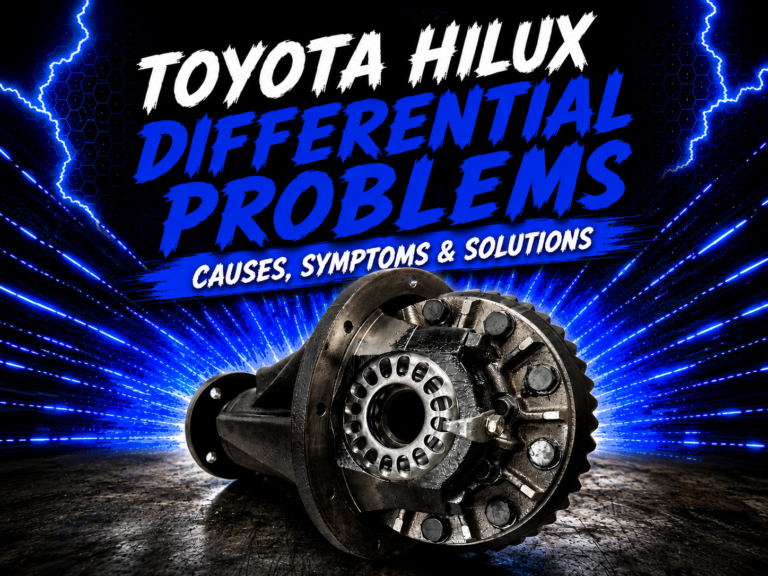
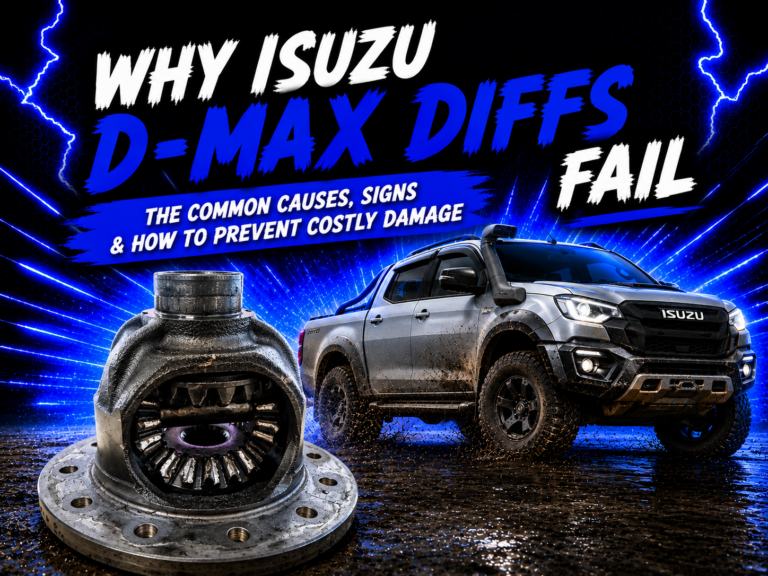
Driving a Hilux or D-Max? We’ve documented the specific failure points for those models in Common Toyota Hilux Differential Problems and Isuzu D-Max Diff Failure.
What a Differential Repair Christchurch Workshop Should Do
A typical repair follows a shorter version of the rebuild process:
- Diagnosis — we confirm exactly what’s worn or failed, not just treat the loudest symptom.
- Targeted strip down — we access the specific area that needs work, without unnecessarily disturbing a diff that’s already set up correctly.
- Replacement — we replace worn bearings, seals, yokes, or other components with correct parts.
- Reset and check — where a repair affects preload or backlash (such as a pinion seal replacement), we reset these properly, not just reassemble them.
- Testing — we confirm the fix before the vehicle leaves.
That last point in step 3/4 is where a lot of cheaper repairs go wrong. Replace a pinion seal without resetting pinion preload correctly and it’ll often leak again. Or introduce a new noise, within a few thousand kilometres.
Can You Repair a Differential Without Removing It From the Vehicle?
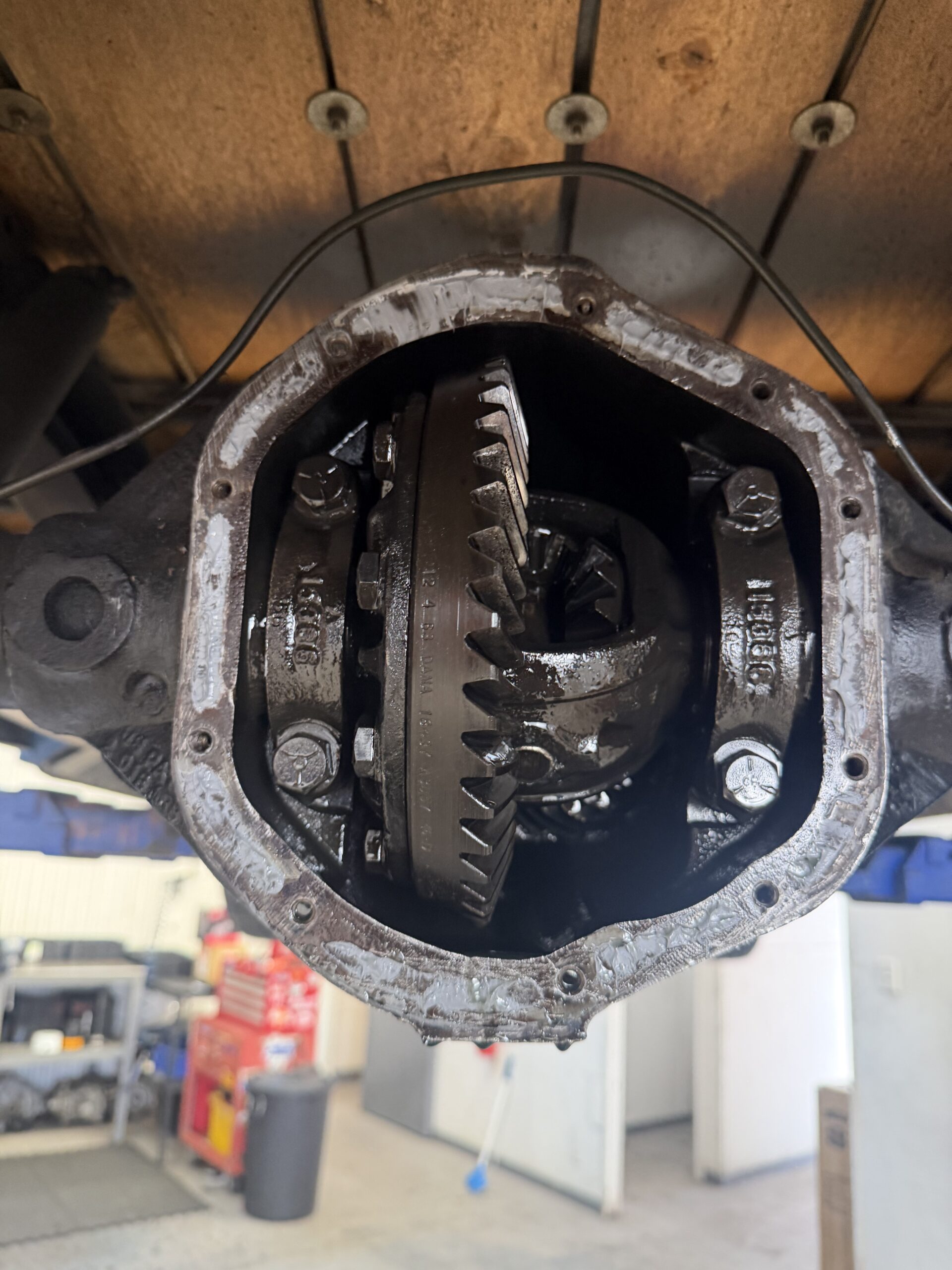
We can do some repairs in the vehicle. Pinion seal replacement, for example, often doesn’t require the diff to come out. Others, like bearing or gear replacement, sometimes requires us to pull the differential and strip it down on the bench. We’ll always tell you which applies to your job before starting.
Who to Call for a Differential Repair Christchurch Drivers Recommend
A general mechanic can often replace an obviously failed seal. The harder part is telling a simple seal fault apart from something bigger. Sometimes that seal is only failing because the bearing behind it has already worn out. That distinction determines whether the fix lasts.
You’ll find us at 104 Byron Street, Sydenham. A differential repair Christchurch drivers can rely on is the entire focus of our workshop — cars, utes, 4WDs, and performance vehicles, from Christchurch and wider Canterbury.
FAQs
Is a differential repair cheaper than a rebuild? Generally, yes — a targeted repair addressing one or two worn components costs less than a full rebuild. But if we don’t fully diagnose the underlying cause, a cheap repair now can mean a bigger bill later.
How urgent is a diff leak? More urgent than most people assume. Low oil level accelerates wear on the gears and bearings that are still fine. Ignore a small, cheap leak for months and it can turn into an expensive rebuild.
Can I drive with a whining differential? For a short distance at reduced speed, usually. But the whine won’t fix itself, and continuing to drive on it normally will accelerate the wear.
Final Thoughts
You can fix most differential noises and leaks without a full rebuild. Just catch them early, and get us to diagnose them properly. If something doesn’t sound or feel right, get in touch. We’ll tell you honestly whether you’re looking at a repair, a rebuild, or nothing to worry about yet.