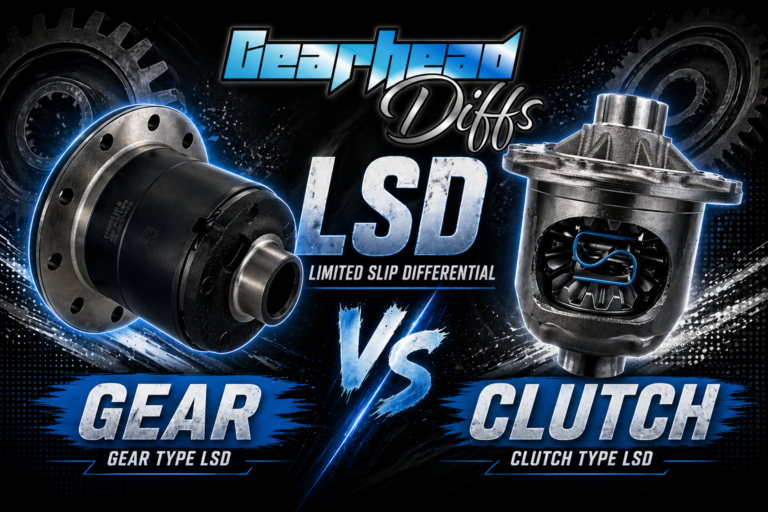
When building a race car, one of the most important decisions is choosing the right LSD or diff centre for your race application. The differential plays a major role in how a vehicle puts power to the ground, rotates through corners, and behaves under braking and acceleration.
Choosing the wrong diff centre can compromise handling and lap times, while the right setup can dramatically improve traction and consistency.
The ideal differential depends on the type of motorsport, vehicle setup, power level, and driving style.
Race LSD and Differential Centre Options
The most common differential centres used in motorsport include:
- Helical LSDs
- Clutch-Type LSDs
- Mechanical Lockers
- Spools
- Open Differentials (certain classes)
Each design behaves differently and suits different forms of racing.
Helical LSDs for Racing
Helical LSDs use a series of gears to transfer torque to the wheel with the most traction.
Popular examples include:
- DiscTrac
- Quaife
- Wavetrac
- Truetrac
Advantages
- Smooth operation
- Minimal maintenance
- No clutch plates to wear out
- Excellent corner exit traction
- Predictable handling
Best Suited To
- Circuit racing
- Time attack
- Hill climbs
- Street and track vehicles
Limitations
Helical LSDs require resistance at both wheels to generate locking force.
If one wheel becomes unloaded or completely airborne, locking performance can be reduced.
Clutch-Type LSDs for Racing
Clutch LSDs use friction plates and ramp angles to create locking action.
Popular examples include:
- OS Giken
- Cusco
- Kaaz
- Nismo
- Tomei
Advantages
- Adjustable lock characteristics
- Strong locking action
- Excellent traction under power
- Works even if one wheel becomes lightly unloaded
Best Suited To
- Circuit racing
- Drift cars
- Rally cars
- High-horsepower applications
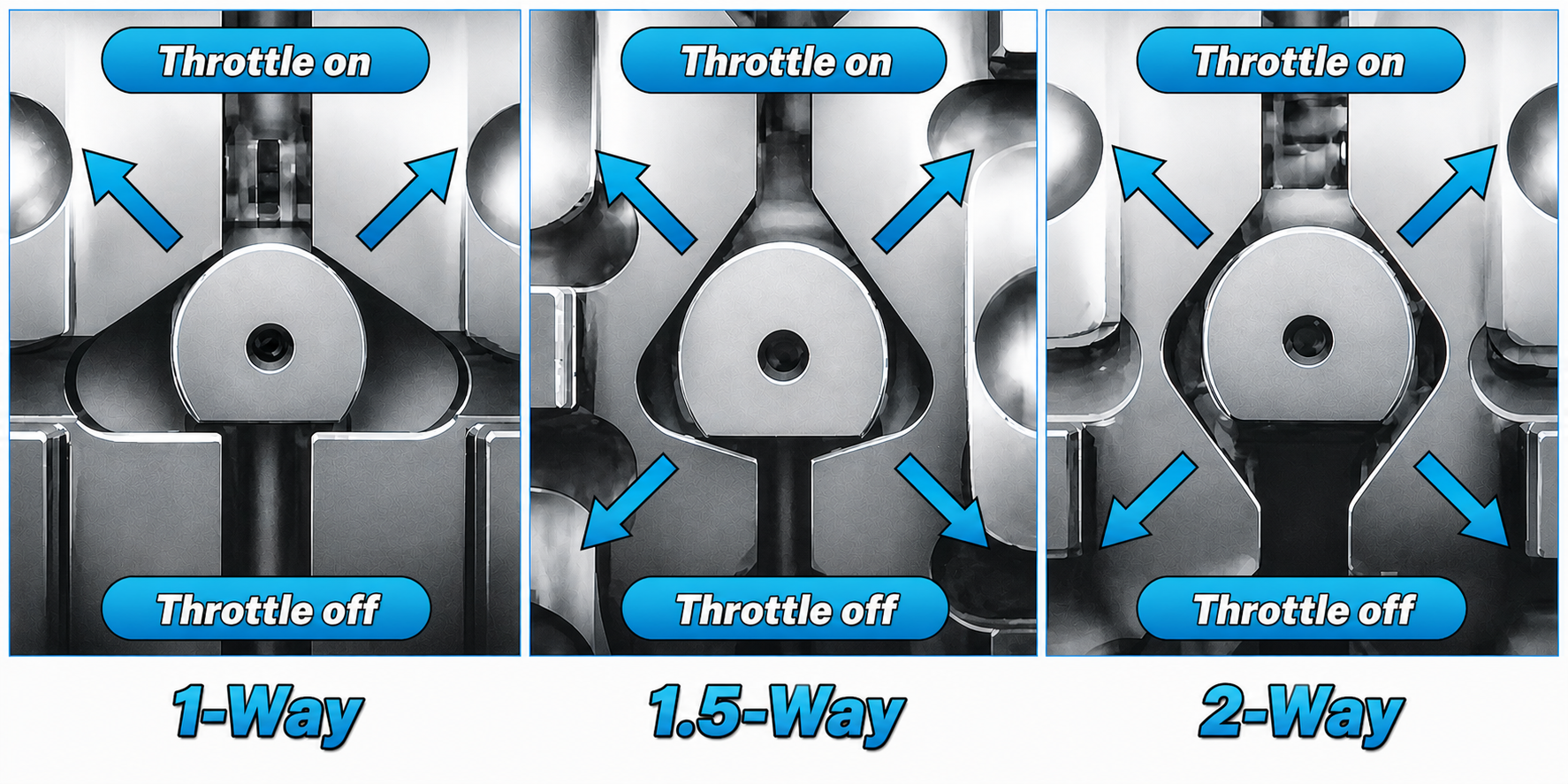
1-Way, 1.5-Way and 2-Way LSDs
1-Way
Provides lock-up under acceleration only.
Common in front-wheel-drive performance vehicles.
1.5-Way
Provides full lock under acceleration and partial lock under deceleration.
Often considered the best compromise for circuit racing.
2-Way
Provides similar locking characteristics under acceleration and deceleration.
Popular in drifting and rally applications.
Differential Choice for Circuit Racing
For most circuit racing applications, the choice usually comes down to:
- Helical LSD
- Clutch-Type LSD
A helical LSD generally offers smoother operation and lower maintenance.
A clutch LSD typically provides more aggressive locking characteristics and greater adjustability.
The ideal choice often depends on driver preference and vehicle setup.
Differential Choice for Drift Cars
Drift cars place unique demands on a differential.
Drivers typically want strong and predictable lock-up characteristics while maintaining wheel speed.
Popular choices include:
- Kaaz
- Cusco
- OS Giken Super Lock LSD
- Tomei 2-Way LSD
Some dedicated drift vehicles also run:
- Welded differentials (Cheaper option but is not as strong)
- Full spools
These provide maximum lock but are generally unsuitable for most road-driven vehicles.
Differential Choice for Rally Cars
Rally vehicles regularly encounter loose surfaces and changing grip conditions.
Clutch-type LSDs are commonly used because they continue to provide locking action even when wheels become lightly loaded.
Many rally teams utilise different ramp angles and preload settings to tailor the handling characteristics of the vehicle.
Differential Choice for Drag Racing
Drag racing prioritises maximum traction in a straight line.
Popular options include:
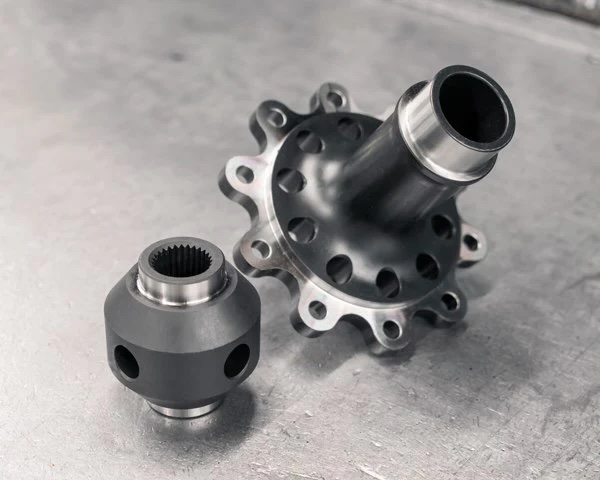
- Full Spools
- Mini Spools
- Clutch-Type LSDs
Many dedicated drag vehicles utilise a spool to ensure both wheels receive equal torque during launch.
Which Differential Is Fastest?
There is no universal answer.
The fastest differential depends on:
- Vehicle weight
- Suspension setup
- Power output
- Tyre selection
- Driving style
- Race discipline
A differential that works exceptionally well in a drift car may perform poorly in a time attack vehicle.
Likewise, a spool that dominates at the drag strip would be unsuitable for circuit racing.
Final Thoughts
Selecting the right LSD or differential centre can significantly influence the performance of a race car.
Whether you’re building a circuit car, drift car, rally car, drag car, or time attack vehicle, choosing a differential that matches the application is critical.
At Gearhead Diffs, we supply and install a wide range of helical LSDs, clutch LSDs, lockers, and spools. If you’re unsure which differential best suits your race application, get in touch and we’ll be happy to help.