If you’ve ever planted the throttle mid-corner and felt one wheel spin uselessly into the air while the other just sat there, you’ve met the limitations of an open differential. It’s the single biggest thing holding back an otherwise good street car, and swapping in a limited-slip diff (LSD) is one of the best-value upgrades you can make for traction, confidence, and just plain fun. But finding the best LSD for street use means understanding your two main options first.
But once you start shopping, you hit the fork in the road: helical (gear-type) or plate-type (clutch-type)? Both are proper LSDs, both are miles ahead of an open diff, and both have loyal fans who’ll tell you the other one is wrong. The truth is they work in completely different ways, and the “best” one really depends on how you drive.
Let’s break down both so you can pick with confidence.
First, what an LSD actually does
An open diff lets your two drive wheels spin at different speeds, which is exactly what you want when turning a corner, because the outside wheel travels further than the inside one. The problem is that an open diff always sends torque to the wheel with the least grip. Lift a wheel, hit a wet patch, or unload the inside tyre under hard cornering, and your power vanishes into one spinning wheel.
A limited-slip diff does what the name says: it limits how much slip is allowed between the two wheels, so power keeps flowing to the wheel that still has grip. How it decides to do that is where helical and clutch-type go their separate ways.
Helical (gear-type) LSD
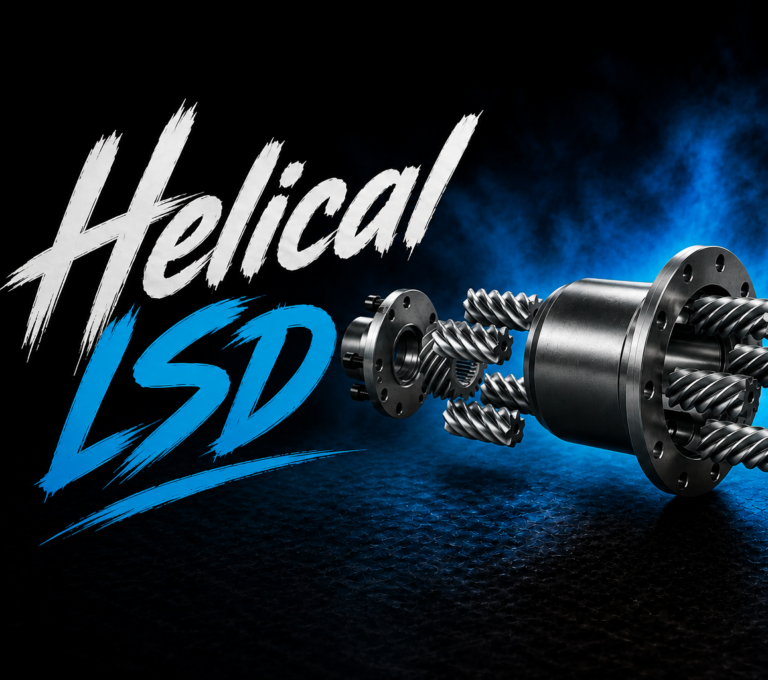
A helical LSD, also called a Torsen-style or torque-biasing diff, uses sets of meshing helical gears instead of clutch plates. When one wheel starts to lose grip and spin faster, the angled gear teeth generate internal friction and side-loading that resists that difference in speed. The bigger the torque, the harder it works.
The clever part is that it’s automatic and progressive. There’s nothing to switch on, nothing to wear out in the way clutches do, and the locking effect scales smoothly with load. For most drivers it just feels like the car suddenly has more grip everywhere, without any drama. Well-known examples include the Quaife ATB, the Detroit Truetrac, and the Disctrac.
Why the street loves it:
- Smooth and quiet. No clutch chatter on tight, slow turns, no shuddering out of your driveway or through a car park. It behaves like a normal diff until it’s needed.
- Basically maintenance-free. No clutch packs to wear down and rebuild. It’ll happily run standard gear oil (no special friction modifier required) and last the life of the car.
- Predictable. Power delivery is progressive, so it’s very forgiving in the wet and easy to drive fast without surprises.
- Great for daily driving and spirited road use. This is exactly the environment it was designed for.
Plate-type (clutch-type) LSD
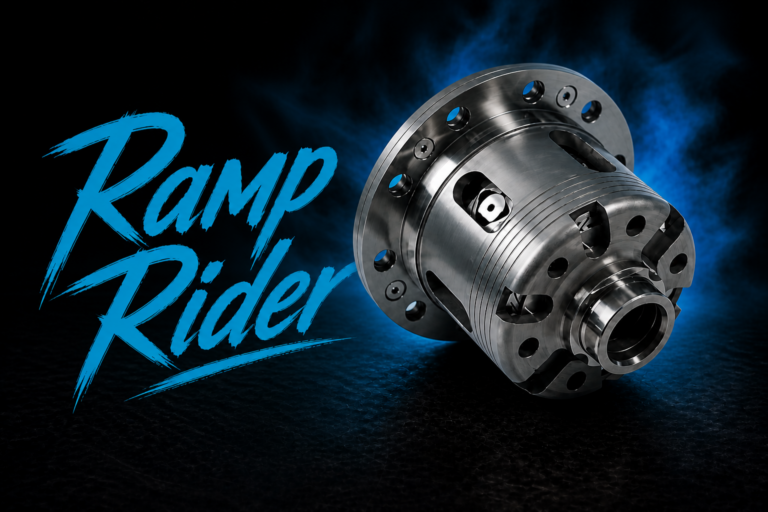
A plate-type LSD uses stacks of clutch plates inside the diff. Pressure rings ride on ramped surfaces, and as torque is applied, those ramps force the clutch packs together, locking the two sides of the diff more tightly. The steeper the ramp angle, the more aggressively it locks.
This gives you real, mechanical lockup that doesn’t rely on the other wheel having grip, which is why clutch-type diffs are the default choice for drifting, track work, and high-power builds.
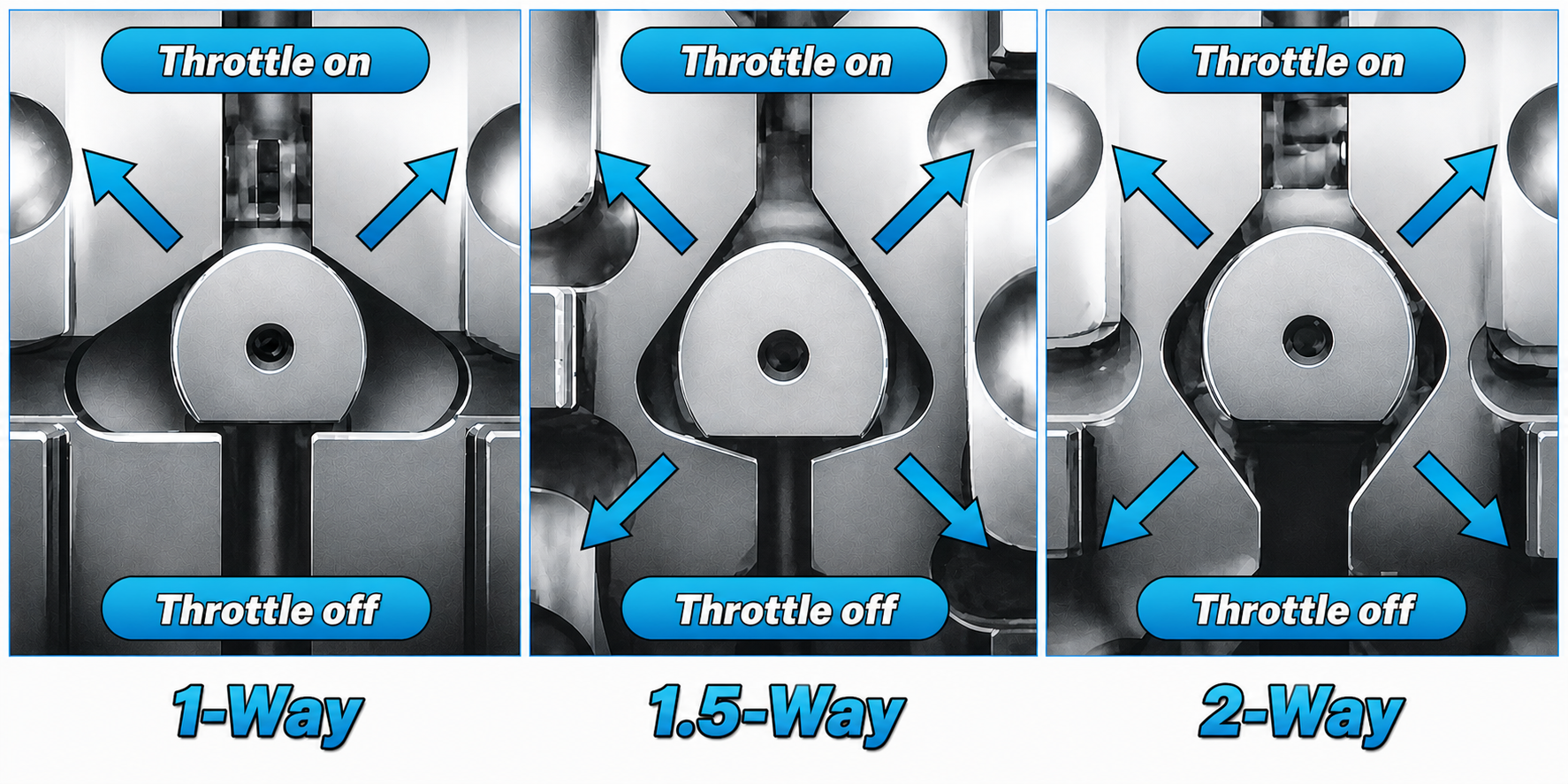
Clutch LSDs come in a few flavours based on when they lock:
- 1-way locks under acceleration only, staying open on the overrun (off-throttle). Nicest for front-wheel-drive and street use.
- 2-way locks both on and off throttle. Very stable and predictable at the limit, but more aggressive and more noticeable on the road.
- 1.5-way is the middle ground: strong lockup on power, gentler on the overrun. A popular all-rounder for RWD cars that see both road and track.
They also have an adjustable preload, the baseline clamping force before the ramps even kick in, which lets a good workshop tune the diff’s character for your car and your driving.
Why hardcore drivers love it:
- Aggressive, positive lockup. Puts power down hard even when a wheel is unloaded or airborne.
- Tunable. Ramp angles, preload, and clutch stack can be set up to suit drifting, circuit, or fast road use.
- Built for high power and abuse. When you’re making serious torque, this is the tougher tool.
The catch for street use:
- It’s a wear item. Clutch plates wear over time and eventually need a rebuild. How quickly depends on your setup and how hard you drive.
- Noise and manners. Especially with 2-way or high-preload setups, you can get clutch chatter and a bit of “clunk” during slow, tight manoeuvres like parking, roundabouts, and driveways. Some people don’t mind it; some find it tiresome on a daily.
- Fussy about fluid. Clutch diffs need the correct LSD gear oil with a friction modifier, and they benefit from regular fluid changes. Get the fluid wrong and the chatter gets worse.
So which is the best LSD for street use?
For most drivers, the best LSD for street use comes down to how you actually use the car. For the majority of street cars like daily drivers, weekend cruisers, and cars that see the occasional spirited back-road blast, a helical LSD is usually the sweet spot. It transforms traction and corner-exit grip, it’s smooth and silent in traffic, and it’s a genuine fit-and-forget upgrade with no special maintenance. You get most of the real-world benefit with none of the everyday compromises.
A clutch-type LSD makes more sense once your priorities shift toward the track or the skid pad: high power outputs, drifting, circuit days, or any situation where you need aggressive, guaranteed lockup and you’re happy to accept a bit of noise and periodic servicing in exchange. A 1.5-way clutch diff is a fantastic choice for a dual-purpose RWD car that lives on the road but earns its keep at track days.
In short: helical for street-focused traction and comfort; clutch-type when performance and adjustability outrank everyday manners. There’s no wrong answer, just the right tool for how you actually drive.
Frequently asked questions
Is a helical or clutch-type LSD best for street use?
For most road cars, a helical LSD is the easier choice: it’s smooth, quiet, and needs no special maintenance. A clutch-type LSD is the better pick if you’re chasing aggressive lockup for track days, drifting, or high-power builds and don’t mind a little noise and periodic servicing.
What’s the best LSD for street use if I also do track days?
A 1.5-way clutch-type LSD is a great all-rounder. It locks firmly under power for the track but stays more civilised off-throttle on the road, which makes it a popular pick for dual-purpose RWD cars.
Will a clutch-type LSD be noisy on the road?
It can be. Especially with 2-way or high-preload setups, you may hear some chatter or clunk during slow, tight turns like parking or roundabouts. Using the correct LSD oil with a friction modifier, and keeping the fluid fresh, keeps it to a minimum.
Not sure which way to jump, or which unit suits your specific car, power level, and driving style? That’s exactly what we do. At Gearhead Diffs we build, set up, and rebuild both helical and clutch-type units to suit everything from daily drivers to dedicated track cars, and we’re happy to talk it through before you spend a cent. Get in touch and we’ll help you get the right diff sorted properly the first time.