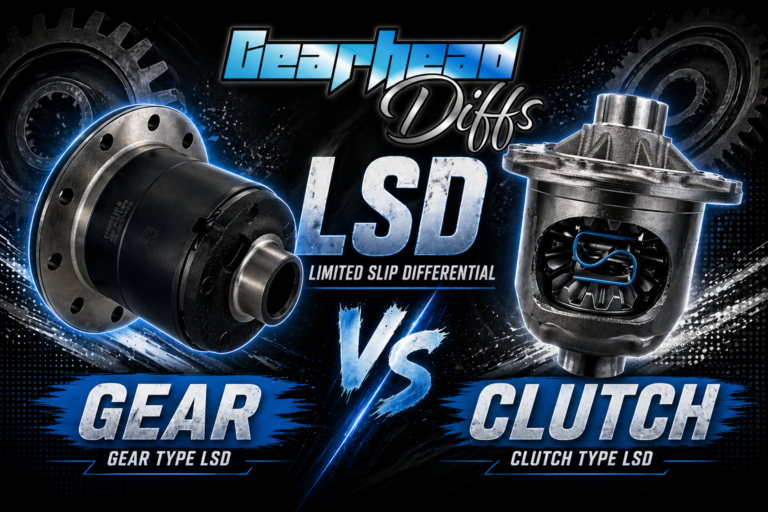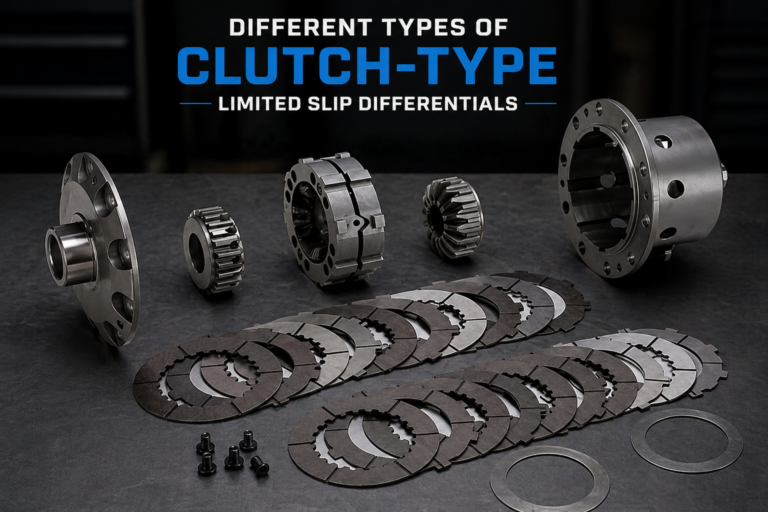
A Positraction LSD, often referred to simply as a “Posi”, is one of the most well-known types of clutch-type limited slip differentials.
The design became widely known through American performance vehicles, particularly muscle cars produced by manufacturers such as General Motors.
While the term “Positraction” originally referred to a specific GM differential design, it is what’s commonly used to describe a style of clutch-type LSD that uses clutch packs and preload springs to limit wheel spin.
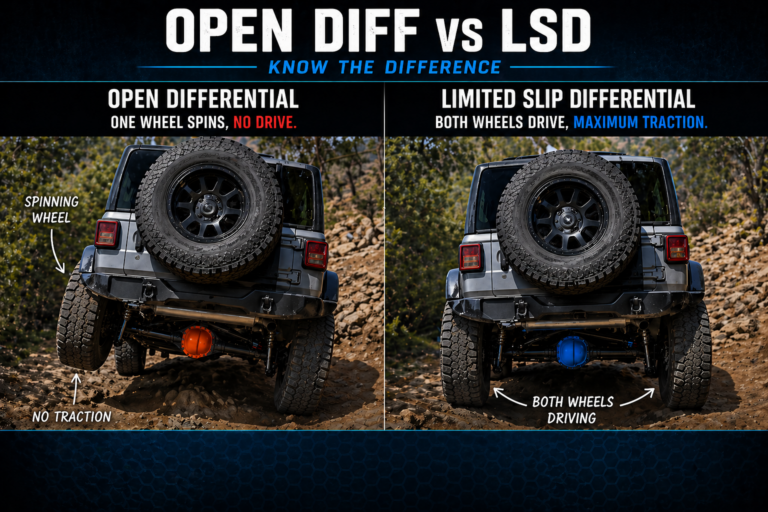
These differentials are designed to improve traction by ensuring both drive wheels receive torque rather than allowing one wheel to spin freely as in an open differential.
How a Positraction LSD Diff Works
Inside a Positraction differential are clutch packs located between the side gears and the differential carrier.
The clutch packs consist of alternating internal and external steel plates, which create resistance between the axle shafts.
A set of preload springs inside the differential applies constant pressure to the clutch packs.
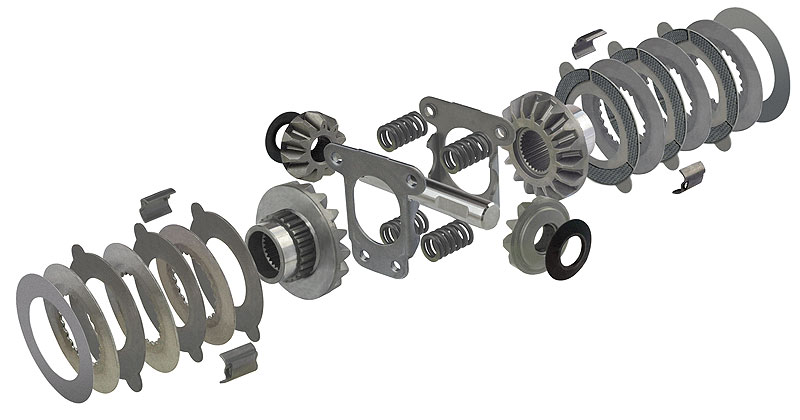
Under normal driving conditions this preload creates friction between the clutch plates, helping limit the difference in speed between the two wheels.
When one wheel begins to lose traction, the clutch packs help transfer torque to the opposite wheel, improving traction.
Because the system relies largely on spring pressure and clutch friction, engagement tends to be relatively smooth and progressive.
Advantages of Positraction LSD Units
Positraction differentials provide several advantages over open differentials.
Improved Traction
The clutch packs help distribute torque between both wheels, reducing wheel spin when traction is uneven.
Smooth Engagement
Because the locking effect relies mainly on spring preload rather than aggressive ramp mechanisms, engagement tends to be smooth during normal driving.
Simple Mechanical Design
Positraction LSD units are relatively simple internally compared to more complex ramp-style differentials.
Limitations of Positraction LSD Units
While Posi LSDs provide improved traction, they also have some limitations.
Clutch Wear
Over time the clutch plates inside the differential will wear. As the clutch plates wear down, the LSD effect can become weaker.
Limited Locking Force
Because the locking force relies primarily on spring preload and clutch friction, Positraction LSD units typically provide less aggressive locking behaviour compared to ramp-style LSDs used in motorsport.
When Posi’s Are Used
Positraction-style limited slip differentials are commonly found in a range of OEM clutch-type differential designs.
While the term “Positraction” originally came from General Motors, the same basic clutch and preload design has been widely used by many manufacturers.
These types of LSD units are commonly found in:
- OEM clutch-type differentials
- Classic American muscle cars
- Factory performance vehicles
- Some 4WD and utility vehicles (Mainly American)
Because of their relatively simple design and smooth engagement characteristics, Positraction-style LSDs have been widely used in factory differentials for many years.
They are generally well suited to vehicles where improved traction and predictable behaviour are desired without the aggressive locking characteristics often found in motorsport-focused LSD designs.
Servicing and Rebuilding Positraction LSD Units
One advantage of Posi LSD’s is that the clutch packs are serviceable and replaceable.
Over time the clutch plates can wear and may need replacement to restore the differential’s locking performance.
Rebuilding typically involves:
- Replacing clutch plates
- Inspecting internal gears and components
- Setting correct preload
Proper setup ensures the LSD provides the correct balance between traction and drivability.
At Gearhead Diffs, we regularly rebuild clutch-type LSD units and can restore the performance of worn Positraction differentials.