
A limited slip differential (LSD) is designed to improve traction by limiting the difference in speed between the two drive wheels. Unlike an open differential, which sends power to the wheel with the least resistance, an LSD helps ensure that both wheels can continue to receive torque when traction becomes uneven.
Limited slip differentials are commonly used in performance vehicles, motorsport applications, off-road vehicles, and high horsepower street cars. Different LSD designs use different methods to transfer torque between the wheels, and each type has advantages depending on how the vehicle is driven.
Clutch Type LSD
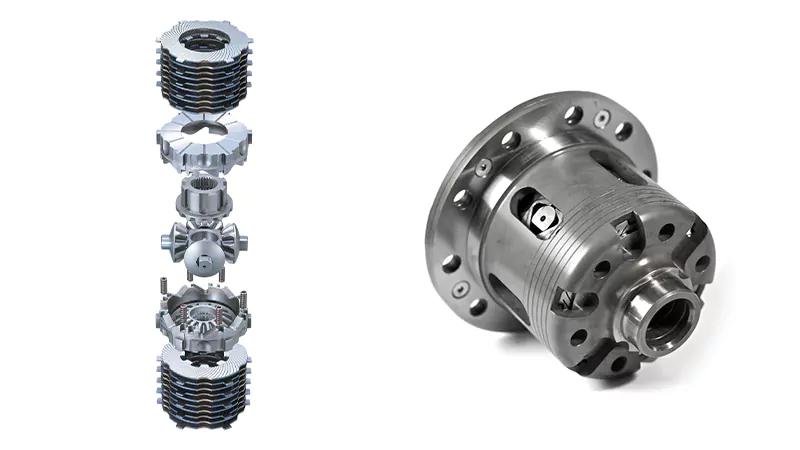
Clutch type LSDs use a series of clutch plates inside the differential to limit the difference in speed between the two drive wheels.
When torque is applied through the drivetrain, pressure is applied to the clutch plates which creates friction between the differential components. This friction helps transfer torque to the wheel with more traction.
Clutch type LSDs are commonly used in:
• Motorsport
• Drift cars
• Performance street vehicles
There are also various types of clutch type LSD designs, with some performing better than others depending on the intended use of the vehicle. Certain designs may be better suited to specific driving conditions such as track driving, drifting, street performance, or off‑road applications.
Viscous LSD
A viscous limited slip differential uses a sealed fluid coupling inside the differential to help transfer torque between the two drive wheels.
Inside the coupling are plates submerged in viscous silicone fluid. When one wheel begins to spin faster than the other, the difference in speed creates resistance in the fluid, which helps transfer torque to the wheel with more traction.
Viscous LSDs are commonly found in:
• Older performance vehicles
• Some factory AWD systems
• A number of factory 2WD and AWD vehicles
While viscous LSDs do improve traction compared to an open differential, they are generally less aggressive than clutch‑type LSDs and rely on wheel speed difference before torque transfer occurs.
Wear and Lifespan of Viscous LSD Units
One of the main limitations of viscous LSD units is that the viscous coupling gradually wears over time. As the internal fluid and plates degrade, the LSD becomes less effective and may eventually behave very similarly to an open differential.
Unlike many clutch type LSD units, viscous couplings generally cannot be rebuilt. In most cases the coupling assembly is sealed or welded, preventing it from being disassembled or serviced.
Misconceptions About Shimming Viscous LSDs
Some people attempt to restore the performance of a worn viscous LSD by installing shims inside the differential carrier.
In most cases this does not increase the effectiveness of the viscous coupling. Instead, it restricts the movement of the internal differential gears rather than improving the viscous coupling itself.
This may initially feel like the LSD is working again, but it effectively forces the differential to behave more like a locked differential. While this can appear to improve traction temporarily, it places significant stress on the internal components and can lead to premature failure.
Helical LSD (Gear Type)
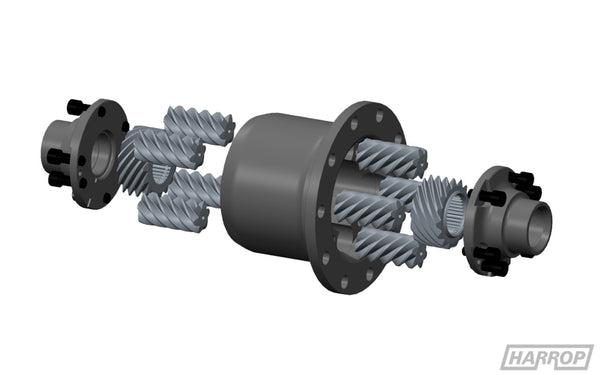
Helical LSDs use a series of helical gears to distribute torque between the wheels. Unlike clutch type LSDs, they do not rely on friction plates and generally require less maintenance.
Helical LSDs are commonly used in:
• Performance street cars
• Road racing vehicles
They provide smooth and progressive torque transfer, making them well suited to vehicles that are primarily driven on the road.
However, helical LSDs generally require some load on both wheels in order to function effectively. If one wheel completely loses traction, the differential may struggle to transfer torque to the opposite wheel.
Note: Some manufacturers reduce this limitation by incorporating an internal Belleville spring system within the differential. This maintains constant tension on the helical gears, helping improve torque transfer when traction is low and reducing internal gear play when transitioning on and off the throttle.
Limited Slip Differential Upgrades
At Gearhead Diffs, we regularly install, rebuild, and upgrade limited slip differentials for performance vehicles, 4WDs, and motorsport applications. Choosing the correct LSD design for the vehicle and its intended use is critical for achieving the best results.