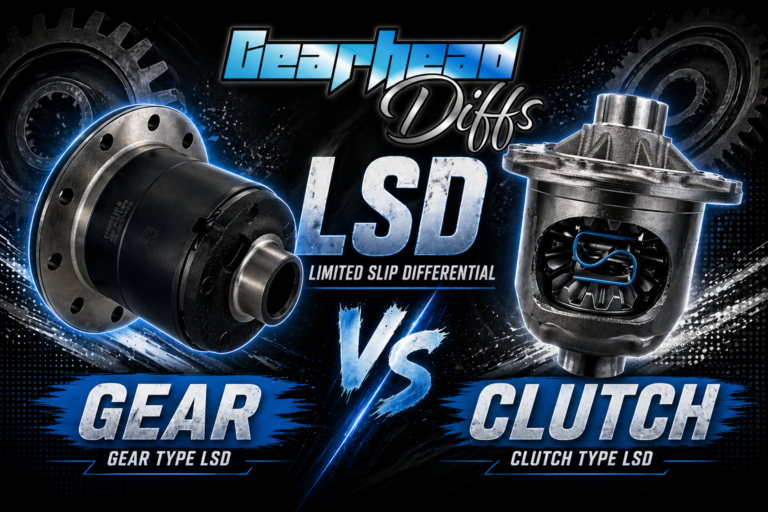
Clutch-type limited slip differentials are one of the most widely used LSD designs in performance vehicles, motorsport applications, and some factory drivetrain setups.
These differentials use friction plates inside the differential to limit the speed difference between the two drive wheels, helping transfer torque to the wheel with more traction.
However, not all clutch-type LSDs operate the same way. There are several different mechanical designs that apply pressure to the clutch plates.
Understanding the differences between these designs helps explain why some LSDs behave differently under acceleration, cornering, or when traction is lost.
The most common clutch-type LSD designs include:
- Positraction type
- Ramp rider type
- Factory clutch LSD (without ramps)
Positraction Type LSD
One of the most well-known clutch-type LSD designs is the Positraction-style differential, often simply referred to as a “Posi”.
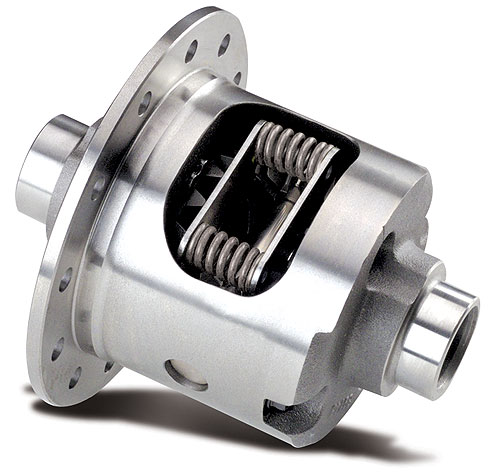
In this design, clutch packs are positioned between the side gears and the differential carrier. Springs inside the differential apply constant pressure to the clutch packs, creating friction between the axle shafts.
When one wheel begins to lose traction, the friction created by the clutch plates helps transfer torque to the opposite wheel.
Because the locking force is created primarily through spring preload and clutch friction, the engagement tends to be relatively smooth.
Positraction-style LSDs are commonly found in:
- Many American muscle cars
- Some factory performance vehicles
- Certain aftermarket LSD units
These differentials are generally well suited to street performance applications where predictable engagement is desirable.
Factory Clutch LSD (Without Ramps)
Some factory LSD units use clutch plates but do not incorporate ramp mechanisms.
Instead, these differentials rely primarily on spring preload and internal friction to limit the speed difference between the wheels.
While these designs can still improve traction compared to an open differential, they generally produce less aggressive locking behaviour than ramp-based LSD designs.
Factory clutch LSD units are commonly found in:
- Older factory performance vehicles
- Some 4WD applications
- Certain OEM limited slip designs
Because these LSD units rely primarily on clutch preload, their effectiveness can decrease as the clutch plates wear over time.
Ramp Rider LSD
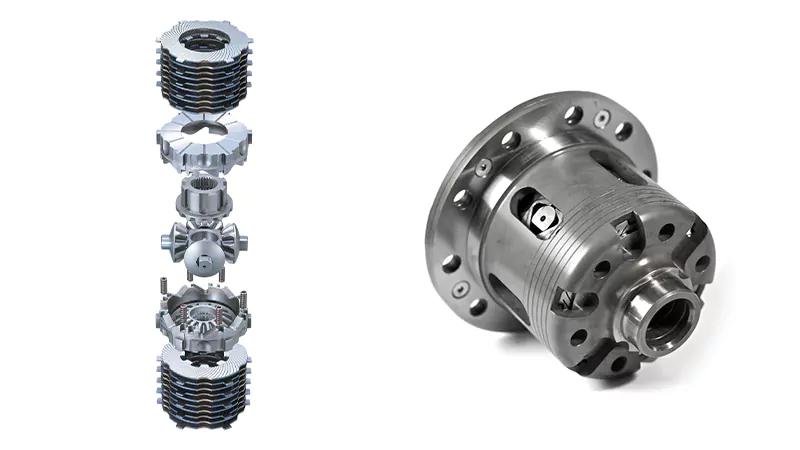
Ramp rider LSDs use a more complex internal design to apply pressure to the clutch plates.
In this design, ramps inside the differential act on pressure rings when torque is applied through the drivetrain.
As torque is applied to the differential, the ramps push the pressure rings outward, compressing the clutch packs. This increases the locking force between the two wheels.
Because the ramps react to drivetrain torque, the locking effect can increase as load increases.
Ramp rider LSD units are commonly used in:
- Motorsport vehicles
- Drift cars
- High-performance street builds
One of the main advantages of this design is that ramp angles can be tuned to change how the differential behaves.
Different ramp configurations allow the LSD to:
- Lock more aggressively under acceleration
- Provide locking during deceleration
- Provide smoother engagement for street use
This adjustability is one reason ramp-style LSDs are popular in motorsport.
Why LSD Design Matters
The internal design of a clutch-type LSD has a major influence on how the differential behaves.
Different LSD designs can affect:
- How aggressively the differential locks
- How it behaves during acceleration & deceleration
- How it behaves during cornering, especially tight cornering in carparks
- How smooth the engagement feels during normal driving
Because of these differences, selecting the correct type of plate type LSD matters hugely based off what your intentions are with the vehicle.
Servicing Clutch-Type LSD Units
One advantage of many clutch-type LSD units is that they are serviceable and rebuildable.
Over time the clutch plates inside the differential will wear and may need replacement.
Rebuilding the LSD can restore its locking characteristics and improve traction performance.
At Gearhead Diffs, we regularly rebuild and service clutch-type limited slip differentials for a wide range of performance vehicles and motorsport applications.