
Choosing the right diff ratio is one of the most important considerations when modifying a vehicle.
Whether you’re fitting bigger tyres to a 4WD, swapping transmissions in a classic car, or building a dedicated off-road vehicle, the differential ratio has a major impact on performance, fuel economy, towing ability, and drivability.
Understanding how to choose the right diff ratio can help you avoid common mistakes and get the most from your vehicle.
Choosing the Right Diff Ratio Starts with Understanding Differential Ratios
A differential ratio (also known as a final drive ratio) determines how many times the driveshaft rotates for one complete revolution of the wheels.
Common differential ratios include:
- 3.08:1
- 3.55:1
- 3.73:1
- 4.10:1
- 4.56:1
- 4.88:1
- 5.29:1
For example, a 4.88 ratio means the driveshaft rotates 4.88 times for every single wheel revolution.
Higher numerical ratios provide greater torque multiplication and improved acceleration, while lower numerical ratios generally reduce engine RPM at highway speeds.
Why Differential Ratios Are So Important
The differential ratio works together with:
- Tyre diameter
- Transmission gear ratios
- Transfer case ratios (4WD vehicles)
- Engine power and torque characteristics
- Vehicle weight
- Intended vehicle use
Changing any one of these components can alter the overall gearing of the vehicle.
This means a vehicle that drove perfectly before modifications can become sluggish, unresponsive, or inefficient if the differential ratio is no longer suitable.
Bigger Tyres and Differential Ratios
This is one of the most common issues we see in modified 4WDs.
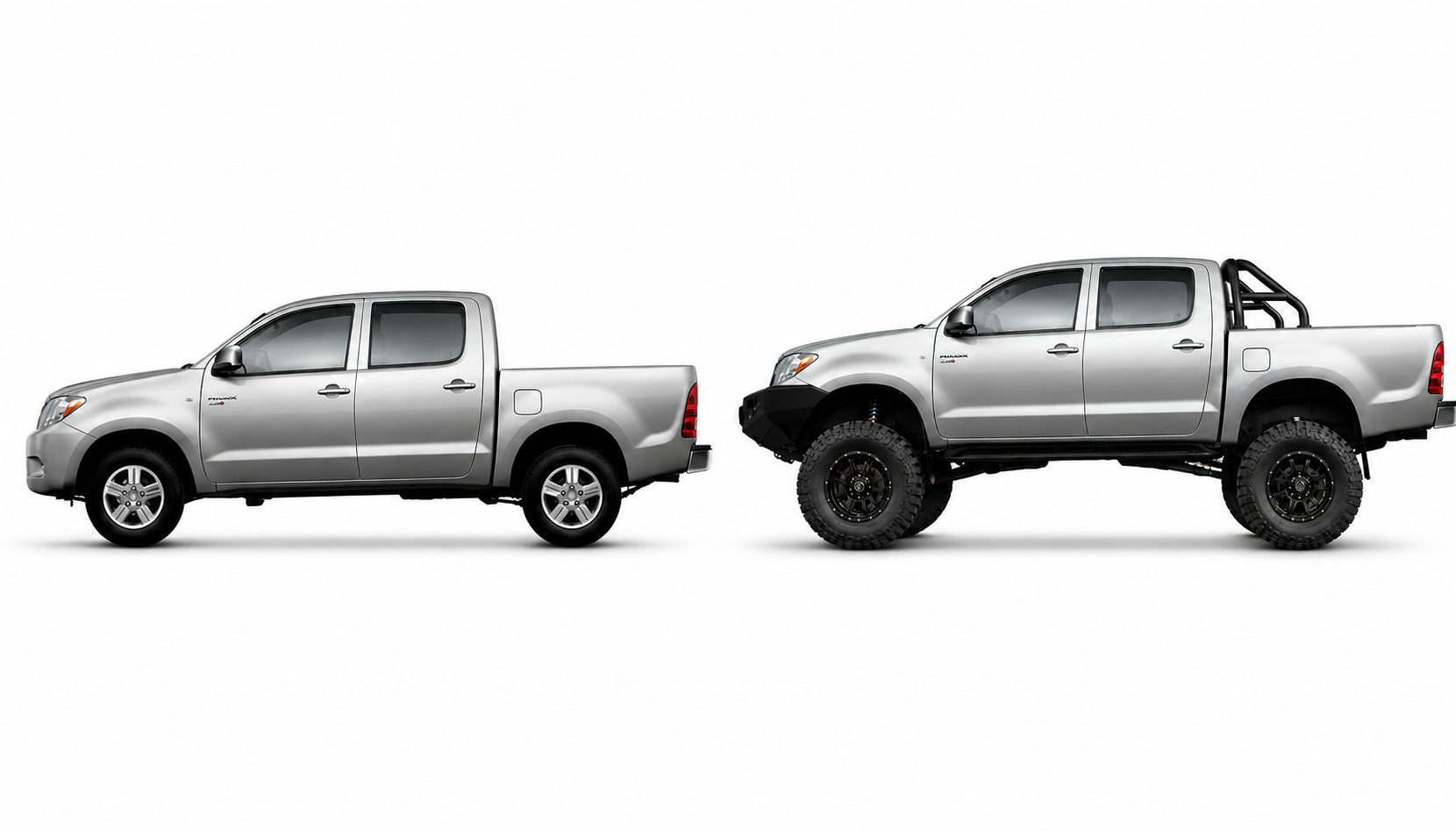
When larger tyres are fitted, the effective gearing becomes taller.
The larger tyre travels further with each revolution, reducing the mechanical advantage provided by the differential gears.
As tyre size increases, vehicles often experience:
- Reduced acceleration
- Poor towing performance
- Increased clutch wear
- Constant gear hunting in automatic transmissions
- Higher transmission temperatures
- Reduced off-road crawling ability
Many owners describe the vehicle as feeling “gutless” after fitting larger tyres.
In reality, the engine has not lost power. The gearing has simply become too tall for the new tyre size.
Why Re-Gearing Is Important for 4WDs
Re-gearing the differential restores the factory-like relationship between tyre size and engine RPM.
For example:
| Factory Tyre | New Tyre | Common Ratio Change |
|---|---|---|
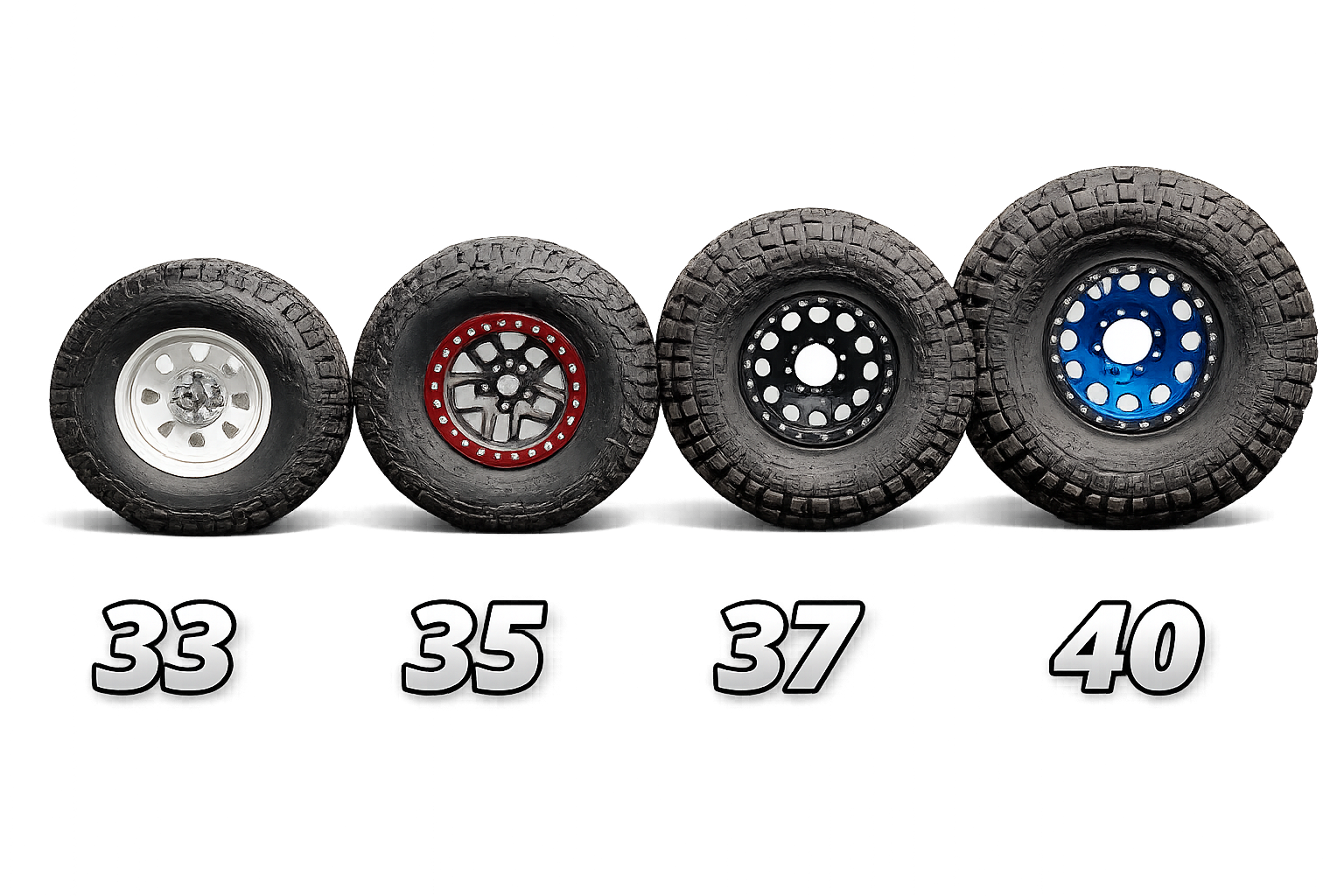
| 31″ | 33″ | 4.10 → 4.56 |
| 31″ | 35″ | 4.10 → 4.88 |
| 31″ | 37″ | 4.10 → 5.29 |
The exact ratio required depends on:
- Vehicle weight
- Engine torque
- Transmission ratios
- Intended use
A vehicle used primarily for towing may require different gearing than one built for recreational off-roading.
Off-Road Performance Benefits
Correct differential gearing becomes even more important off-road.
Lower differential ratios can improve:
- Hill climbing ability
- Low-speed control
- Crawl ratio performance
- Reduced clutch slipping
- Reduced strain on transmissions
While tyre and suspension upgrades often receive the most attention, differential gearing is frequently overlooked until after the modifications are complete. This can leave a vehicle feeling underpowered and less capable than intended.
Transmission Swaps
Another common scenario involves transmission conversions.
Modern transmissions often have significantly different gear ratios compared to the original gearbox.
The introduction of overdrive gears can dramatically reduce cruising RPM.
While this may seem beneficial, it can sometimes lower engine RPM below the ideal operating range.
The result can be:
- Poor throttle response
- Excessive downshifting
- Reduced towing performance
- Increased transmission load
In many cases, changing the differential ratio is necessary to fully benefit from the transmission conversion.
Differential Ratios in Classic Cars
Classic cars frequently undergo drivetrain modifications.
Common upgrades include:
- Larger diameter wheels
- Modern overdrive transmissions
- Engine swaps
- Increased horsepower
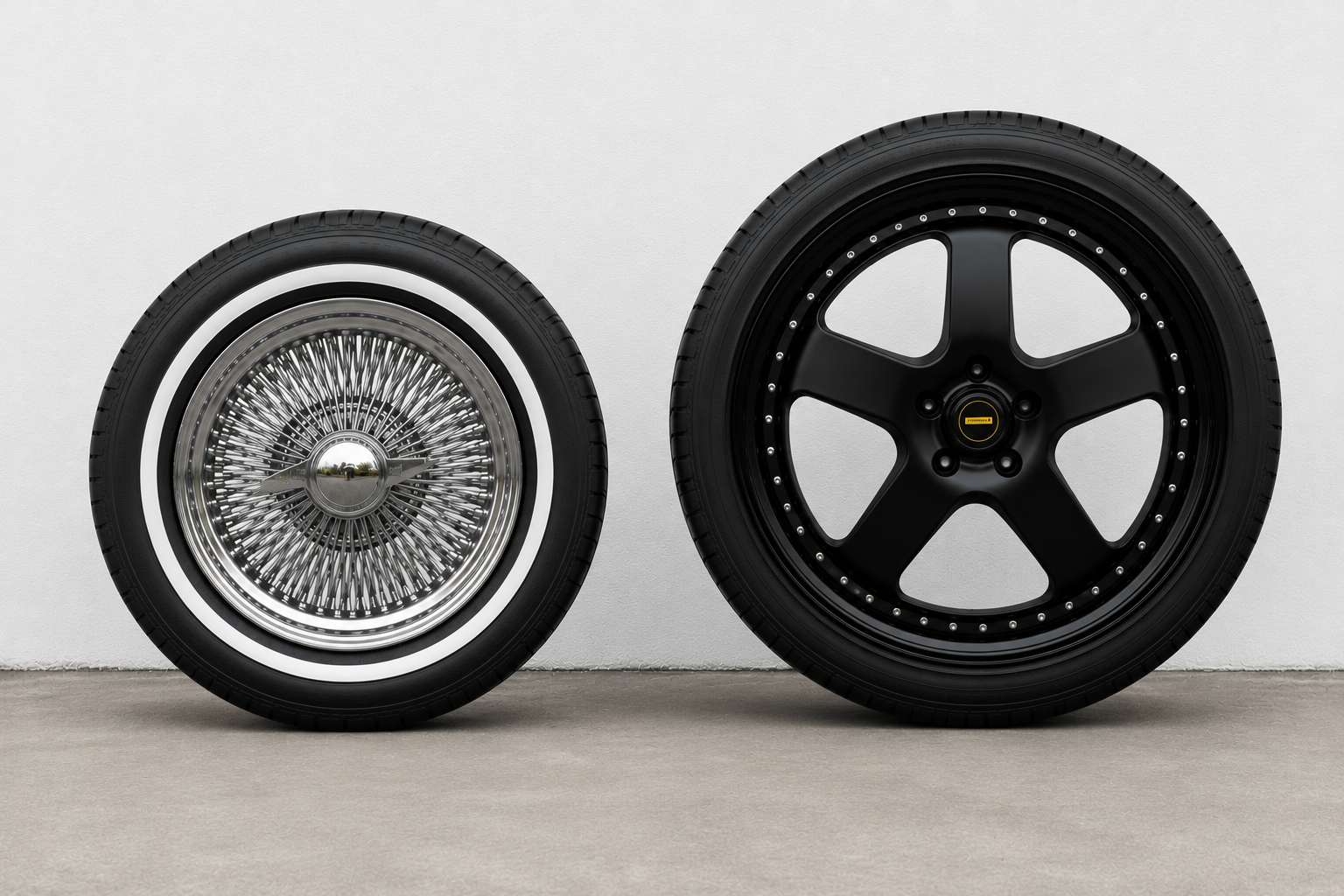
A vehicle originally designed around a 14-inch wheel and three-speed transmission may now run:
- 18-inch wheels
- A five-speed manual
- A six-speed automatic
- A completely different engine
These changes dramatically alter the overall gearing.
Without considering differential ratios, the vehicle may no longer operate within the engine’s ideal power range.
Why Changing Wheel and Tyre Sizes Can Cause Problems
Many classic car owners change wheel and tyre sizes to achieve a particular look.
However, changing the overall tyre diameter effectively changes the final drive ratio.
Common symptoms include:
- Slower acceleration
- Reduced responsiveness
- Higher or lower cruising RPM than intended
- Poor overall drivability
Larger tyres can make the gearing too tall, while smaller tyres can make the gearing too short.
Correcting the differential ratio often restores the performance and drivability lost after changing wheel and tyre sizes.
There Is No Universal Best Ratio
Many people ask:
“What is the best diff ratio?”
The answer depends entirely on the vehicle combination.
Factors include:
- Tyre size
- Transmission ratios
- Engine torque curve
- Vehicle weight
- Intended use
- Towing requirements
A ratio that works perfectly in one vehicle may perform poorly in another.
How We Calculate the Correct Differential Ratio
At Gearhead Diffs, we regularly help customers select the correct differential ratio for their vehicle combination.
When recommending ratios, we consider:
- Current tyre size
- Planned tyre size
- Transmission type
- Vehicle usage
This allows us to recommend a ratio that delivers the best balance of drivability, performance, and reliability.
We can calculate the exact RPM you will be pulling at certain speeds using information like:
- Tyre size
- Transmission type
- Current diff ratio
If you are thinking of changing your ratio, and would like some help working out the correct diff ratio for you, get in touch!
Final Thoughts
Differential ratios play a major role in how a vehicle performs.
Whether you’re fitting larger tyres to a 4WD, upgrading to an overdrive transmission, or building a classic car with a modern drivetrain, selecting the correct differential ratio can transform the way the vehicle drives.
Many performance, towing, and drivability issues can often be traced back to incorrect gearing rather than a lack of engine power.
By matching the diff ratio to the tyre size, transmission, and intended use, you can maximise performance, improve reliability, and get the most out of your drivetrain.