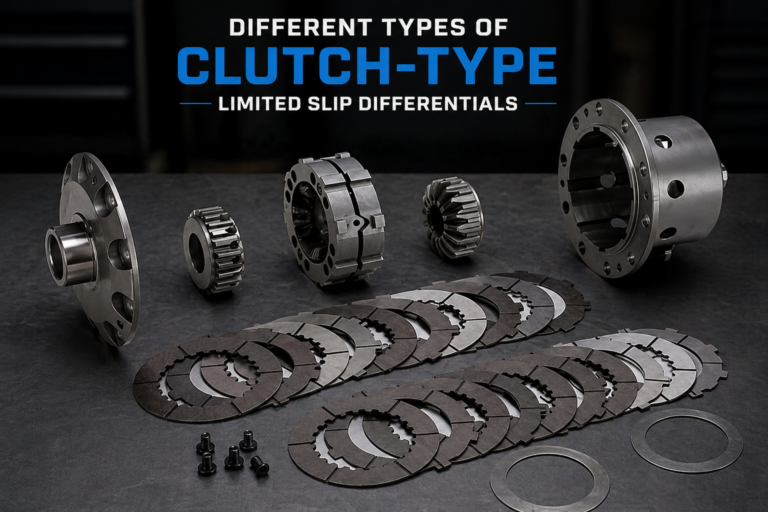
Ramp rider limited slip differentials are one of the most common LSD designs used in motorsport and performance vehicles. They are particularly popular in drifting, circuit racing, and high-performance street builds because they allow the locking behaviour of the differential to be carefully tuned.
Unlike some clutch-type LSD units that rely mainly on spring preload, ramp rider differentials use ramp angles and pressure rings to apply force to the clutch packs when torque is applied through the drivetrain.
This allows the locking behaviour of the differential to change depending on whether the vehicle is accelerating or decelerating.
Understanding how ramp rider LSDs work is important when selecting the correct differential setup for a vehicle.
How Ramp Rider LSDs Work
Inside a ramp-style LSD are several key components:
- Clutch packs
- Pressure rings
- Ramp surfaces
- Side gears
- Differential carrier
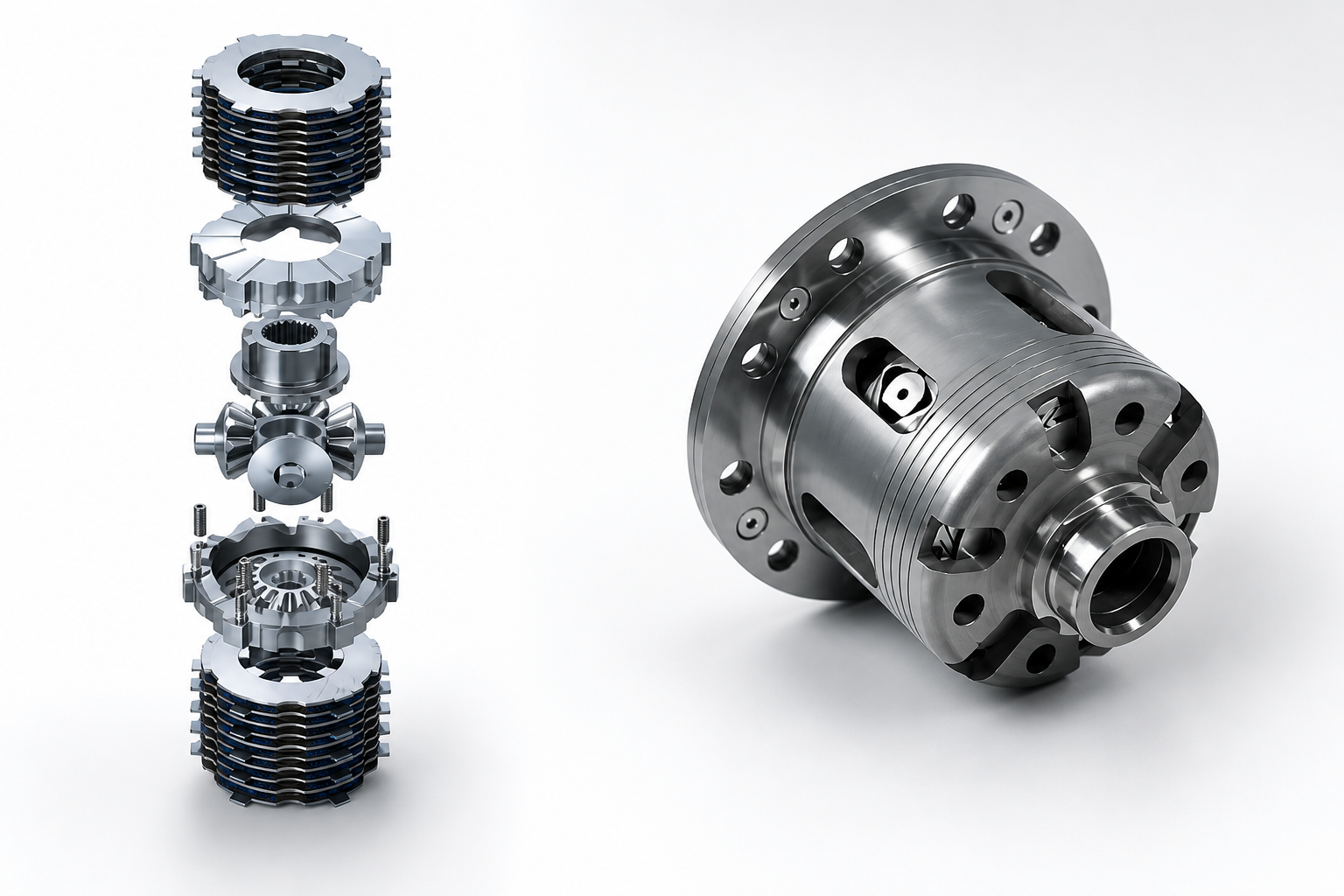
When torque is applied through the drivetrain, the side gears push against the ramp surfaces inside the pressure rings. As the side gears move up the ramps, they force the pressure rings outward which compresses the clutch packs. This compression creates friction between the clutch plates and limits the speed difference between the two wheels.
The angle of the ramps determines how aggressively the LSD locks. Steeper ramp angles apply more force to the clutch packs, increasing the locking effect. In some motorsport applications, ramp angles can even be customised to suit the driver’s requirements or vehicle setup.
1 Way LSD
A 1 Way LSD provides locking action only during acceleration.
When the vehicle is under power, the ramps apply pressure to the clutch packs and the differential begins to lock.
During deceleration or braking, the ramps do not apply pressure to the clutch packs, allowing the differential to behave more like an open differential.
Because of this behaviour, 1 Way LSD units are more commonly used in front diffs.
1.5 Way LSD
A 1.5 Way LSD locks fully under acceleration but provides partial locking during deceleration.
This is achieved by using different ramp angles for the acceleration and deceleration sides of the pressure rings.
1.5 Way LSDs are extremely popular in:
- Rear-wheel drive performance cars
- Street performance builds
- Track day vehicles
2 Way LSD
A 2 Way LSD provides equal locking force during both acceleration and deceleration.
Because the LSD locks under braking as well as acceleration, the differential provides strong and predictable behaviour when entering corners.
2 Way LSDs are commonly used in:
- Drift cars
- Rally cars
- Motorsport applications
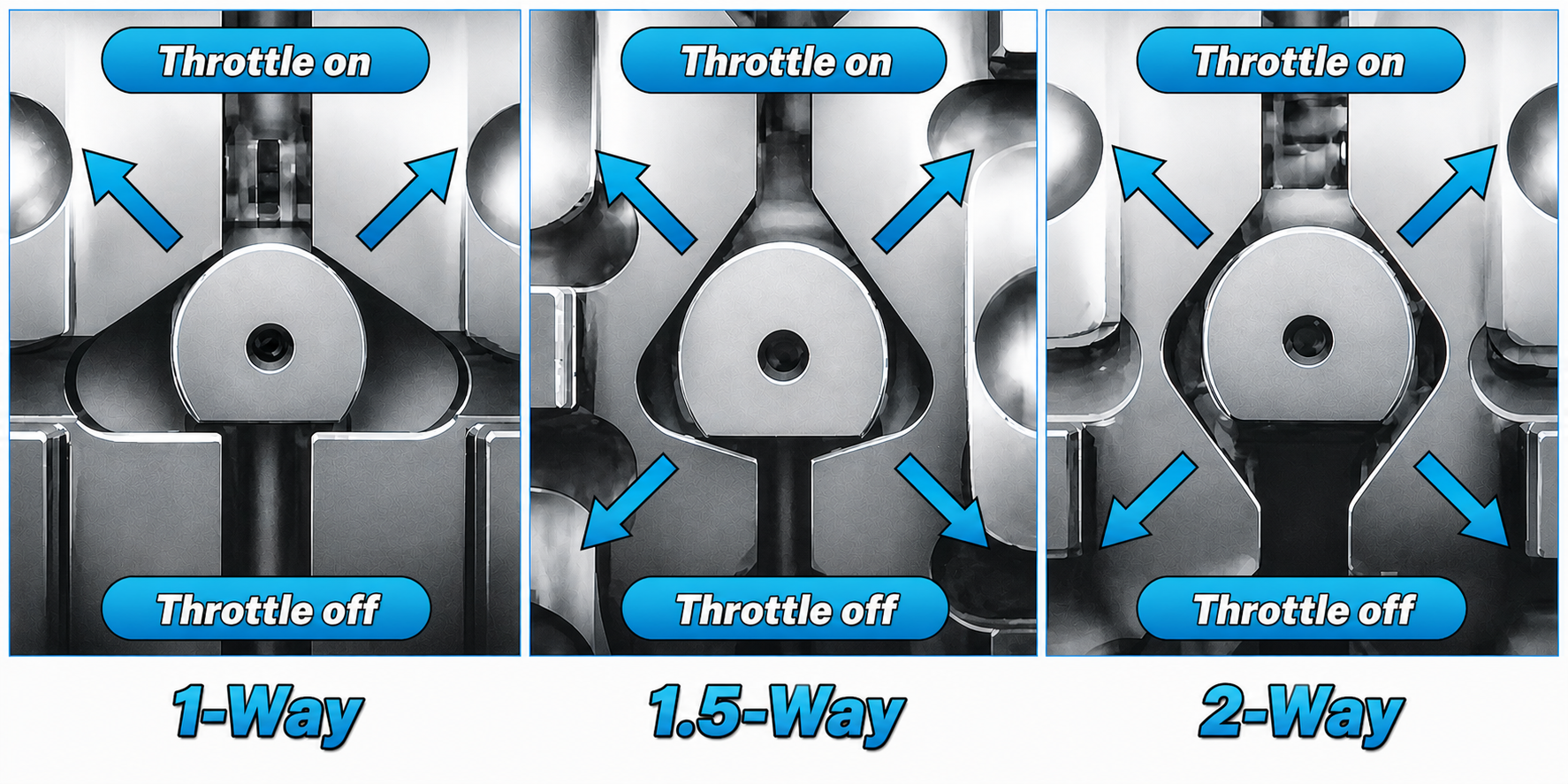
Adjustable Ramp Configurations
Many aftermarket ramp rider LSD units are designed with multiple ramp positions on the ramp hubs.
By changing the ramp position during assembly, the locking behaviour of the differential can be altered to suit different driving styles or applications.
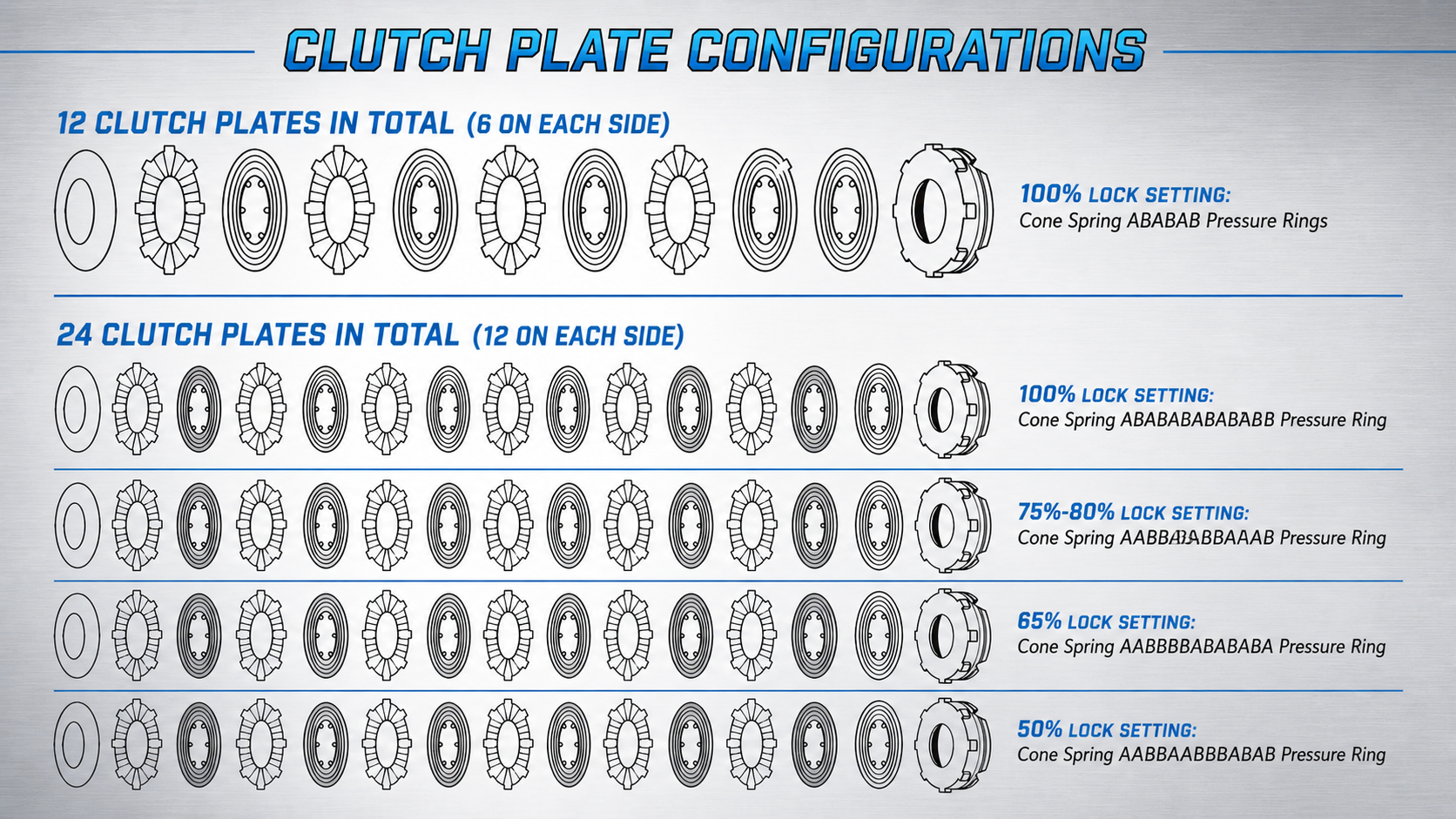
Clutch Plate Configuration (Stacking)
Inside the LSD clutch pack there are two types of plates:
- Internal plates which locate into the side gears
- External plates which locate into the differential carrier
By changing how the internal and external plates are stacked, the effective locking percentage of the differential can be adjusted.
Standard Alternating Plate Configuration (Maximum Lock)
Most aftermarket ramp rider LSD units are supplied with a standard alternating plate stack:
Internal – External – Internal – External – Internal – External
(I – E – I – E – I – E)
This configuration is considered 100% lock and is the most aggressive configuration a clutch-type LSD can be set to.
Double-Stacked Plate Configuration (Reduced Lock)
Double stacking places two plates of the same type together:
Internal – Internal – External – External – Internal – Internal – External
(I – I – E – E – I – I – E)
This reduces the number of active friction surfaces and lowers the locking percentage, creating smoother engagement.
There are also many different plate orientations to progressively change the amount of lock, how adjustable your diff is, is based off how many plates the LSD has.
LSD Setup and Servicing
Proper setup is critical for achieving the correct behaviour from a ramp rider LSD.
Servicing may involve:
- Adjusting clutch plate configuration
- Setting preload
- Replacing worn clutch plates
- Inspecting internal components
At Gearhead Diffs, we regularly install, service, and rebuild ramp-style limited slip differentials for performance vehicles and motorsport applications.
Common Ramp Rider LSD Brands
- Cusco
- KAAZ
- OS Giken
- Nismo
- Tomei
- TRD
- ATS
- MFactory