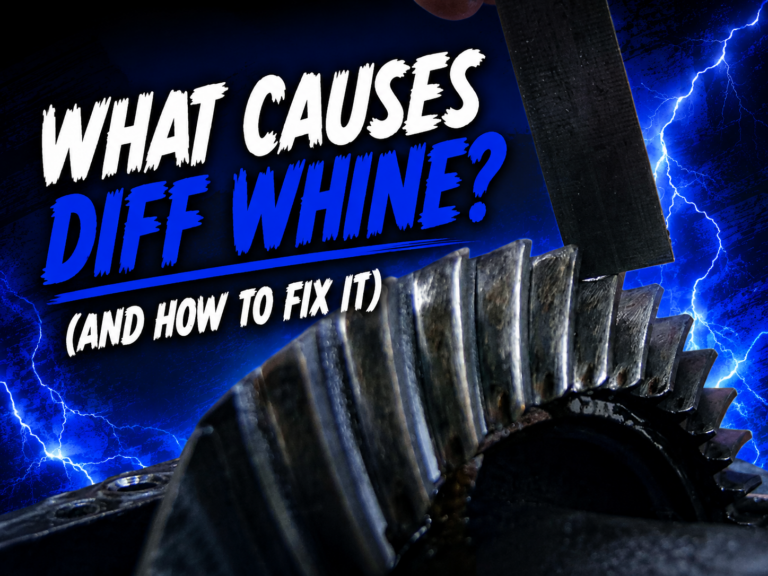
The differential, or “diff”, is one of the hardest working parts of your vehicle’s drivetrain, yet most drivers never give it a second thought until it starts whining, clunking, or leaving them stranded on the side of the road.
Its job sounds simple but is genuinely clever: a differential lets your driven wheels turn at different speeds while still delivering power from the engine. In this guide we’ll cover what a diff does, where it sits, how it works, the main types you’ll come across, and the warning signs that yours needs attention.
Why a Differential Is Needed
When a vehicle turns, the inside and outside wheels do not travel the same distance. The outside wheel has further to go, so it needs to rotate faster than the inside wheel.
If both wheels were locked to the same speed, the tyres would:
- Scrub across the road
- Lose traction
- Put excessive stress on drivetrain components
The differential solves this by allowing each wheel to rotate at its own speed while still transmitting power from the engine, which is why your car corners smoothly instead of hopping and chirping through every turn.
Where Is the Differential Located?
Where the diff lives depends on the type of vehicle. In most vehicles you’ll find it:
- In the rear axle (rear wheel drive vehicles)
- In the front transaxle (front wheel drive vehicles)
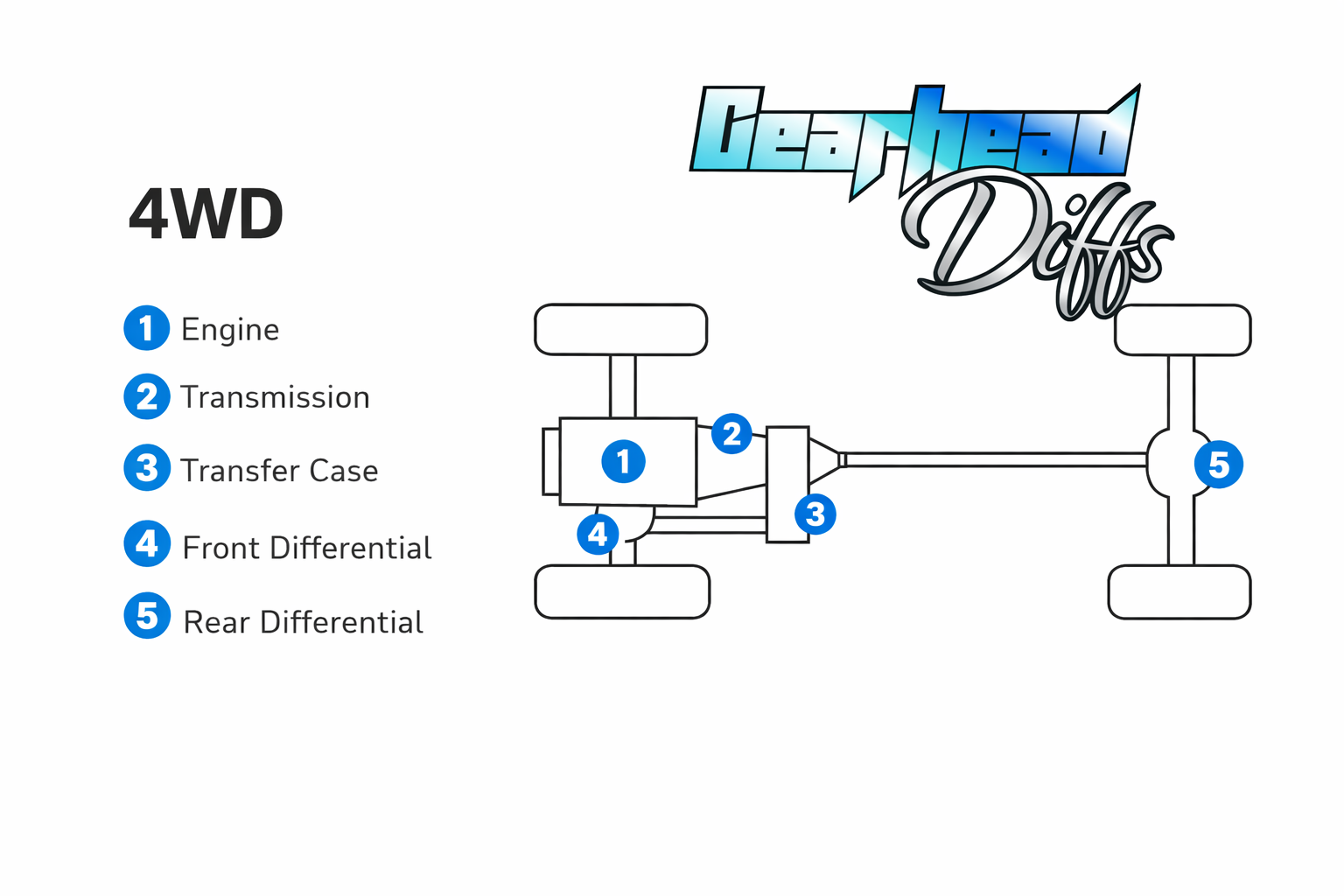
- In both front and rear axles (4WD and AWD vehicles)
In 4WD and AWD vehicles there may also be a centre differential, which manages power between the front and rear axles.
How a Differential Works
Inside the housing, power from the driveshaft arrives at the pinion gear, which drives a much larger ring gear (also called the crown wheel). Bolted to the ring gear is the carrier, and tucked inside it a set of small spider gears do the clever part, letting the two wheels turn at different speeds through a corner while still splitting drive to both.
When driving in a straight line:
- Both wheels rotate at the same speed
- Power is split evenly
When turning:
- The differential lets one wheel rotate faster than the other
- Power is still delivered to both wheels
The number of teeth on the ring gear compared with the pinion sets your diff ratio, which affects both acceleration and cruising revs.
Types of Diffs
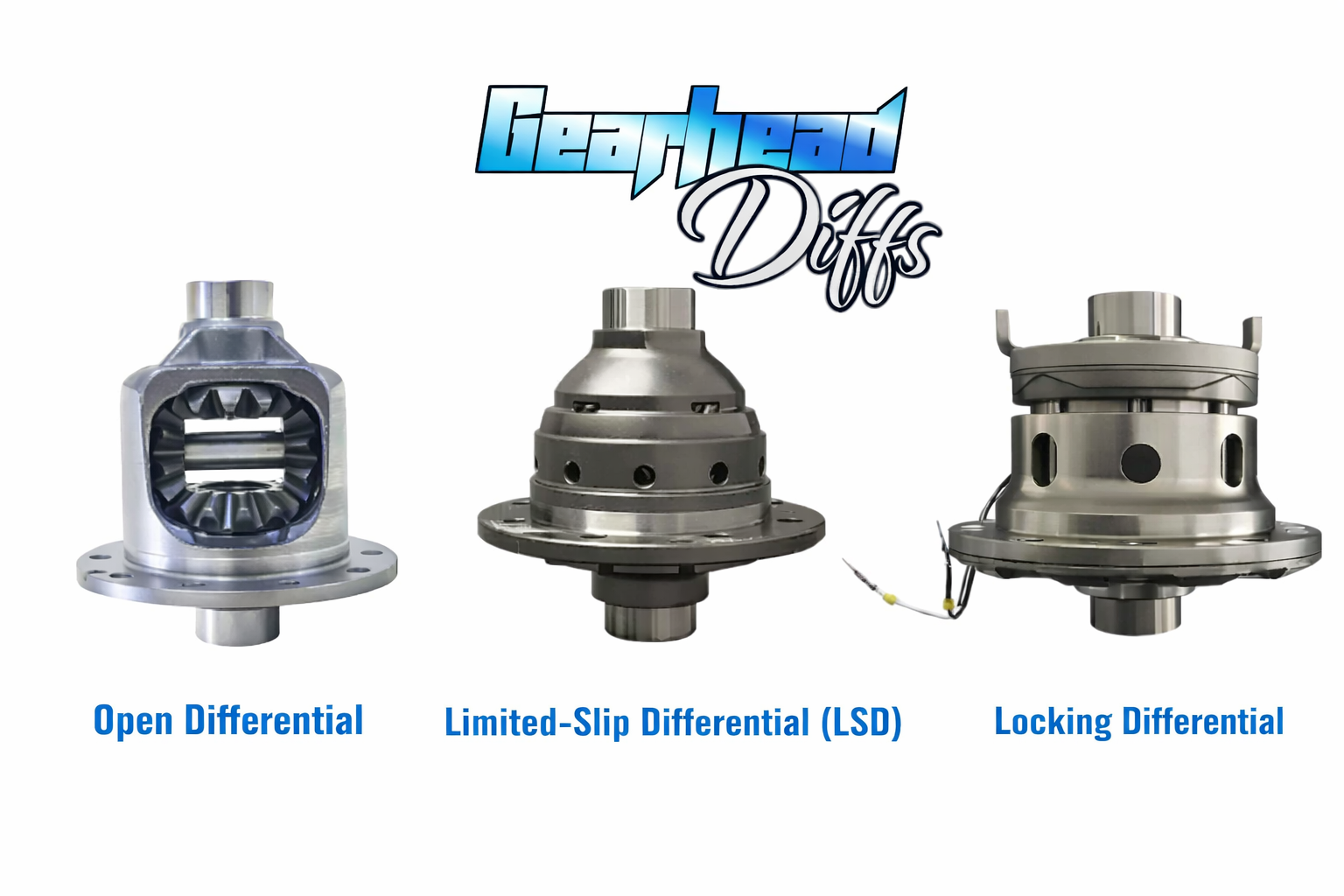
Open Differential
- Simple design and by far the most common
- Smooth, quiet operation
- Can lose traction if one wheel slips, because it sends power to the wheel with the least grip
Limited Slip Differential (LSD)
- Much better traction than an open diff
- Common in performance, towing, and 4WD vehicles
- Maximum traction, with both wheels locked to turn together
- Common in off road and serious 4WD vehicles
Why Differentials Fail
Common causes include:
- Worn bearings
- Gear wear
- Lack of maintenance
- Contaminated or old oil
- Heavy loads or towing
Symptoms of failure include:
- Whining or humming that changes with speed
- Clunking when pulling away or changing direction
- Vibration
Maintaining Your Differential
A bit of routine care goes a long way:
- Regular oil changes
- Checking for leaks
- Inspecting for unusual noises
- Servicing after deep water crossings
Diff Repairs at Gearhead Diffs
At Gearhead Diffs we specialise in the inspection, repair, and rebuilding of differentials for road cars, 4WDs, and performance builds. Whether you need a straightforward differential repair in Christchurch, an exchange diff to get you back on the road faster, or a full custom rebuild, we can help.
Frequently Asked Questions
What does a differential do?
A differential splits engine power between two driven wheels while letting them spin at different speeds. That’s what allows your vehicle to corner smoothly without the tyres scrubbing or the drivetrain binding up.
What are the signs of a failing differential?
The most common signs are a whine or hum that changes with speed, clunking when you accelerate or change direction, vibration, and oil leaks around the diff. If you notice any of these, it’s worth getting it checked before the damage spreads. See what causes diff whine.
How often should a differential be serviced?
As a rough guide, every 40,000 to 60,000 km for most road vehicles, and more often if you tow, carry heavy loads, or drive off road. Always service the diff after a deep water crossing, regardless of distance.
Can I keep driving with a noisy diff?
You might get away with it for a while, but a noisy diff is usually a sign something is wearing out. Ignoring it often turns a straightforward repair into a full rebuild, so it’s best to have it looked at early.
If your diff is making noises, leaking, or just due for a service, get in touch with the team at Gearhead Diffs, we’re happy to take a look.
See How a Differential Works
This short film from Chevrolet, made back in 1937, is still one of the clearest explanations ever put to video of how a differential lets your wheels turn at different speeds. Well worth a watch: