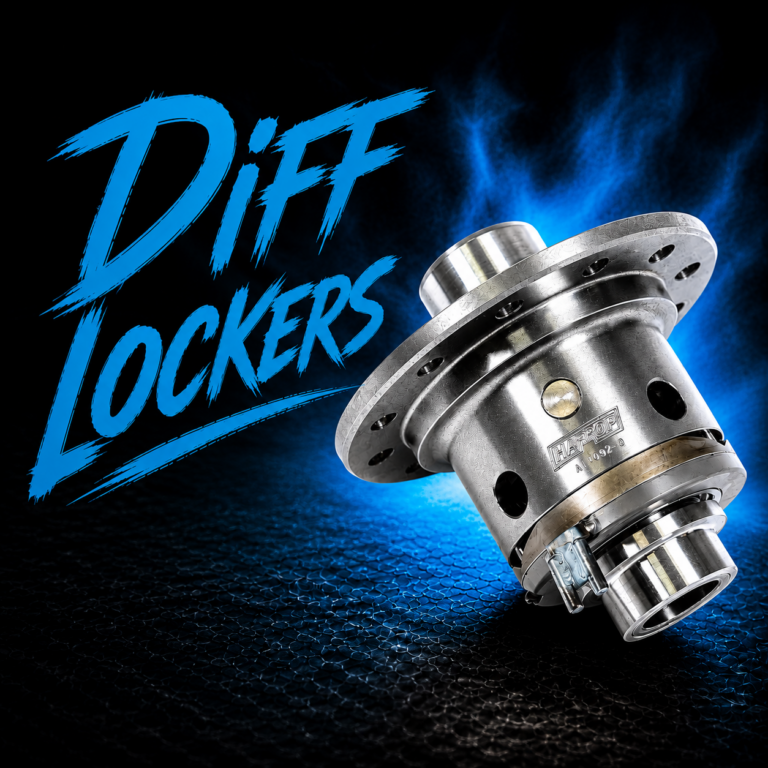
Mechanical lockers, often referred to as auto lockers or lunch-box lockers, are a type of differential locker that engage automatically when torque is applied to the drivetrain.
Unlike air lockers or electronic lockers, mechanical lockers do not require air pressure, electrical systems, or driver input to operate.
Instead, they use internal mechanical components that automatically lock the differential when power is applied.
Mechanical lockers are commonly used in off-road vehicles and 4WD builds where strong and reliable traction is required.
How Mechanical Lockers Work
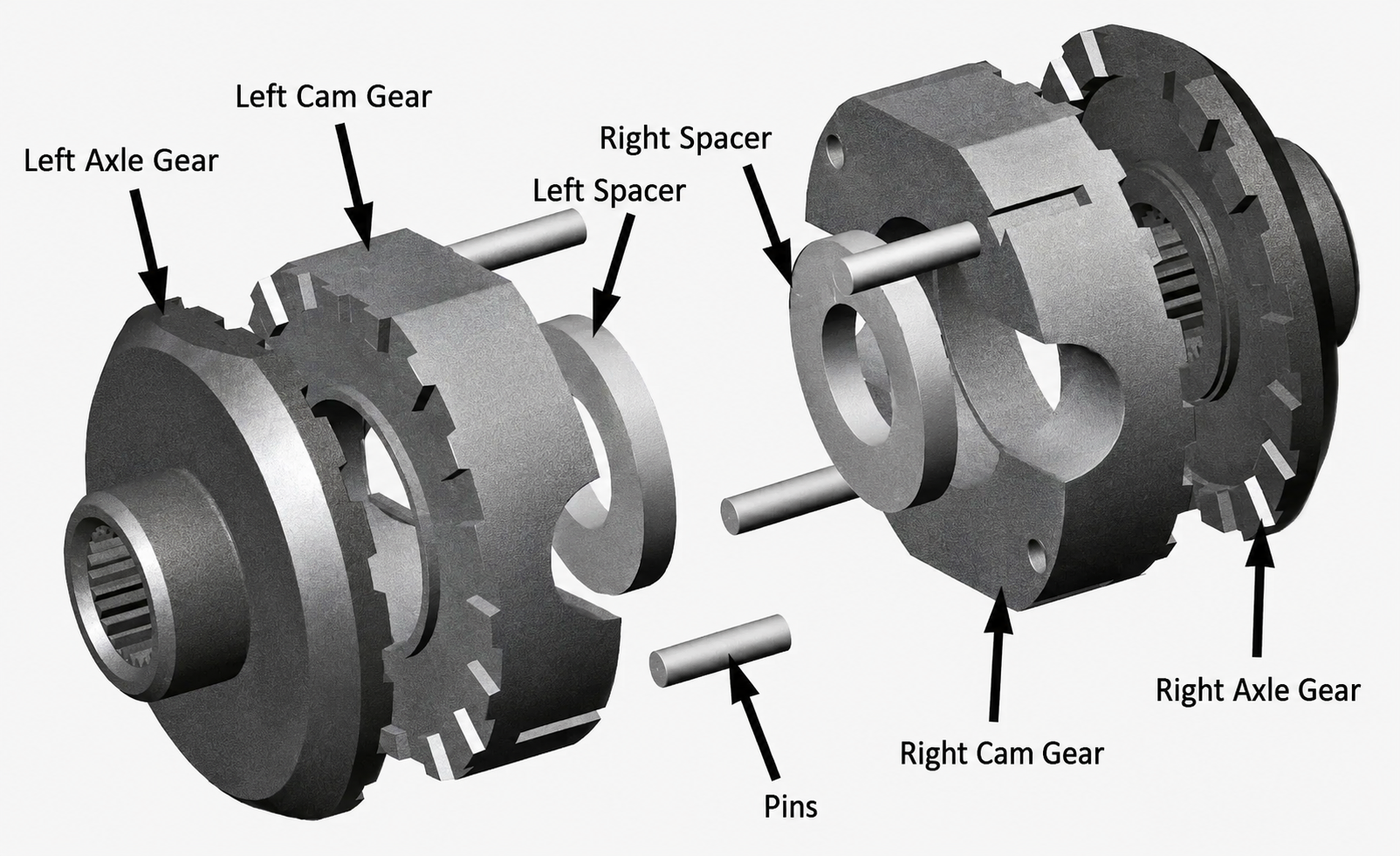
Mechanical lockers replace the internal differential carrier gears with a locking mechanism that allows the axle shafts to lock together under load.
When torque is applied through the drivetrain, the locker engages and forces both axle shafts to rotate together.
This ensures that both wheels receive torque, even if one wheel has very little traction.
When the vehicle turns, the locker is designed to momentarily unlock to allow the wheels to rotate at different speeds.
This unlocking and locking happens automatically depending on the load applied to the drivetrain.
Because the system works purely through mechanical interaction, mechanical lockers are known for their simplicity.
Common Mechanical Locker Brands
Several well-known manufacturers produce mechanical locking differentials.
Some of the most recognised systems include:
- Detroit Locker
- Lokka
- Yukon Grizzly Locker
- Spartan Locker
These lockers are widely used in off-road vehicles due to their durability and strong locking capability.
Some mechanical lockers replace the entire differential centre, while others are designed to fit inside the existing carrier.
Advantages of Mechanical Lockers
Strong Locking Capability:
Mechanical lockers provide very strong locking action, ensuring that both wheels receive torque when traction is limited.
Simple Design:
Because they operate purely through mechanical components, they do not require compressors, air lines, or electrical systems.
Reliable Off-Road Performance:
Mechanical lockers are often favoured in serious off-road environments where reliability and strength are critical.
On-Road Behaviour
Although mechanical lockers perform extremely well off-road, their behaviour on sealed roads can sometimes be noticeable.
Because these lockers automatically lock under load, drivers may experience characteristics such as:
- Clicking or ratcheting noises during cornering
- Sudden engagement when applying throttle
- Changes in vehicle handling during tight turns
For vehicles that spend a significant amount of time on the road, some drivers find these characteristics less desirable compared with selectable lockers.
For this reason, our preference at Gearhead Diffs is typically selectable lockers, such as air lockers or electronic lockers, particularly for vehicles that are regularly driven on the road.
Lunchbox Locker vs Full Carrier Locker
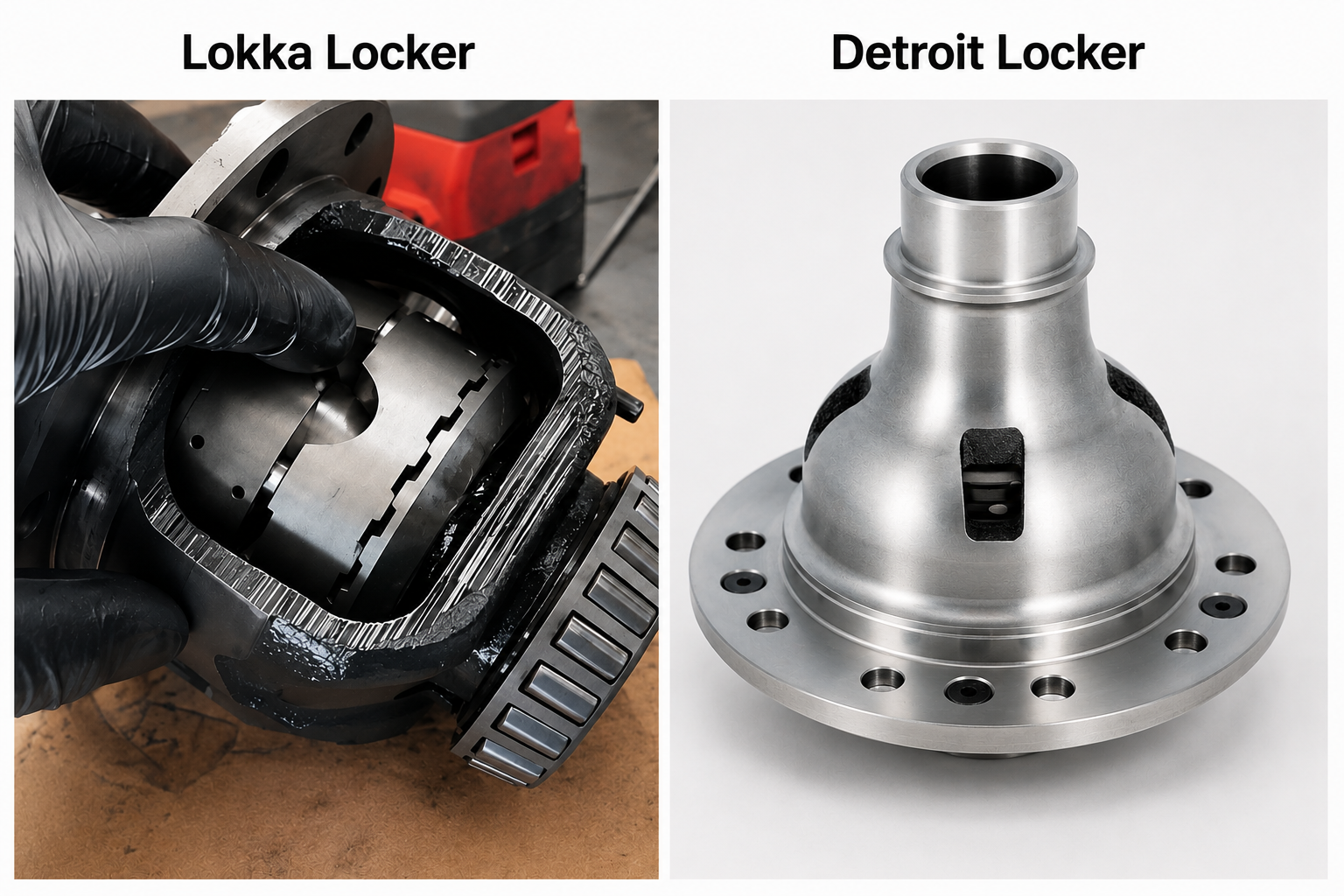
Mechanical lockers generally fall into two main categories: lunchbox lockers and full carrier lockers.
Lunchbox Lockers:
Lunchbox lockers, such as Lokka style lockers, install inside the existing differential carrier by replacing the internal spider gears.
Because the original differential carrier is retained, these lockers can often be a more cost-effective option compared with full carrier lockers.
However, correct installation and inspection of the differential components is still important to ensure proper operation and reliability.
Full Carrier Lockers:
Full carrier lockers, such as the Detroit Locker, replace the entire differential centre.
Because the entire carrier is replaced, these lockers are generally considered stronger and more durable, particularly in higher power or heavy off-road applications.
However, both designs share the same basic automatic locking behaviour and can produce similar on-road driving characteristics.
Where Mechanical Lockers Work Best
Mechanical lockers are particularly well suited to vehicles that are primarily used for:
- Off-road driving
- Rock crawling
- Mud and loose terrain
In these environments, the automatic locking action and strong engagement can provide excellent traction.
Installing Mechanical Lockers
Installing a mechanical locker involves replacing either the internal differential components or the entire differential carrier with the locking mechanism.
As with any differential work, proper setup is essential to ensure:
- Correct gear mesh
- Bearing preload
- Reliable long-term operation
At Gearhead Diffs we supply and install a wide range of differential lockers and traction upgrades to suit different vehicles and driving styles.